AI Personalization Marketing: How to Scale It in 2026
AI personalization marketing at scale is no longer a future concept — it's the current standard, with 91% of marketers confirming that personalization improves engagement and 76% of consumers frustrated by generic experiences. In this guide, Bernie Fussenegger of B2The7 breaks down a practical framework for building an AI-driven personalization strategy across email, website content, paid advertising, and customer lifecycle — including the specific tools, platforms, and sequencing that produce the fastest measurable results. Whether you're starting from scratch or optimizing an existing setup, this post gives you the roadmap to move from scattered marketing to a functioning personalization system within 90 days.
This guide shows you how to do the same. Whether you are just starting or moving from scattered tactics to a fully AI-driven marketing engine, you will find a practical roadmap here.
What You’ll Learn from This Article
What AI personalization really means today
Why hyper-personalization outperforms generic campaigns
How AI shapes the full customer journey
Top AI tools for personalization at scale
A step-by-step personalization framework
Real brands, real results
7 mistakes to avoid
What Is AI Personalization in Marketing?
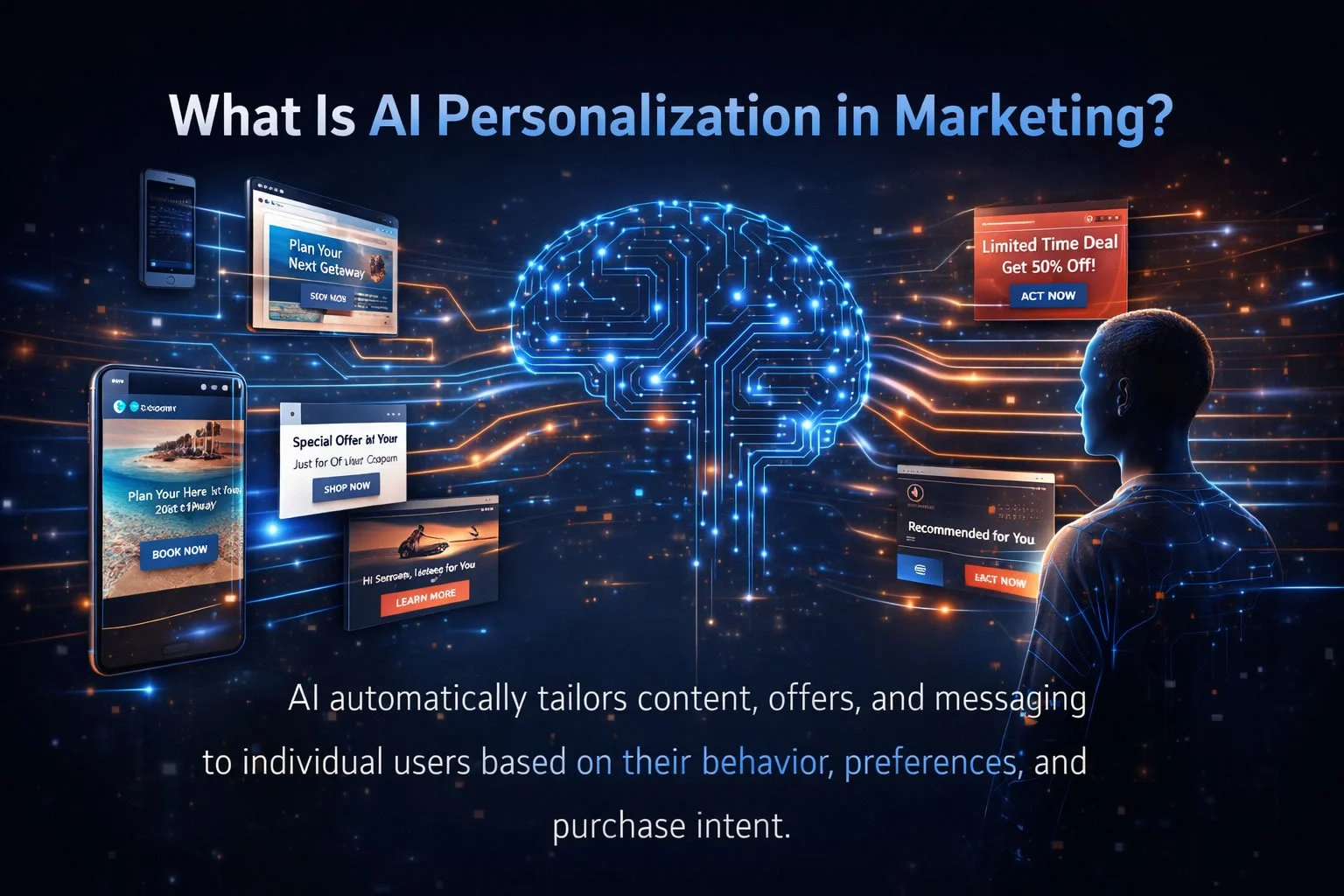
AI personalization in marketing is the use of artificial intelligence to automatically tailor content, offers, and messaging to individual users based on their behavior, preferences, and purchase intent. It delivers the right message to the right person at the right time, at a scale no human team could manage alone.
Traditional personalization meant putting someone's first name in an email subject line. AI-driven marketing works at a completely different level. It analyzes thousands of behavioral data points, including pages visited, content consumed, time spent, past purchases, and search patterns, then uses that information to adapt every touchpoint of the customer journey in real
time.
Imagine this: rather than guessing your audience's needs and sending a one-size-fits-all message, personalization technology empowers you to engage each prospect with a tailored conversation at once, without hiring extra team members. Your outreach can be smarter and more effective.
“76%
Many consumers expect personalized interactions and are frustrated when they do not get them.”
Why Hyper-Relevant Marketing Outperforms Generic Campaigns
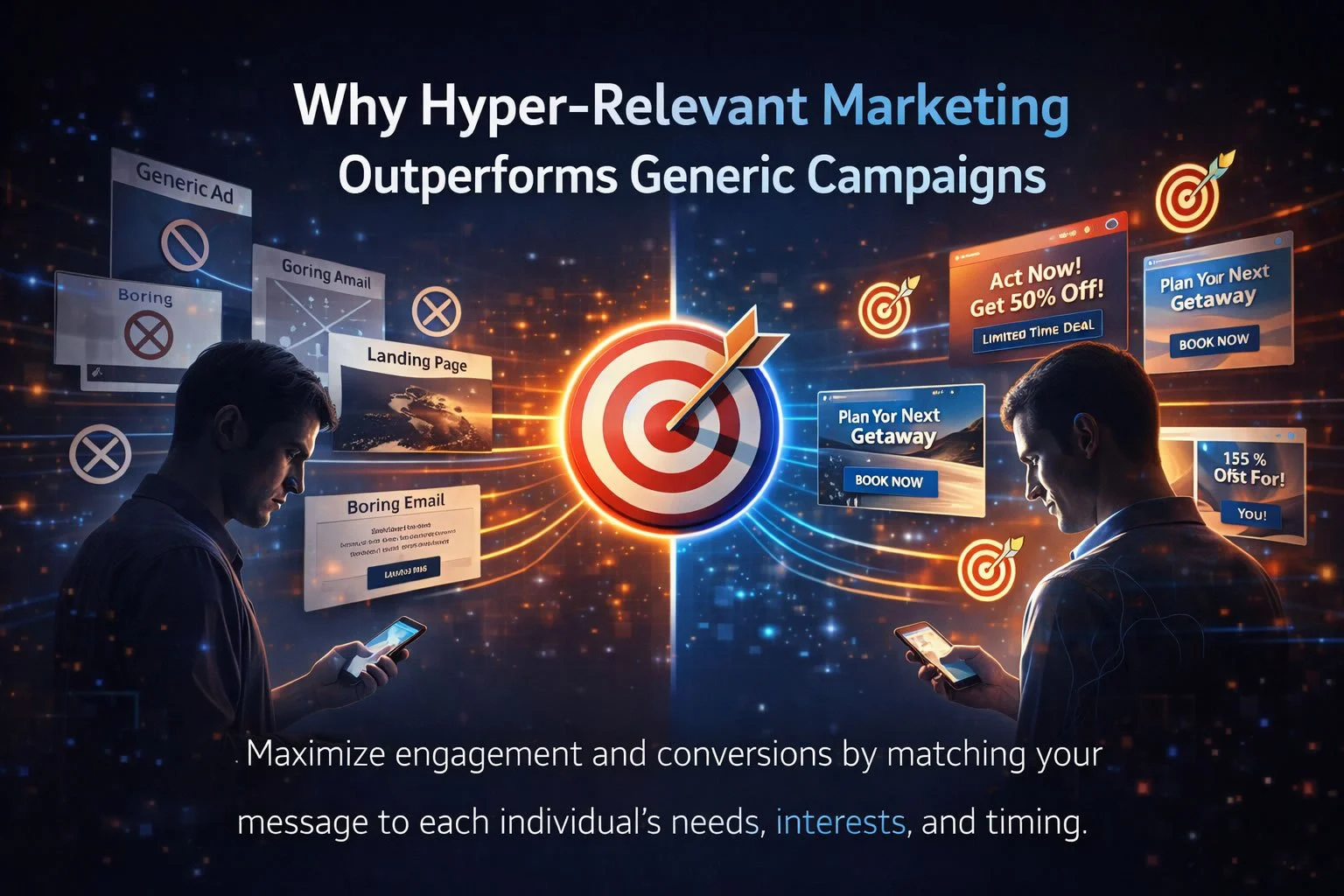
Hyper-personalization numbers don't lie. The gap between marketing teams that win and those that don't comes down to one thing: relevance.
Send the same message to everyone, and here's what you get:
Subject lines that don't speak to most readers, so open rates suffer. Offers that don't match where the buyer is, so click-throughs tank. Follow-ups that feel copy-pasted, so leads go cold. The budget was burned on people who were never a fit.
Shift to personalized marketing, and the results tell a different story:
HubSpot's 2026 State of Marketing report found that 91% of marketers who used personalization saw stronger engagement. Personalized email campaigns produce 6x higher transaction rates than generic sends. Brands that do this well bring in 40% more revenue than those that don't.
“The shift is away from chasing traffic volume and toward maximizing intent-match and conversions. The goal is no longer about getting the most traffic. It is about creating content so specific and helpful to a narrow niche that it drives real conversions. ”
Relevant marketing converts. Generic marketing costs. AI personalization in marketing makes relevance scalable.
How AI Personalizes the Customer Journey at Every Stage
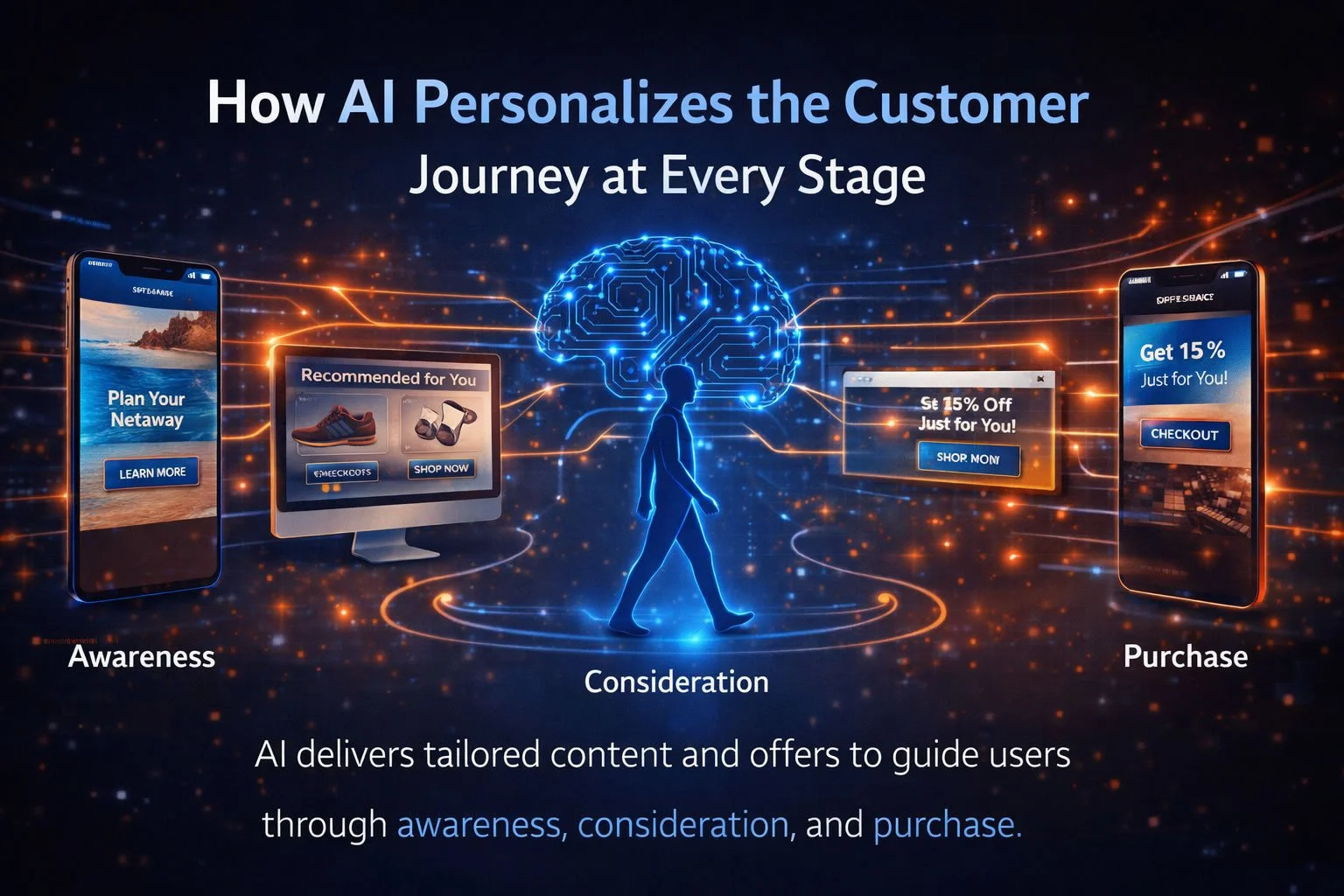
The real strength of AI-driven marketing is that it does not just personalize one moment. It adapts the full journey from first touch to closed deal. Here is how that works across each stage:
Stage 1: Awareness and Personalized Discovery
Search habits, content preferences, and demographic data all feed into how your content gets distributed. Blog posts, ads, and social updates reach people based on actual interest — not a broad guess. The right audience finds your content because the data points there.
Stage 2: Consideration and Dynamic Content Delivery
Once a prospect enters your world, personalization tracking picks up fast. Visit the pricing page three times — a case study lands next. Download a guide on a specific topic — the follow-up goes deeper on that same subject. Each interaction builds on the last.
Stage 3: Decision and Conversion Triggers
At the decision stage, content shifts into offers. CTAs, testimonials, case studies, and pricing incentives get matched to what each buyer actually cares about — not what works for the average person.
Stage 4: Retention and Predictive Loyalty Marketing
An AI marketing strategy does not stop at the sale. AI predicts churn risk, identifies upsell opportunities, and launches retention campaigns before a customer even thinks about leaving. McKinsey describes this as the shift from isolated use cases to end-to-end AI-orchestrated workflows, where every channel from email to ads to your website works from the same unified picture of each customer.
“49%
Many marketers are now using AI to create personalized content, making it the single most widely adopted marketing trend of 2026.”
The Best AI Marketing Tools for Personalization at Scale
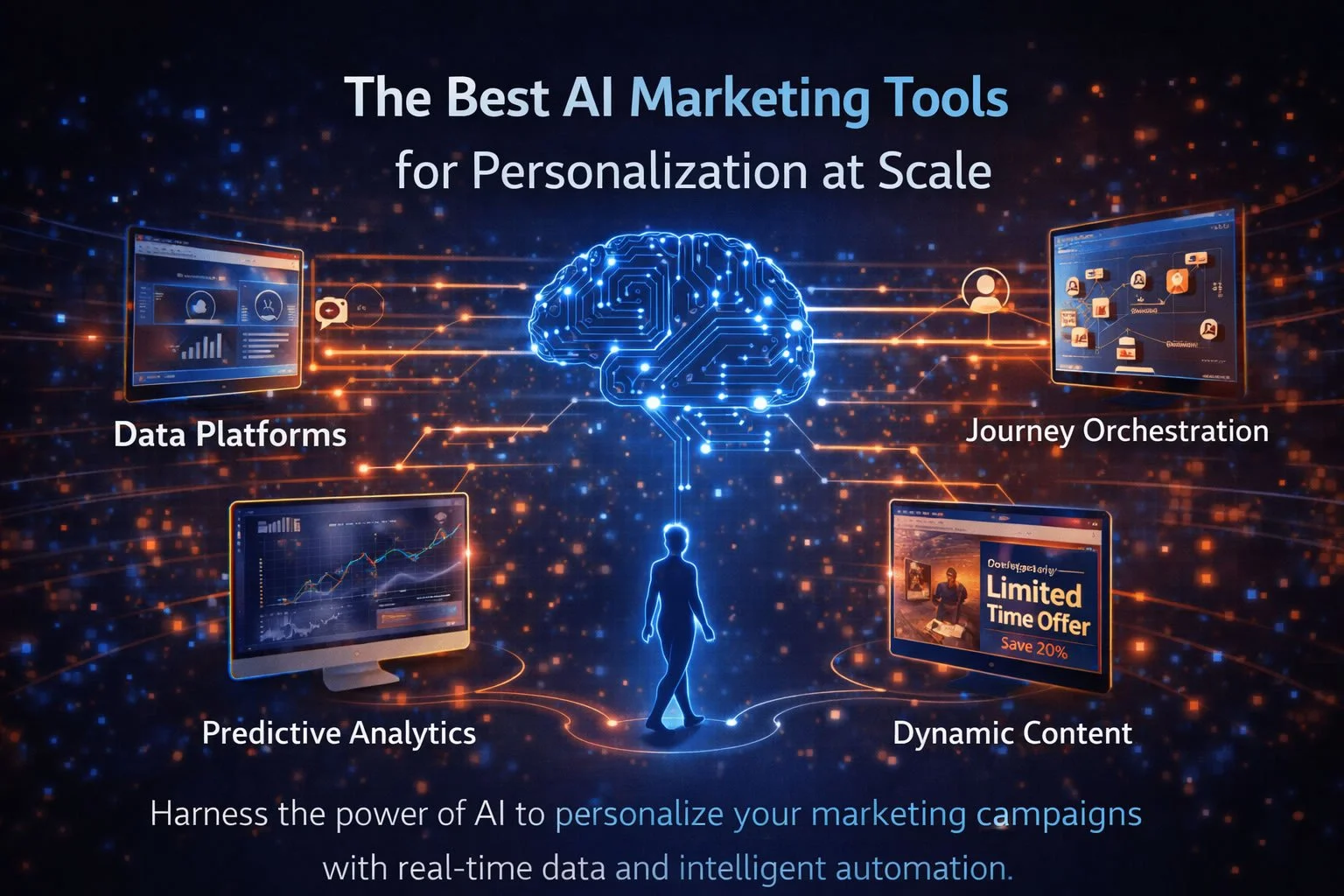
Creating a personalized marketing-at-scale system doesn't require overhauling your entire tech stack. The most effective AI marketing strategy leverages the tools you already have. Here are the key categories of tools to build around:
1. CRM With AI Intelligence
HubSpot, Salesforce, and ActiveCampaign have built out serious personalization features, lead scoring, buying signal detection, and behavior-based follow-ups. If you're already paying for one of these platforms, you're likely sitting on capabilities you haven't touched yet.
2. AI-Powered Email Personalization
Tools like Klaviyo, Iterable, and Braze use real user behavior to decide when and what to send. Instead of sticking to a fixed schedule, emails go out based on recent actions. Subject lines, timing, content, and offers are tailored to each person without extra manual work.
3. Dynamic Website Personalization
Platforms like Mutiny, Optimizely, and HubSpot's CMS show different headlines, CTAs, case studies, and content blocks based on who is visiting, their industry, company size, location, or how they arrived. Your homepage becomes a genuinely different page for a healthcare CEO than for an e-commerce founder.
4. AI Ad Targeting and Creative Testing
Meta's Advantage+, Google's Performance Max, and LinkedIn's AI bidding tools take the guesswork out of audience building, creative testing, and optimization. Give them a clear offer, strong creatives, and defined goals — they handle the rest.
5. Conversational AI and Chatbots
Modern AI chat tools do more than follow scripts. They use visitor context, past interactions, and behavior to shape each response. That allows them to qualify leads, address questions, and guide people toward a decision at any time of day.
How to Build Your AI Personalization Strategy Step by Step
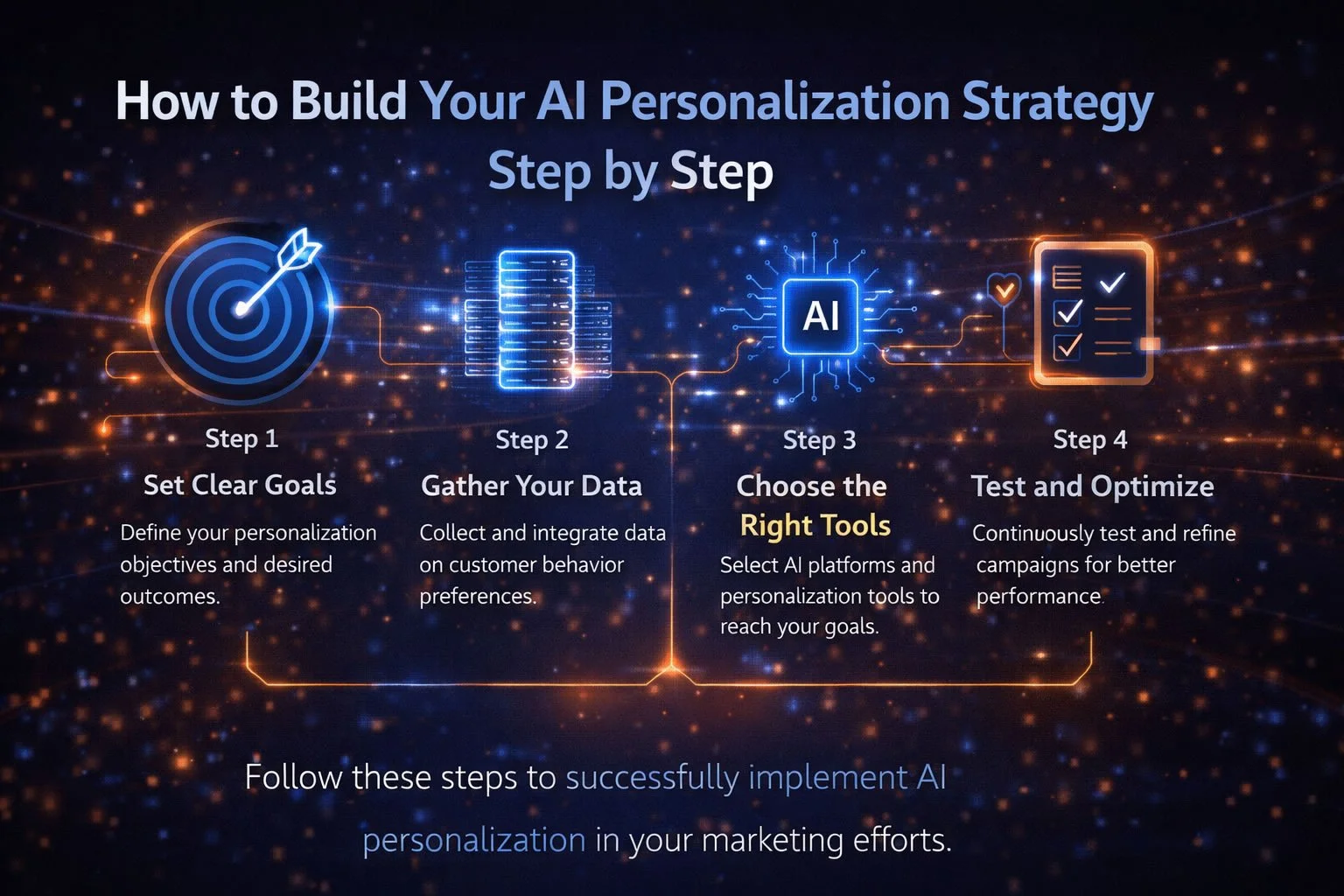
Here is the framework B2The7 uses to help businesses move from scattered marketing to a functioning AI personalization marketing system:
Audit your data first. AI personalization is only as good as the data feeding it. Start by connecting your CRM, website analytics, email platform, and ad accounts. Map where customer data lives and find the gaps where you are losing behavioral signals.
Define your audience segments. Before AI can personalize, you need clear definitions of who you are talking to. Build 3 to 5 core segments based on role, intent stage, industry, or pain point. These become the lenses through which your AI personalizes.
Map content to intent. Create a content matrix that matches your segments to the right message for each stage of their journey. Your AI marketing strategy needs a variety of content to personalize from. One piece per topic will not cut it.
Activate your tools. Layer your AI personalization tools on top of your existing stack. Start with email and website personalization. These two alone deliver the fastest ROI before you expand to ads and full omnichannel orchestration.
Set your signals and triggers. Define the behavioral signals that fire personalized responses: a page visit, a download, a return visit, and a form abandonment. Each trigger should send a tailored next step, not a generic sequence.
Monitor your performance eagerly and make thoughtful adjustments! By analyzing engagement and conversions, you can see how each segment shines in your pipeline. With every data point, your targeting becomes even more precise. Regularly review your results and fine-tune your segments and triggers for amazing success!
Real-World Examples of AI Personalization Marketing That Converts
Numbers on a page only go so far. Here is how leading brands are putting hyper-personalization marketing to work with results you can point to:
Instacart: Personalized Shopping at Scale
Instacart uses generative AI to offer customers personalized recipes, meal-planning ideas, and shopping lists tailored to individual preferences and past purchase history. The shopping experience feels purpose-built for each user, which drives repeat purchases and larger basket sizes without any manual effort from the team.
Amazon: The Standard for Predictive Personalization
Amazon's recommendation engine drives an estimated 35% of total revenue through personalized product suggestions built on purchase history, browsing behavior, and what similar buyers chose. This is personalized marketing at scale at its most mature, and the same capability is now accessible to businesses of all sizes through tools that did not exist three years ago.
B2B SaaS: AI-Scored Lead Personalization
A dynamic mid-sized B2B software company embraced AI lead scoring alongside personalized email sequences designed for specific industries and intents. In just 90 days, they enjoyed a fantastic 34 percent increase in qualified lead conversions, demonstrating that with smarter timing and more relevant outreach, amazing results can come from the leads they already had!
7 Common Mistakes Brands Make With Marketing Personalization
Even with the right tools in place, AI personalization marketing breaks down when brands fall into these patterns:
Personalizing without enough data. AI needs behavioral signals to work from. If your data is sparse, fragmented, or siloed across platforms, the outputs will still feel generic. Fix the data foundation before worrying about the tools.
Over-segmenting too early. Building 40 micro-segments before you have the content to serve them creates paralysis. Start with 3 to 5 meaningful segments and expand as you go.
Treating personalization as a one-time setup. This is not a campaign. It is an ongoing system. Brands that set it up and step away see returns shrink fast. Personalization gets stronger with continuous attention.
Cutting out the human review layer. AI handles execution. Humans still need to set a strategy, review messaging, and catch tone mismatches. The strongest AI marketing strategy keeps human judgment in the loop.
Personalizing only one channel. Email personalization that doesn't match website or ad personalization creates a disjointed experience. Buyers notice when your email says one thing and your landing page says something different.
Confusing personalization with using someone's name. True hyper-personalization marketing adapts the offer, content, timing, and channel based on behavior, not just the salutation.
Buying tools before building a strategy. Investing in AI personalization tools without a clear picture of who you are targeting, what journey you are guiding them through, and what success looks like is the most common and most expensive mistake of all.
“The brands that win in 2026 are the ones that make themselves easy for AI to understand and impossible for their customers to ignore.”
🙋♀️ Frequently Asked Questions About AI Personalization Marketing
What is AI personalization in marketing?
AI personalization in marketing is the use of artificial intelligence to automatically tailor content, offers, and messaging to individual users based on their behavior, preferences, and intent. It delivers the right message to the right person at the right time, at a scale no human team can replicate manually.
How is AI personalization different from traditional personalization?
Traditional personalization often means adding a name to an email or sorting by broad demographics. However, AI-driven personalization takes it up a notch! It evaluates a wealth of real-time behavioral signals—such as pages visited and past purchases—to tailor content, offers, timing, and channels to each individual. The result? A truly engaging experience!
What tools do I need for personalized marketing at scale?
Building a robust foundation for personalized marketing at scale is exciting! Consider leveraging an AI-enhanced CRM like HubSpot, Salesforce, or ActiveCampaign, paired with a behavioral email platform such as Klaviyo or Iterable. Enhance your website experience with dynamic personalization tools like Mutiny or Optimizely, and maximize your ad impact using AI-driven targeting through Meta Advantage+ or Google Performance Max. B2The7 is here to guide you in finding the perfect blend for your unique business!
How quickly can I see results from an AI marketing strategy?
Most businesses using a structured AI marketing strategy see measurable improvements in engagement within 30 to 60 days and meaningful conversion improvements within 90 days, particularly when starting with email personalization and dynamic website content, which produce the fastest feedback loops.
Is AI personalization marketing right for small and mid-sized businesses?
AI-driven marketing tools are now available for all budgets, and the ROI is consistent regardless of company size. Smaller businesses often see results more quickly because they can implement changes rapidly and face fewer layers of organizational complexity.
The B2the7 Final - The Window to Personalize at Scale Is Now
AI personalization marketing has moved from a competitive advantage to a competitive necessity. The businesses building this system today are creating something that compounds. It gets sharper with every interaction, every campaign, and every conversion.
The businesses waiting are handing ground to competitors who are not.
With 91% of marketers confirming personalization improves engagement, 76% of consumers frustrated by generic experiences, and AI tools making personalized marketing at scale more accessible than ever, the question is not whether to invest in AI-driven marketing. The question is how fast you move.
📩 Get Weekly Trend Alerts in Your Inbox
Want these insights delivered straight to your inbox every week?
Sign up here to subscribe to the Trend Brief
Stay ahead of what’s moving in marketing, social, and tech.