How to Lower Your Cost Per Lead Without Cutting Your Marketing Budget
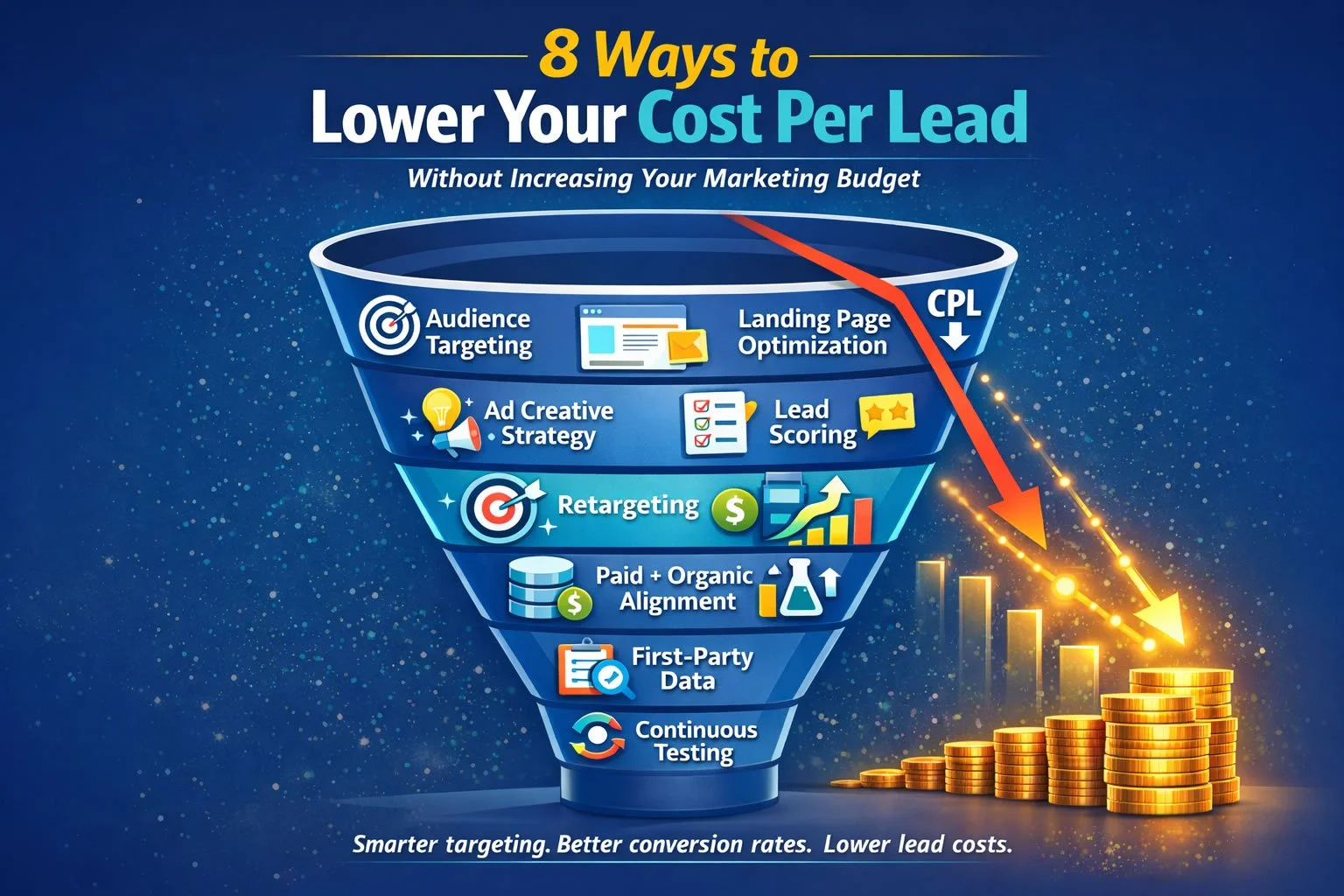
Cost per lead is rising across every paid channel in 2026 — but increasing your budget is not the answer. In this guide, Bernie Fussenegger of B2The7 breaks down eight proven tactics to reduce CPL by improving what you already have: sharper audience targeting, higher-converting landing pages, stronger ad creative performance, better lead scoring accuracy, smarter channel allocation, and content that does more qualifying work before the click. These are the same levers that work whether you're running $5,000 or $500,000 in monthly paid media — and they produce measurable results without touching your budget ceiling.
What You’ll Learn from This Article
By working through the 8 steps in this guide, you will know how to:
Identify why your cost per lead is rising
Tighten audience targeting to reduce wasted spend
Audit landing pages for conversion leaks
Improve ad creative to attract better prospects
Use lead scoring to focus on qualified buyers
Retarget warm prospects instead of cold traffic
Align paid and organic marketing
Use first-party data for better targeting
Test and scale what works
What Is Cost Per Lead and Why Does It Matter?
Cost per lead (CPL) is the total marketing spend divided by the number of leads generated. Lowering CPL without cutting the budget usually comes down to improving efficiency. Focus on tighter audience targeting, stronger landing page conversion rates, more relevant ad creative, and better lead scoring. Improving these areas alone can reduce CPL by 20 to 50 percent without increasing spend.
Why Cost Per Lead Is Rising (And What's Driving It)
Before fixing the problem, it helps to understand it. Rising CPL is not random. It comes from a handful of predictable forces that marketers across every industry are dealing with right now:'
Online advertising brings opportunity, but it also comes with pressure. Competition for high-intent keywords has pushed CPC higher over the past decade. Showing the same ad too often can also wear out an audience, and engagement drops as a result. The message matters as much. If it does not resonate, performance slips.
Budget discipline matters. Spend should go toward campaigns that attract real buyers, not just traffic. Landing pages also play a big role in cost per lead. Improving the page experience and focusing on lead quality helps make better use of the same marketing dollars.
Every one of these is fixable without adding a dollar to your budget.
Step 1: Fix Your Audience Targeting to Reduce CPL

The fastest way to lower your cost per lead is to stop showing ads to the wrong audience. Focused targeting is one of the most effective strategies for improving the performance of your paid media campaigns.
Where most brands go wrong:
Targeting too broadly with basic demographics
Ignoring in-market signals that show real buying intent
Showing the same ads to cold audiences and retargeting pools - a one-message approach to everyone doesn't work.
Not excluding current customers, irrelevant roles, or low-value locations is another example of where a brand goes wrong
What to do instead:
Incorporate behavioral signals into demographic targeting, including factors such as job function, seniority, and recent engagement.
Create lookalike audiences based on your best customers rather than using your entire customer list.
Regularly exclude audiences that do not align with your target market. You can exclude existing customers and target them with different messaging.
Segment audiences according to their buyer stage and customize your messaging for each group.
In one campaign audit, tightening audience exclusions cut wasted impressions by 34% and lowered cost per lead by $47 in the first 30 days.
Step 2: Audit Your Landing Pages for Conversion Leaks
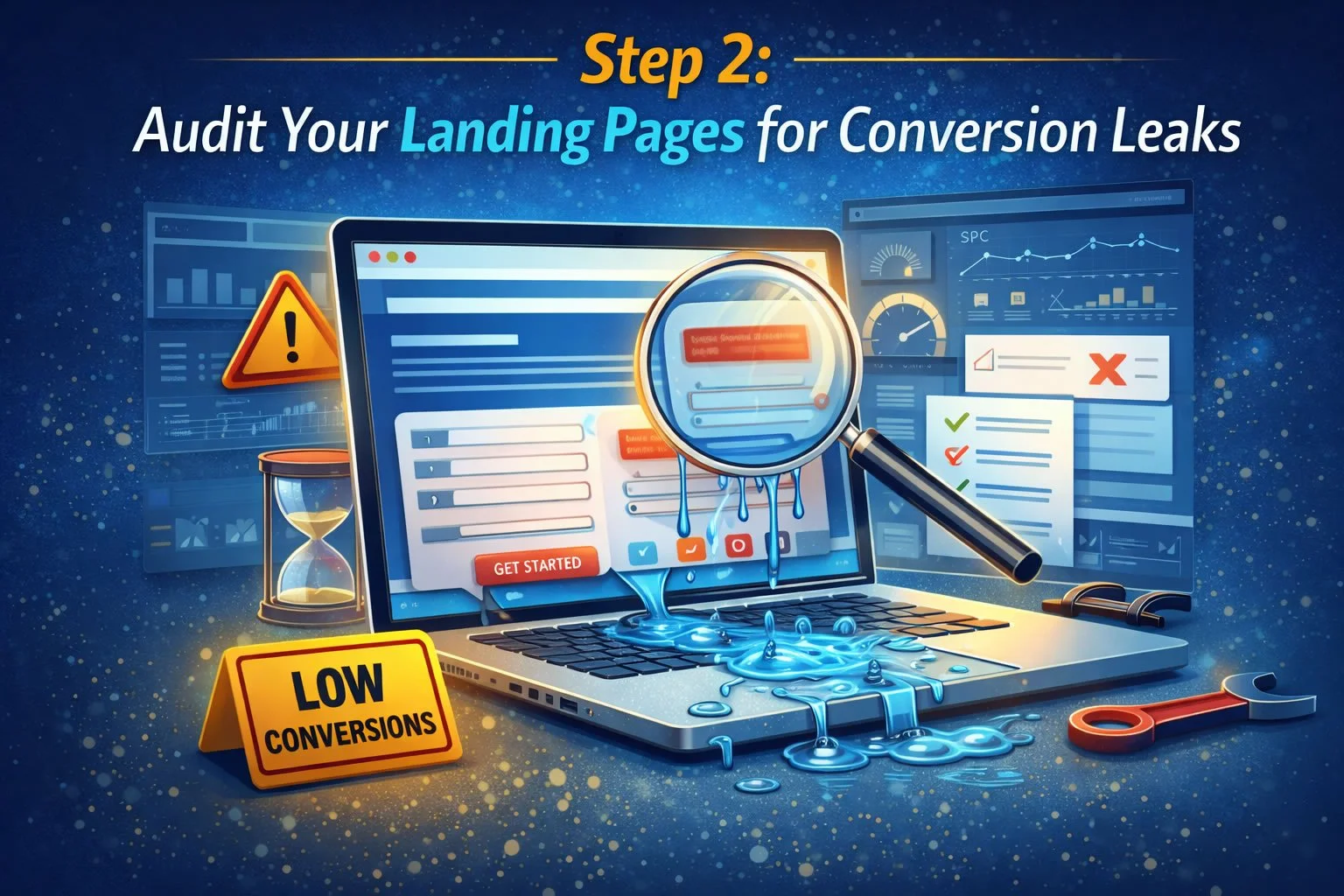
Your landing page is where paid media efficiency either holds up or falls apart. A 2% improvement in conversion rate has the same financial impact as doubling your ad budget. Yet most brands have not touched their landing pages in months. Just think about this, a little improvement can make a huge difference.
Run this audit checklist on every paid landing page:
Match the message: Your landing page headline should reflect what the ad promised. If it feels off, visitors leave.
Page speed: Slow pages lose visitors. If it takes more than a few seconds to load, many people will leave.
Short forms: Every extra field lowers the chance someone completes the form. Ask for the essentials. This is about this as a customer and what YOU are willing to fill out.
Proof near the top: Logos, reviews, and testimonials help build confidence quickly, along with authority.
One clear next step: Do not send visitors in multiple directions. Guide them to a single action.
Mobile-friendly: A large share of paid traffic comes from phones. If the form is hard to use on mobile, leads drop.
When you review landing pages closely, there are usually a few obvious fixes. It is common to find three to five changes that noticeably improve conversion rates and bring the cost per lead down without spending another dollar.
Step 3: Improve Your Ad Creative Strategy

Creative is the single biggest lever in paid media right now. Google and Meta's own data show that ad creative accounts for 56-70% of the variance in campaign performance. Yet most teams recycle tired formats and wonder why results stall.
High-performing creative frameworks that lower cost per lead:
Start with the problem your audience is facing and show how you solve it.
Be specific. "47 qualified leads in 30 days" says more than a vague promise about more leads.
Make ads fit the platform. Ads that look like normal posts tend to get more engagement.
Use short videos for new audiences. Save static ads for retargeting.
Run multiple creatives at once. Pause the weak ones and shift the budget to the winners.
The goal is not just a lower CPL. It is a lower CPL for a better lead. Strong creative filters your audience before they ever hit your landing page.
Step 4: Implement Smarter Lead Scoring for Cost Per Lead Optimization
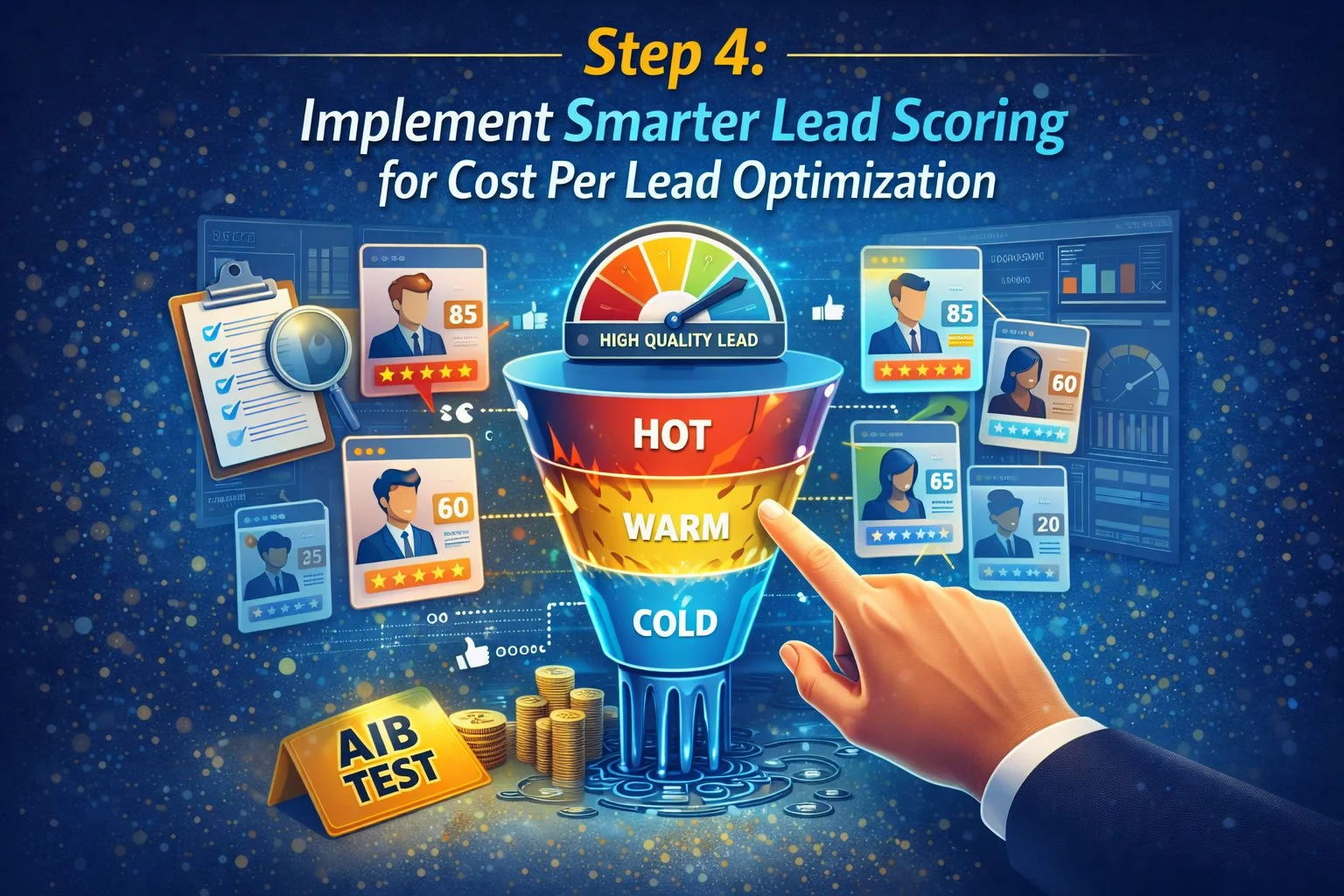
Looking only at lead volume can be misleading. A large number of leads does not mean they are the right ones. Cheap leads that never turn into customers can damage ROI, even if the CPL report looks strong.
Build a lead scoring model that accounts for:
Fit: company size, industry, location, job title
Engagement: pages viewed, downloads, email opens, webinar signups
Intent: pricing page visits, demo requests, repeat visits
Source: campaigns that produce customers, not just leads
Once lead scoring is set up, send that information back to your ad platforms. Google Enhanced Conversions and Meta's Conversion API enable campaigns to focus on leads more likely to become customers rather than counting every form submission equally.
Step 5: Use Retargeting to Recover Warm Leads
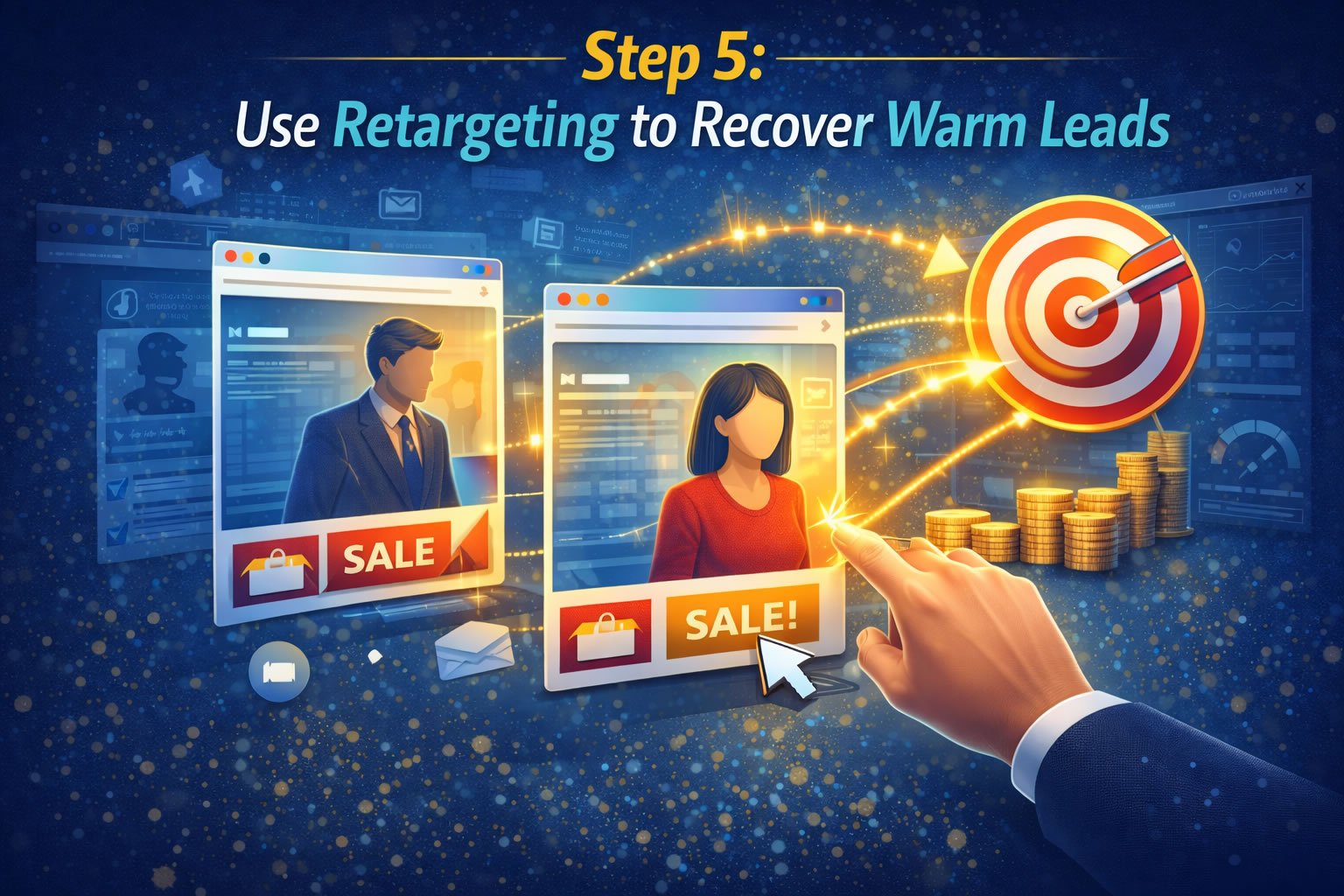
People who have already visited your site have shown interest. Reaching them again is usually cheaper than attracting new traffic, and they tend to convert more often. That is why retargeting can help reduce the cost per lead.
Build a tiered retargeting strategy:
• Tier 1 (0–7 days): Pricing, demo, or contact page visitors. Run strong CTA ads.
• Tier 2 (8–30 days): Blog readers and multi-page visitors. Use proof and case studies.
• Tier 3 (31–90 days): Light reminders to stay visible.
Warm audiences usually convert far better than cold traffic. Even a small shift in budget toward retargeting often brings CPL down fairly quickly.
Step 6: Align Paid and Organic for Compound Returns

One of the most overlooked ways to improve marketing efficiency is to treat paid and organic media as a single system. When SEO and content support your paid campaigns, the cost to generate leads tends to drop because organic content continues to drive traffic over time.
How to align the two for maximum paid media efficiency:
Use paid data to shape organic strategy. The keywords that convert in paid are exactly the topics your SEO content should cover.
Put paid budget behind high-performing organic content. You already know it connects with your audience.
Retarget organic blog visitors with paid ads that move them to the next stage in the funnel.
Use organic search rankings to reduce competitive keyword bids. You do not need to bid aggressively on terms where you already rank organically.
Test messaging and CTAs in paid first, then roll the winners into long-form organic content.
Brands that run integrated paid and organic strategies consistently report a 25-40% lower blended CPL than those running the channels separately.
Step 7: Put First-Party Data to Work to Lower Lead Generation Cost
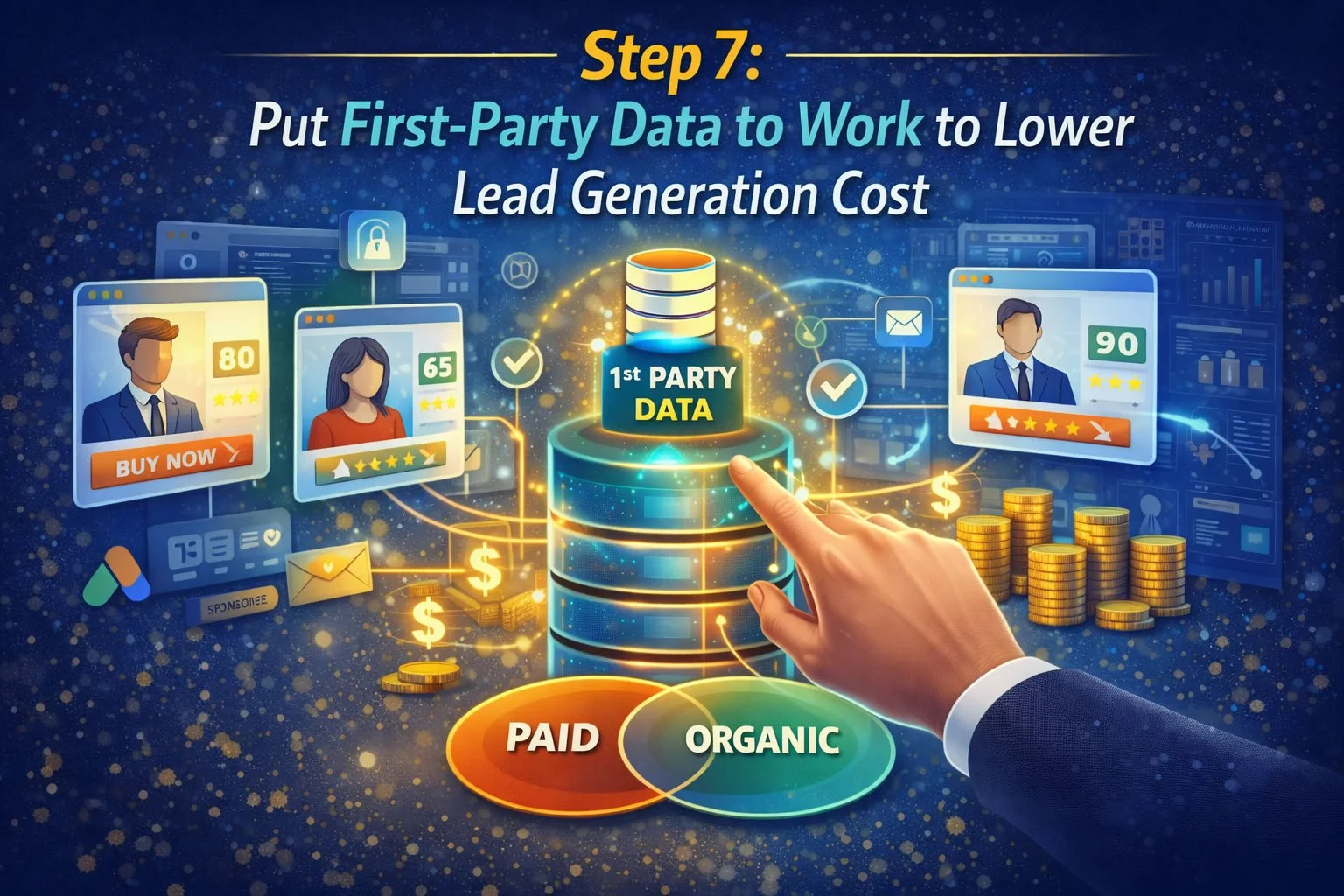
With third-party cookies largely gone, first-party data is your most valuable competitive asset. Brands that own their data reduce CPL, sharpen targeting, and build audience advantages that competitors cannot copy.
How to build and activate your first-party data advantage:
CRM lists: Upload customer and prospect lists to Google, Meta, and LinkedIn for better targeting.
Enhanced conversions: Use Google Enhanced Conversions and Meta's Conversion API to improve tracking.
Email segmentation: Exclude subscribers from cold campaigns and nurture them separately.
Progressive profiling: Collect more information over time instead of asking for it all upfront.
Each touchpoint adds to your picture of the buyer, improving both targeting and personalization in the future.
First-party data is not a one-time setup. It is an ongoing marketing budget strategy that gets more valuable as your data grows.
Step 8: Test, Measure, and Scale What Works
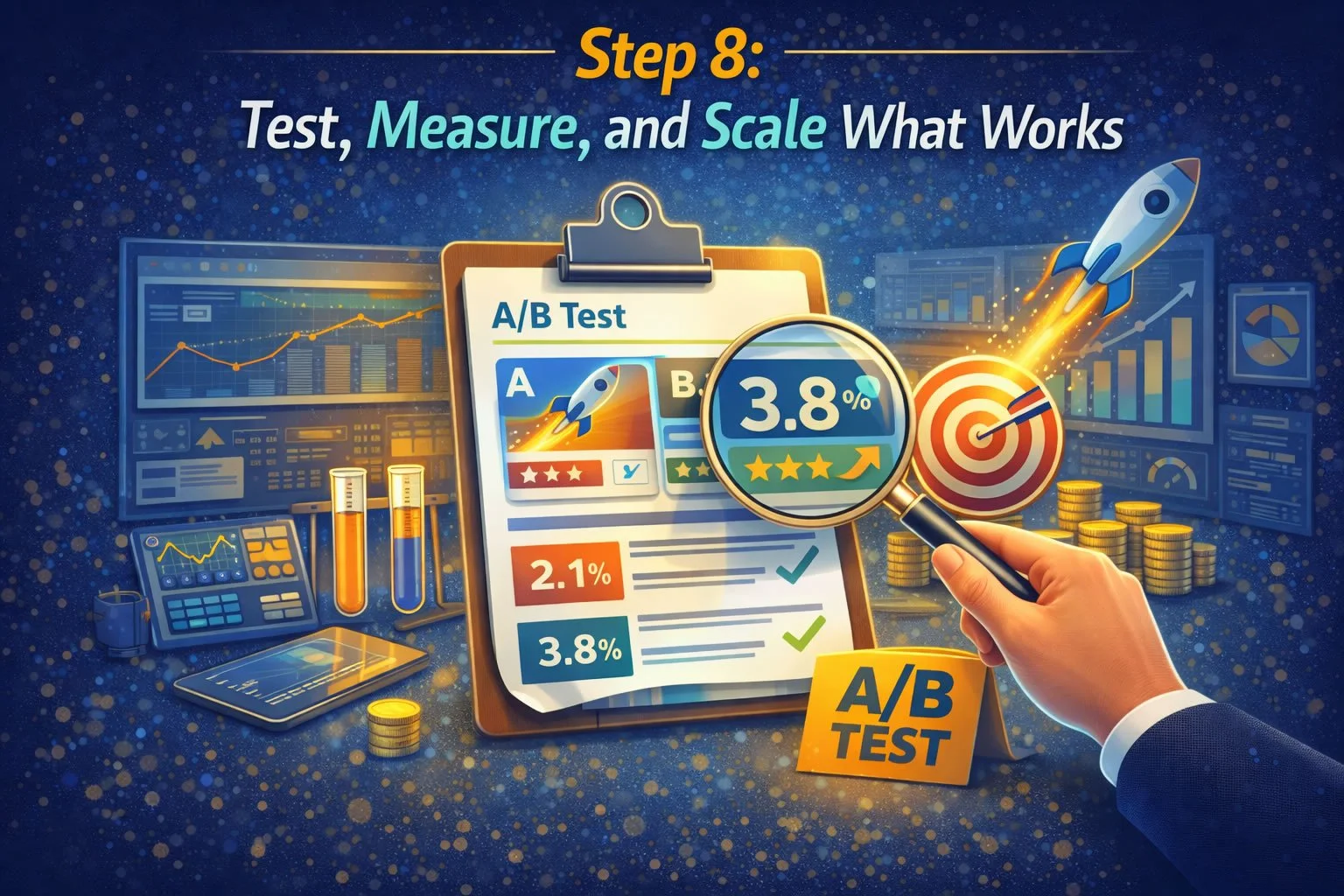
None of these tactics matters if you are not measuring the results. Lowering cost per lead is not a one-time fix. It comes from testing what works, learning from the data, and shifting more budget to the campaigns that perform best.
Build a structured testing rhythm:
Weekly: Review CPL and pause weak campaigns.
Bi-weekly: Test landing page elements like headlines, CTAs, and forms.
Monthly: Shift budget to audiences producing the best leads.
Quarterly: Review the full funnel and cut what is not producing customers.
The brands that win at paid media efficiency are not the ones with the biggest budgets. They are the ones with the best data and the discipline to act on it every week.
🙋♀️ Frequently Asked Questions About Lowering Cost Per Lead
What is a good cost-per-lead benchmark for my industry?
CPL (cost per lead) benchmarks vary by industry, marketing channel, and deal size. In the B2B SaaS sector, the average CPL ranges from $50 to $200 for inbound leads and from $150 to over $500 for outbound campaigns. Industries such as healthcare, legal, and financial services typically experience CPLs of $200 to $800, largely due to higher customer lifetime values in these fields. E-commerce and lead generation typically target $10-$75 per lead.
The most important benchmark is your own historical CPL compared to your customer acquisition cost (CAC) and average contract value. For instance, a CPL of $150 that leads to a $15,000 client is an excellent return on investment, regardless of industry averages.
How quickly can I expect to see CPL improvements after making changes?
Exciting changes can lead to amazing results! You can see boosts in conversion rates from audience tweaks and landing page CTAs in 7 to 14 days. Meanwhile, refreshing your creatives will provide reliable insights in about 2 to 3 weeks. Let's make great progress together! Lead scoring enhancements on ad platforms like Google's Enhanced Conversions can take 3 to 4 weeks to show a reduced cost per lead (CPL). Lastly, budget reallocations based on performance can achieve significant results within 30 days.
Should I focus on reducing CPL or improving lead quality first?
Lead quality comes first. Lower CPL does not help if the leads never turn into customers. Define what a qualified lead looks like, score leads against that standard, and send that signal back to your ad platforms. Focus on quality before cost. A $300 lead that closes is worth more than a cheap one that never converts.
Which paid channels typically produce the lowest cost per lead?
Cost per lead depends on the audience, the offer, and where someone is in the funnel. Google Search often captures people already looking for a solution. Meta tends to work well with consumer audiences when the creative connects. LinkedIn usually costs more per lead but can produce strong B2B prospects because of its targeting. Retargeting also performs better than cold prospecting across most platforms.
Can I lower my cost per lead without a large marketing team?
This guide focuses on simple adjustments, not big projects. Small changes can make a real difference. One marketer can tighten audience targeting, shorten forms, add testimonials to a landing page, and shift budget to stronger campaigns in a few hours. The key is reviewing the data regularly and cutting what does not perform. A focused weekly routine often beats a larger team with no clear direction.
The B2the7 Final
Lowering your cost per lead is not about cutting corners. It is about closing the gap between your budget and the results it should be producing. The 8 steps here, from tightening audience targeting to activating first-party data, are the same frameworks I have applied across hundreds of campaigns over 25 years.
When you reduce CPL, you do not just save money. You get more pipeline from the same investment, give your sales team more qualified conversations, and build a lead generation engine that keeps improving over time.
The businesses that win are not spending more. They are spending smarter. Now you have the roadmap to do the same.
📩 Get Weekly Trend Alerts in Your Inbox
Want these insights delivered straight to your inbox every week?
Sign up here to subscribe to the Trend Brief
Stay ahead of what’s moving in marketing, social, and tech.