How Short-Form Video Is Changing SEO Content Writing (And What To Do About It)
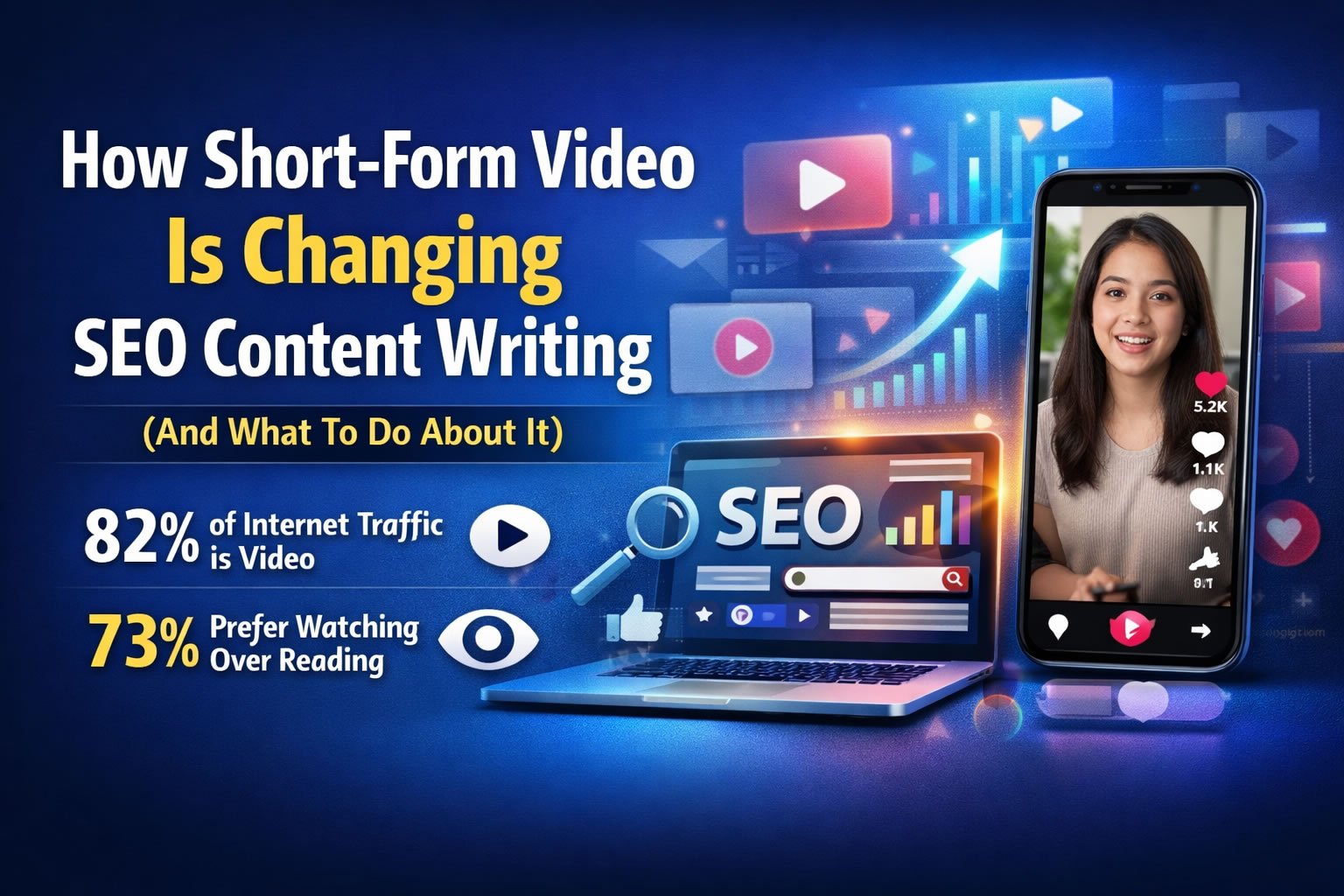
Short-form video is no longer just a social media tactic — it's actively reshaping how SEO content performs, how search algorithms evaluate pages, and how users decide which results to click. In this guide, Bernie Fussenegger of B2The7 explains how platforms from TikTok to YouTube Shorts are influencing search ranking signals, how to integrate short-form video into your website content strategy to boost both engagement and organic visibility, and the specific content formats and distribution approaches that produce measurable traffic and conversion improvements in 2026.
Short-form video now accounts for 82% of all internet traffic, and 73% of consumers say they would rather watch a quick clip than read a product description. Most brands have not caught up. They are still publishing the same keyword-heavy blog posts they wrote three years ago and wondering why organic reach keeps dropping. The audience did not leave. They just stopped waiting for content to load.
This post gets into exactly how short-form video is reshaping SEO content writing and what a smarter website content strategy looks like in practice. You will find real numbers, specific tactics, and a framework you can start applying this week.
What You’ll Learn from This Article
Why short-form video is reshaping SEO and content strategy
How video improves engagement, dwell time, and search visibility
Where traditional SEO content writing falls short today
Simple ways to add short-form video to your website pages
How transcripts and keyword clusters support stronger rankings
What metrics and tools help measure video-driven SEO performance
What is the impact of short-form video on SEO content strategy?
Short-form video improves SEO performance by increasing page dwell time, lowering bounce rates, and generating extra indexable content through transcripts and metadata. Pages that pair short-form video with strong written copy rank higher, hold attention longer, and convert at a better rate than text-only pages.
Why the Buyer Journey Looks Nothing Like It Did Three Years Ago
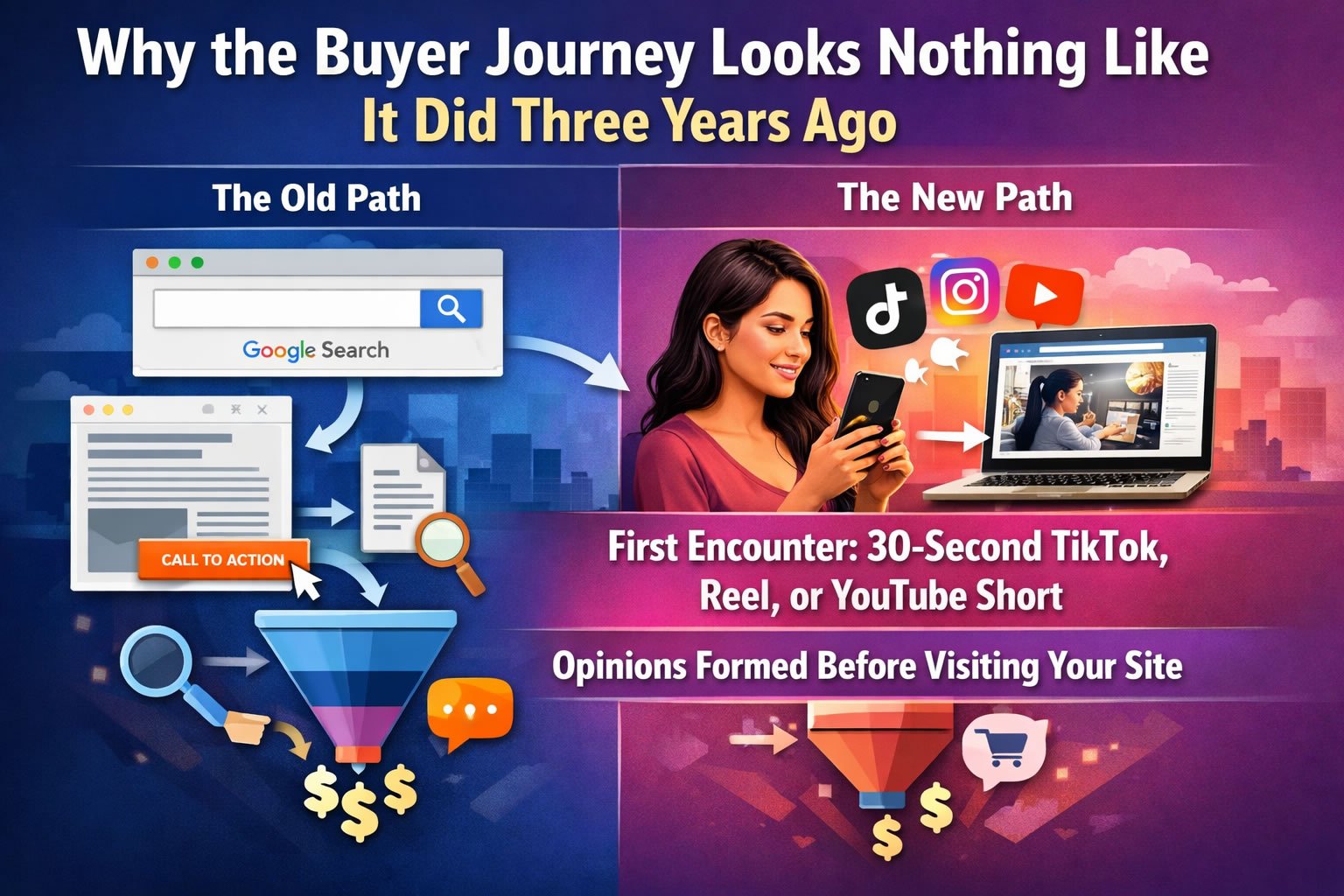
Buyers used to find a brand through Google, skim a blog post, and click a CTA. That path still exists, but it is no longer the main one. A growing share of your potential customers' first encounters with your brand are through a 30-second TikTok clip, a Reel, or a YouTube Short. They form an opinion about you before they ever visit your site.
The numbers behind the shift:
82% of all internet traffic is projected to be video by 2025, according to Cisco.
Short-form videos drive about 2.5 times more engagement than longer videos.
Vertical video in a 9:16 format produces completion rates roughly 90% higher than horizontal formats.
Around 73% of consumers say they prefer short-form video when learning about a product or service.
These changes are meaningful. They show that the way people discover brands, research options, and make buying decisions is evolving. Many people now come across a video before they ever read a piece of written content, so a strong website content strategy should account for that behavior.
Where Traditional SEO Content Writing Falls Short
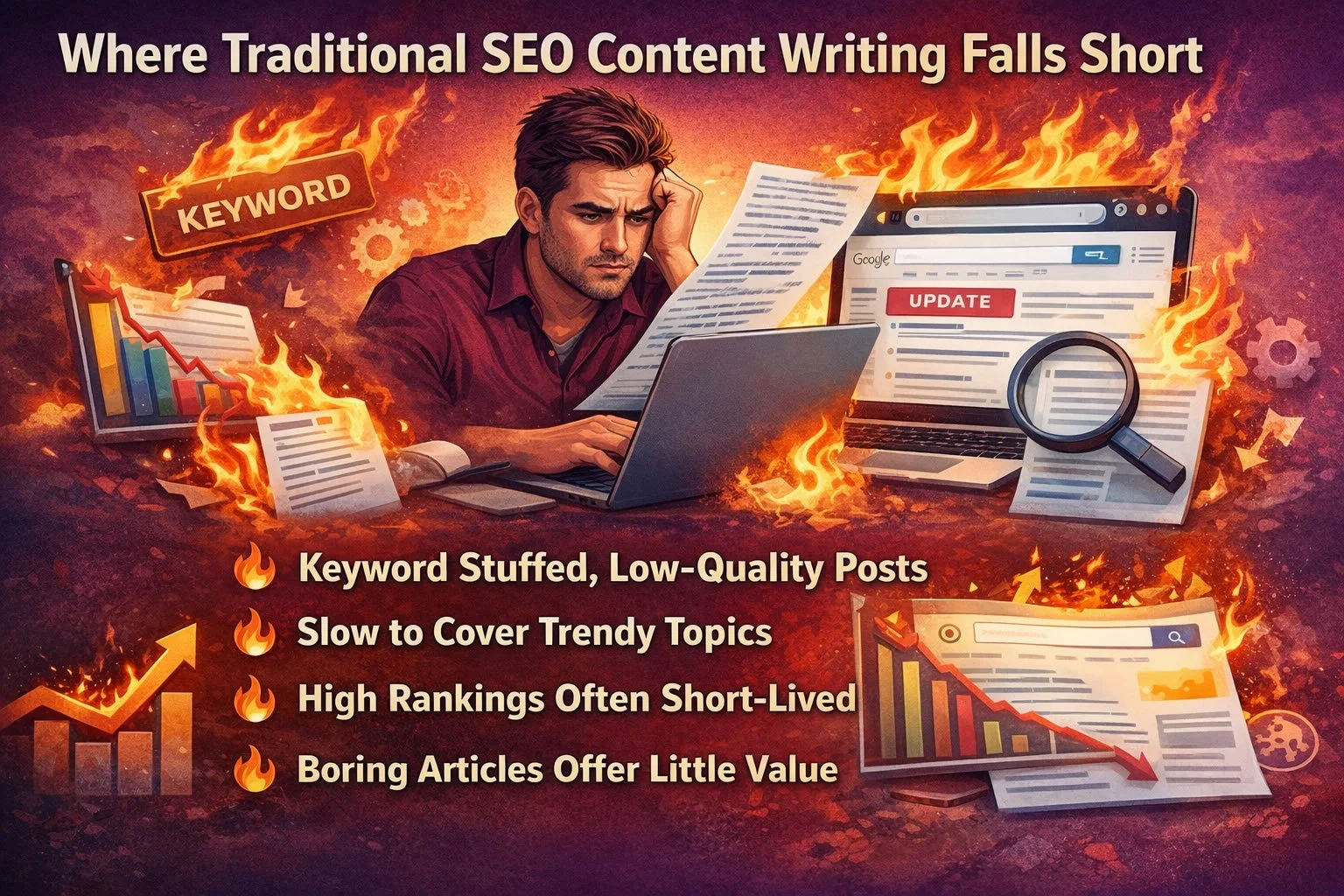
Good SEO content writing still matters. Keyword research, header structure, internal linking, and meta descriptions all still move rankings. The problem is that content teams treat text as the whole strategy rather than just one part of it. Here is where the gaps show up:
Search Results Are Returning More Video
"How do I" and "What is" searches now surface video carousels in over 26% of Google results. If a competitor has a short-form video targeting the same query you're after with a blog post, they are likely getting the click. Google is showing users what they are actually clicking on, and right now, that is increasingly video.
Video Keeps People on Your Page Longer
Dwell time is one of the cleaner signals Google uses to gauge page quality. A page with a well-placed short-form video for SEO plus a transcript can hold a visitor twice as long as a text-only page on the same topic. That additional time signals to search engines that the page is doing its job.
Transcripts Double Your Indexable Content
Every word in a video transcript is text that search engines can read and rank. Adding a transcript to your embedded video improves accessibility. It gives you a second layer of keyword-rich content on the same page, which supports your rankings without any additional writing.
6 Website Content Strategy Tips for Integrating Short-Form Video
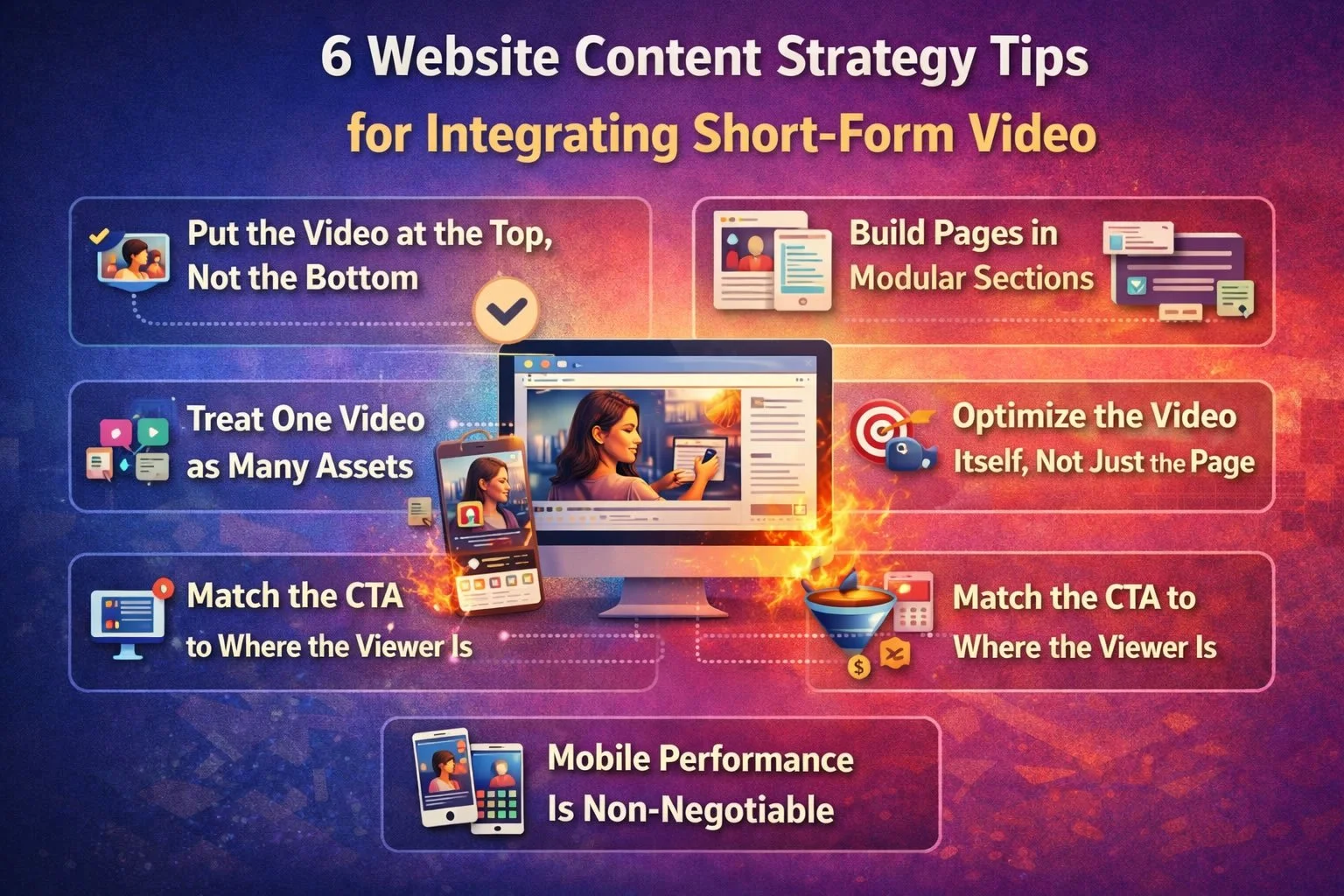
Updating your website content strategy does not require rebuilding from scratch. The goal is to layer video into what is already working. These six approaches cover the most impactful changes you can make:
1. Put the Video at the Top, Not the Bottom
Most teams embed video as an afterthought, buried halfway down a long post. Flip that. A 30 to 60-second video placed above the fold captures attention before the reader decides whether to keep scrolling. It acts as the hook. The written content below it is the payoff for people who want more depth.
2. Build Pages in Modular Sections
A page structured as a single long article serves readers who read linearly, a shrinking group. Instead, structure the page in layers. Start with a short video at the top, followed by a 200-300-word summary that highlights the key points. Add an FAQ section that answers common questions, then include the full transcript at the bottom of the page.
People consume information in different ways, and a modular page structure makes it easier for each visitor to engage with the content in the way that works best for them.
3. Treat One Video as Many Assets
A single short-form video can produce a full week of content. The same clip becomes:
A blog post
A transcript page optimized for search
A LinkedIn video post
An Instagram Reel or YouTube Short
A podcast audio clip
A Twitter or LinkedIn text thread
Each piece links back to the others. You are building a network of connected content from one recording session.
4. Optimize the Video Itself, Not Just the Page
Having a video is not enough. The video needs to be optimized the same way a page does. That means descriptive titles with your target keyword, captions on every clip, metadata and tags tied to your keyword cluster, and placement on pages with real authority. A video sitting on a weak page with no supporting text will not move your rankings.
5. Match the CTA to Where the Viewer Is
Someone who just watched your video is not a cold lead. They already spent time with your content and showed interest in what you had to say. Your call to action should reflect that level of engagement. Direct viewers to additional resources that expand on the topic they just watched, such as a more detailed guide, a downloadable checklist, or a booking page. Redirecting an interested viewer back to a generic homepage wastes the attention you have just captured.
6. Mobile Performance Is Non-Negotiable
Short-form video is a mobile-first format. If your site loads slowly, forces horizontal playback, or breaks on smaller screens, you are losing the audience that video brings in. Google's Core Web Vitals measure exactly these things, and pages that fail them pay for it in rankings.
The Keyword Cluster That Supports This Topic
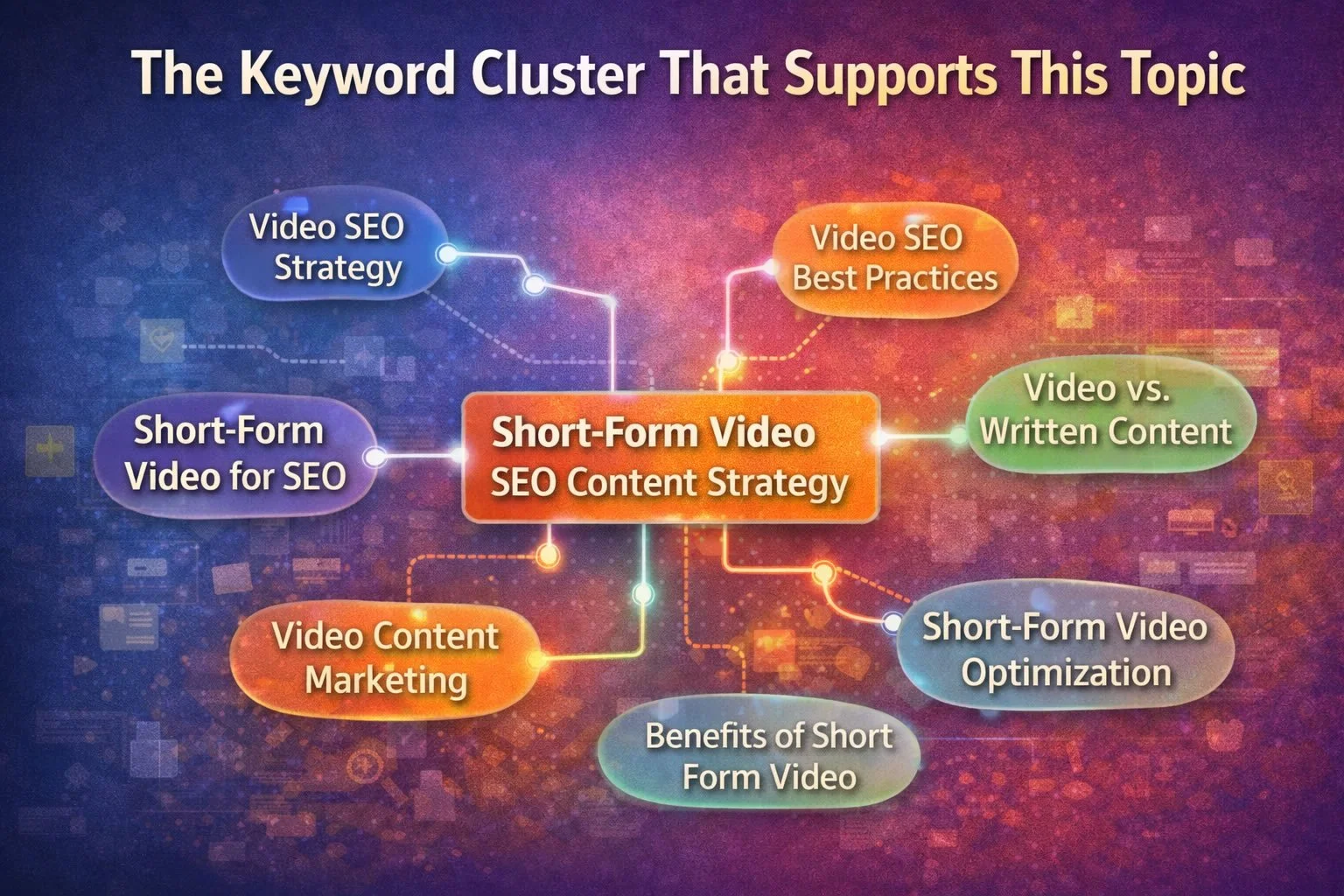
Ranking for a single keyword does not establish topical authority. Search engines look for coverage across a set of closely related terms that explore the same subject from different angles. For this topic, the keyword cluster might look like this:
Primary: SEO content writing
Secondary: short-form video marketing, video content for SEO
Supporting: website content strategy tips, how to embed short-form video on website, making short-form video part of content strategy, short-form video SEO
Write content that addresses each of these terms. Link between them. Over time, search engines connect the dots and reward the site that covers a topic most thoroughly.
Tools Worth Using for This Strategy
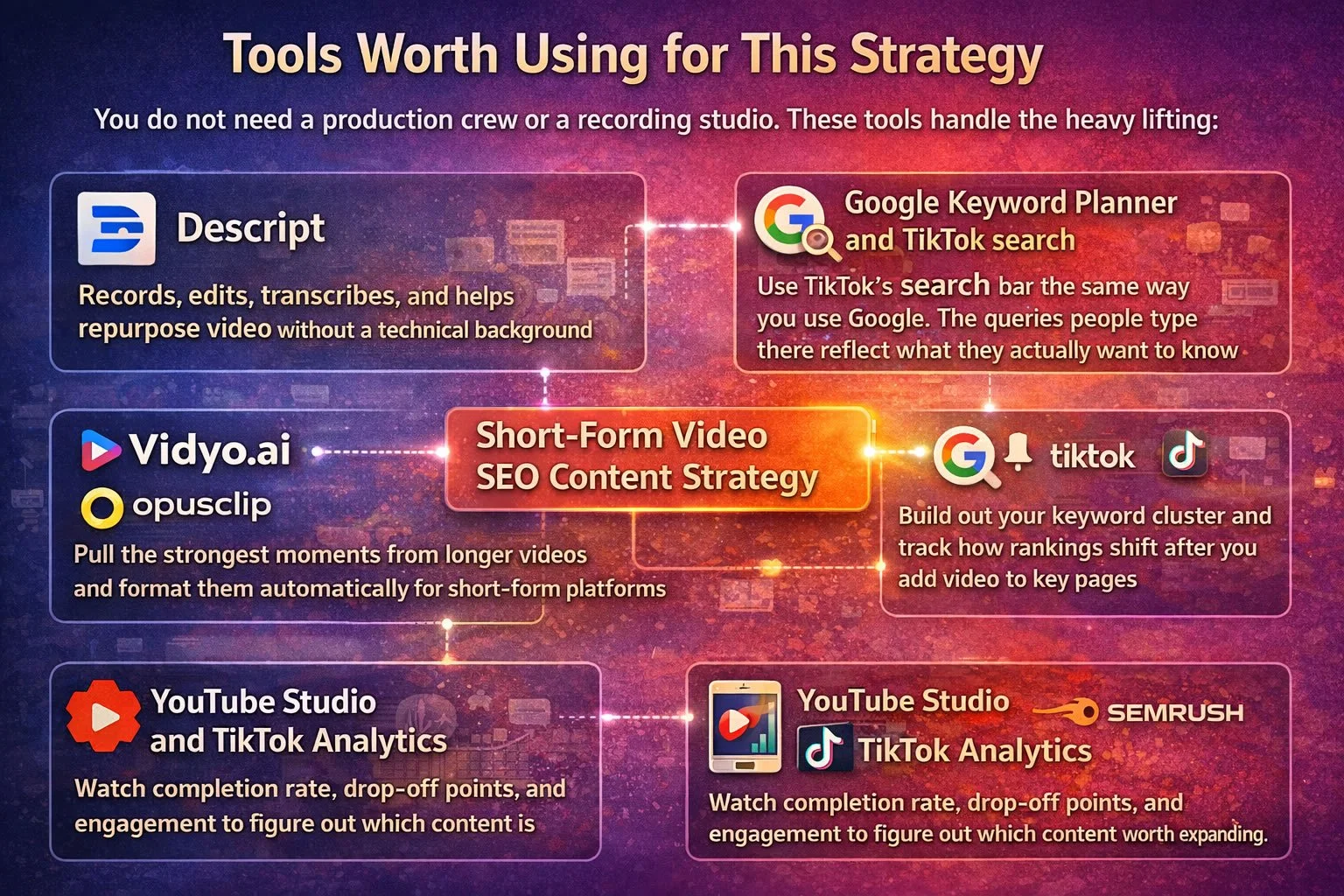
You do not need a production crew or a recording studio. These tools handle the heavy lifting:
Descript -- Records, edits, transcribes, and helps repurpose video without a technical background.
Vidyo.ai and OpusClip -- Pull the strongest moments from longer videos and format them automatically for short-form platforms.
Google Keyword Planner and TikTok search -- Use TikTok's search bar the same way you use Google. The queries people type there reflect what they actually want to know.
Ahrefs or SEMrush -- Build out your keyword cluster and track how rankings shift after you add video to key pages.
YouTube Studio and TikTok Analytics -- Watch completion rate, drop-off points, and engagement to figure out which content is worth expanding.
The Data Behind the Shift
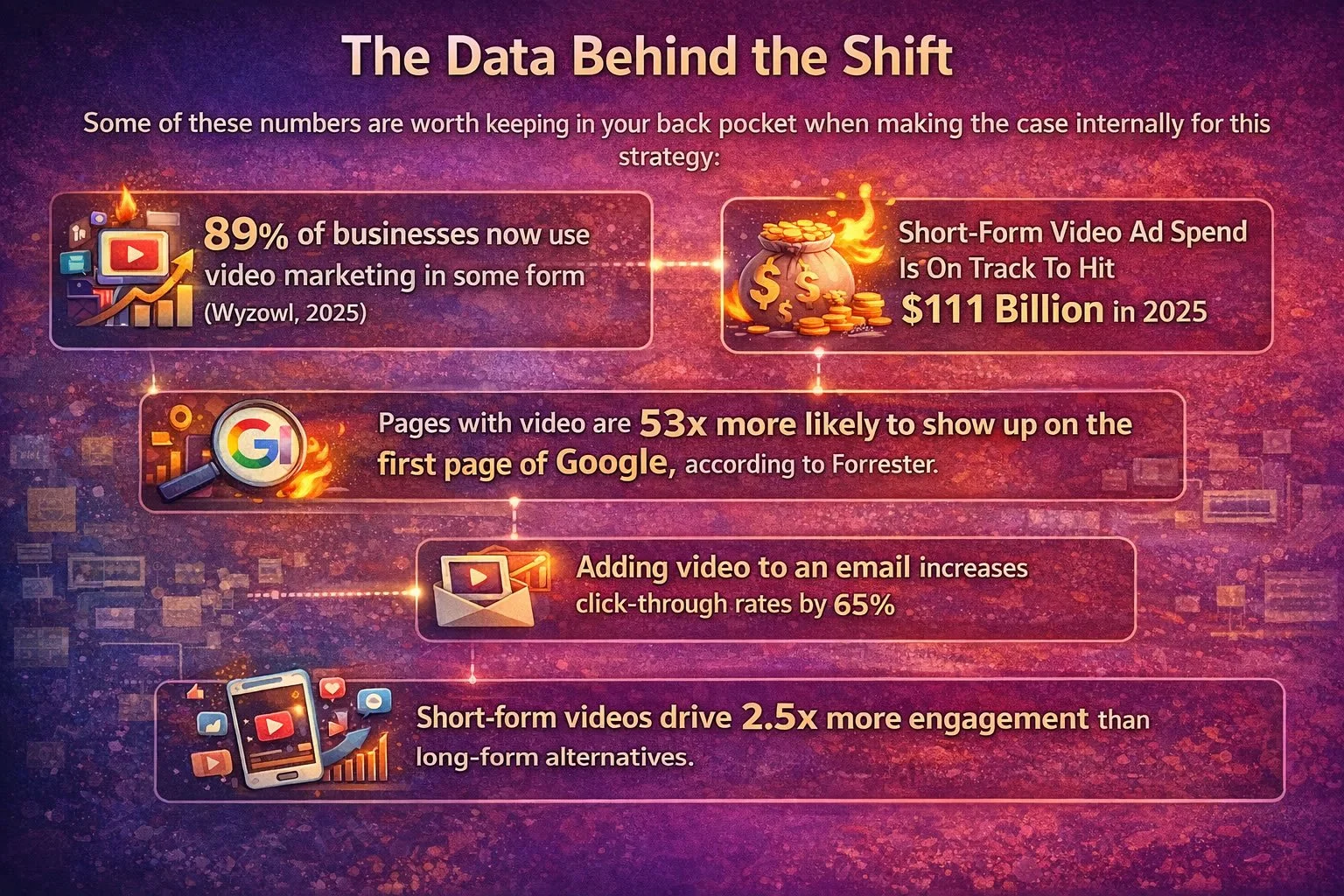
Some of these numbers are worth keeping in your back pocket when making the case internally for this strategy:
89% of businesses now use video marketing in some form (Wyzowl, 2025).
Short-form video ad spend is on track to hit $111 billion in 2025.
Pages with video are 53x more likely to show up on the first page of Google, according to Forrester.
Adding video to an email increases click-through rates by 65%.
Short-form videos drive 2.5x more engagement than long-form alternatives.
If competitors in your space are already adding short-form video for SEO and you are not, the rankings gap will be visible within a few months. This is not a future problem.
🙋♀️ Frequently Asked Questions: Local SEO for Small Business
Can short-form video actually move SEO rankings?
Yes, when it is set up correctly. A video embedded on a strong page increases dwell time, lowers bounce rate, and gives search engines more to work with through transcripts and metadata. The key is treating it like an SEO asset, not just a piece of social content. Done right, it supports your SEO content writing rather than sitting in isolation.
Does written content still matter if I'm investing in video?
Yes. Video and written content play different roles. Written content helps capture long-tail search traffic, provides text that search engines can crawl, and works well for people who prefer reading or scanning information. Video is often more effective for grabbing attention quickly, showing personality, and keeping viewers engaged. The strongest pages today use both together instead of relying on just one format.
How long should a short-form video be on a website page?
For pages on your website, 30 to 60 seconds hits the right balance. It is long enough to communicate something useful but short enough that most visitors will watch the whole thing. For social platforms where attention is even more compressed, under 15 seconds performs best. For service page explainers where you need more room, 90 seconds is still workable.
What should I be tracking to measure how this is performing?
Video completion rate, average time on page, scroll depth, bounce rate, and conversion rate on pages with video versus without. Track keyword ranking changes after you add a video to a page. Also, look at the split between mobile and desktop users since most short-form video traffic comes through mobile.
The B2the7 Final
Short-form video is not a platform trend with a shelf life. It has changed how people discover brands, how search engines rank content, and how pages are built. Both your SEO content writing and your website content strategy need to account for an audience that expects video as part of the experience.
Pull up your top five pages right now and ask yourself four questions:
• Does this page have a short-form video embedded near the top?
• Is there a transcript on the page that search engines can index?
• Is the video titled and tagged to match the keyword this page targets?
• Does the CTA on this page fit what a video viewer would want to do next?
If the answer to any of those is no, you have a gap worth closing. If you want a team that builds content strategy around what actually drives revenue, not just traffic, reach out to B2The7. Your Dedicated Growth Coordinator is ready to map it out with you.
Ready to build a content strategy that converts? Let’s connect and talk about your needs
📩 Get Weekly Trend Alerts in Your Inbox
Want these insights delivered straight to your inbox every week?
Sign up here to subscribe to the Trend Brief
Stay ahead of what’s moving in marketing, social, and tech.