
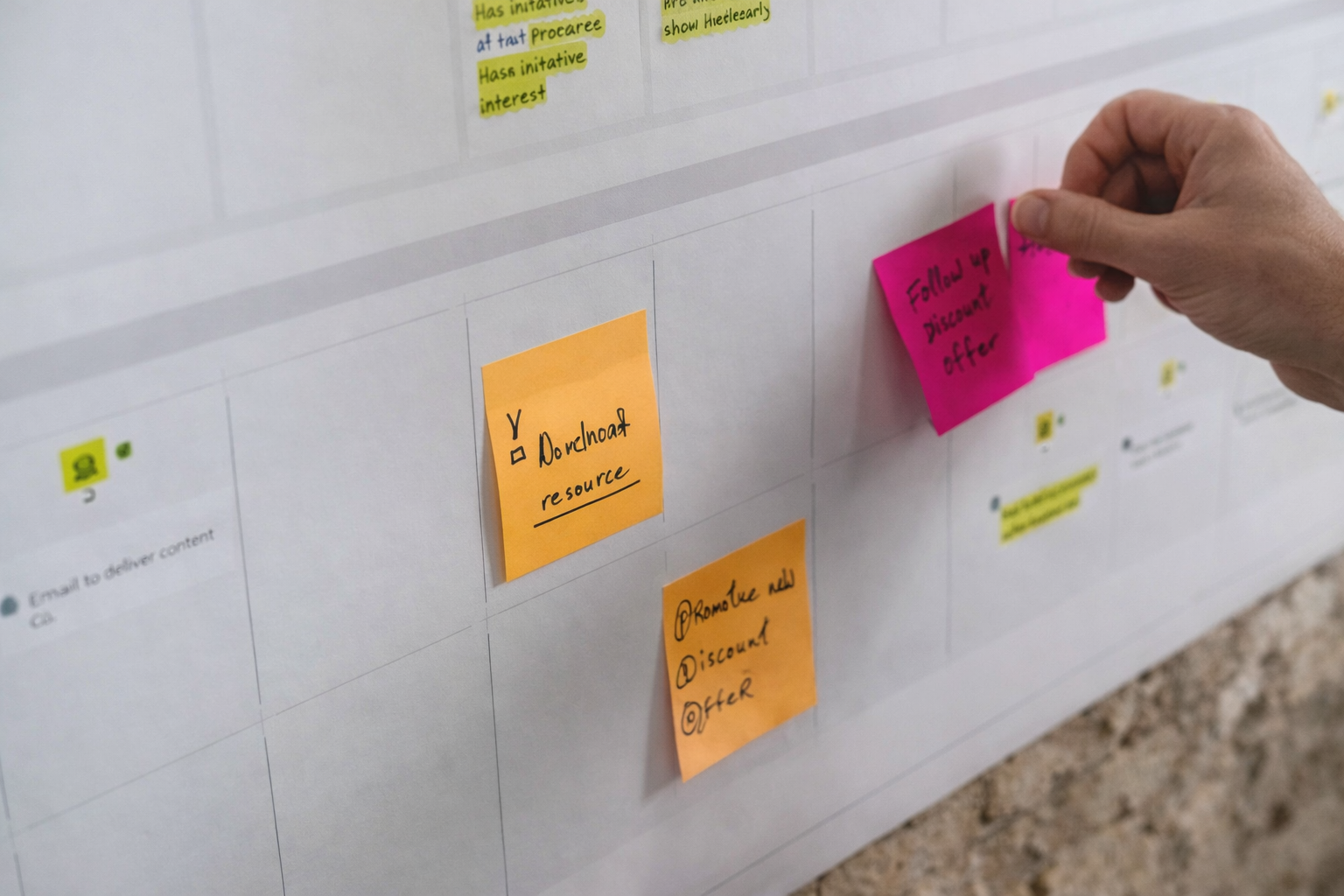
Lifecycle & Retention Marketing Services — B2The7 | Louisville, KY
Lifecycle and retention marketing is the practice of communicating with customers at each stage of their relationship with your brand — from new acquisition through active engagement to win-back — using personalized messaging that increases customer lifetime value and reduces churn. B2The7 builds automated lifecycle marketing systems for businesses that want to reach, retain, and regain customers through segmentation, behavioral triggers, and strategic incentives. Contact Bernie to start increasing your customer retention.
What You'll Learn in This Guide
- What lifecycle & retention marketing is and why it matters
- Where retention, data, and messaging intersect to drive long-term growth
- How to map the customer journey beyond the first conversion
- How brands turn engagement into loyalty and lifetime value
What Is Lifecycle & Retention Marketing?
Lifecycle & Retention Marketing focuses on how brands attract, engage, convert, retain, and re-activate customers over time — not just how they acquire them.
Instead of treating every interaction as a one-off campaign, lifecycle marketing looks at the entire customer journey: from first touch to repeat purchase, loyalty, and advocacy. Retention marketing zeroes in on keeping customers engaged, satisfied, and coming back — which is often where the highest ROI lives.
Learn how lifecycle thinking connects with Strategic Marketing Planning
See how lifecycle campaigns integrate with Omni-Channel Campaigns
Why Lifecycle & Retention Marketing Matters
Most brands spend heavily on acquisition — ads, content, promotions — but far less on what happens after the first conversion. That's where growth often stalls.
Lifecycle & retention marketing helps brands:
- ✓ Increase customer lifetime value (CLV)
- ✓ Reduce churn and drop-off
- ✓ Improve ROI on acquisition spend
- ✓ Build stronger, more durable customer relationships
- ✓ Create predictable, repeatable revenue
Why It's Especially Important for Brands Today
Customer behavior has changed. People move across devices, channels, and touchpoints quickly — and they expect brands to remember them, understand them, and respond accordingly.
Lifecycle & retention marketing is critical because:
- ▸ Customers expect personalization, not generic blasts
- ▸ Privacy changes make first-party data more valuable than ever
- ▸ AI-driven search and discovery reward brands with strong engagement signals
- ▸ Loyalty is built through experience, not just discounts
The Core Stages of Lifecycle Marketing
Lifecycle & retention marketing typically includes:
Awareness & First Touch
How new audiences discover your brand and what first impression you create.
Consideration & Engagement
How you educate, build trust, and move prospects toward action.
Conversion
How friction is removed at the moment of decision.
Onboarding & Early Experience
How you reinforce the decision and set expectations immediately after conversion.
Retention & Loyalty
How you stay relevant, useful, and valuable over time.
Re-Engagement & Win-Back
How you bring back inactive customers and rebuild momentum.
What Lifecycle & Retention Marketing Looks Like in Practice
Here are a few real-world examples of how brands apply lifecycle strategy effectively:
Personalized Email & Messaging Journeys
Instead of one-off emails, brands build sequences based on behavior — welcome flows, post-purchase follow-ups, replenishment reminders, and loyalty nudges.
Data-Driven Customer Segmentation
Customers are grouped by behavior, value, engagement level, or lifecycle stage — allowing messaging to feel timely and relevant.
Retention-Focused Content Strategy
Content isn't just for discovery. It supports onboarding, education, usage, and long-term value.
Cross-Channel Lifecycle Campaigns
Email, SMS, paid media, organic content, and on-site experiences work together — not in silos.
Churn Prevention & Win-Back Campaigns
Brands proactively identify drop-off signals and respond before customers disappear.
First-Party Data & Content Strategy
See how lifecycle campaigns are powered by First-Party Data Strategy. Explore Content Strategy & SEO as a lifecycle driver.
How B2The7 Approaches Lifecycle & Retention Marketing
At B2The7, lifecycle marketing starts with clarity — not tools.
Our approach typically includes:
- Mapping the full customer journey by channel and intent
- Designing campaigns that scale without feeling automated
- Identifying key moments that influence retention and churn
- Measuring success beyond opens and clicks — focusing on value and behavior
- Aligning messaging, content, and offers to lifecycle stages
Lifecycle Marketing, SEO & GEO (Generative Engine Optimization)
Lifecycle & retention marketing plays a growing role in how brands perform in AI-driven search and generative discovery.
Strong lifecycle programs:
Who Lifecycle & Retention Marketing Is Best For
Lifecycle & retention marketing is especially valuable for:
Ready to Turn One-Time Customers Into Long-Term Growth?
B2The7 builds automated lifecycle marketing systems for businesses that want to reach, retain, and regain customers. Contact Bernie to get started.
Contact Bernie to Get StartedReady to Build Retention Into Your Growth Strategy?
Lifecycle & retention marketing helps brands grow smarter — not louder. If you’re ready to turn customers into long-term relationships and predictable revenue, let’s talk.
Frequently Asked Questions About Lifecycle & Retention Marketing
-
Lifecycle marketing covers the entire customer journey, while retention marketing focuses specifically on keeping customers engaged and returning after conversion.
-
No. Smaller brands often benefit even more because retention improves efficiency and reduces reliance on constant acquisition spend.
-
Common channels include email, SMS, paid media, organic content, on-site experiences, CRM systems, and customer support touchpoints.
-
Some improvements (like engagement and repeat purchases) can happen quickly, while long-term retention gains compound over time.
-
Effective lifecycle marketing relies on ethical, transparent use of first-party data and clear value exchange with customers.
-
Absolutely. Paid media often performs better when paired with strong lifecycle and retention strategies that increase lifetime value.