
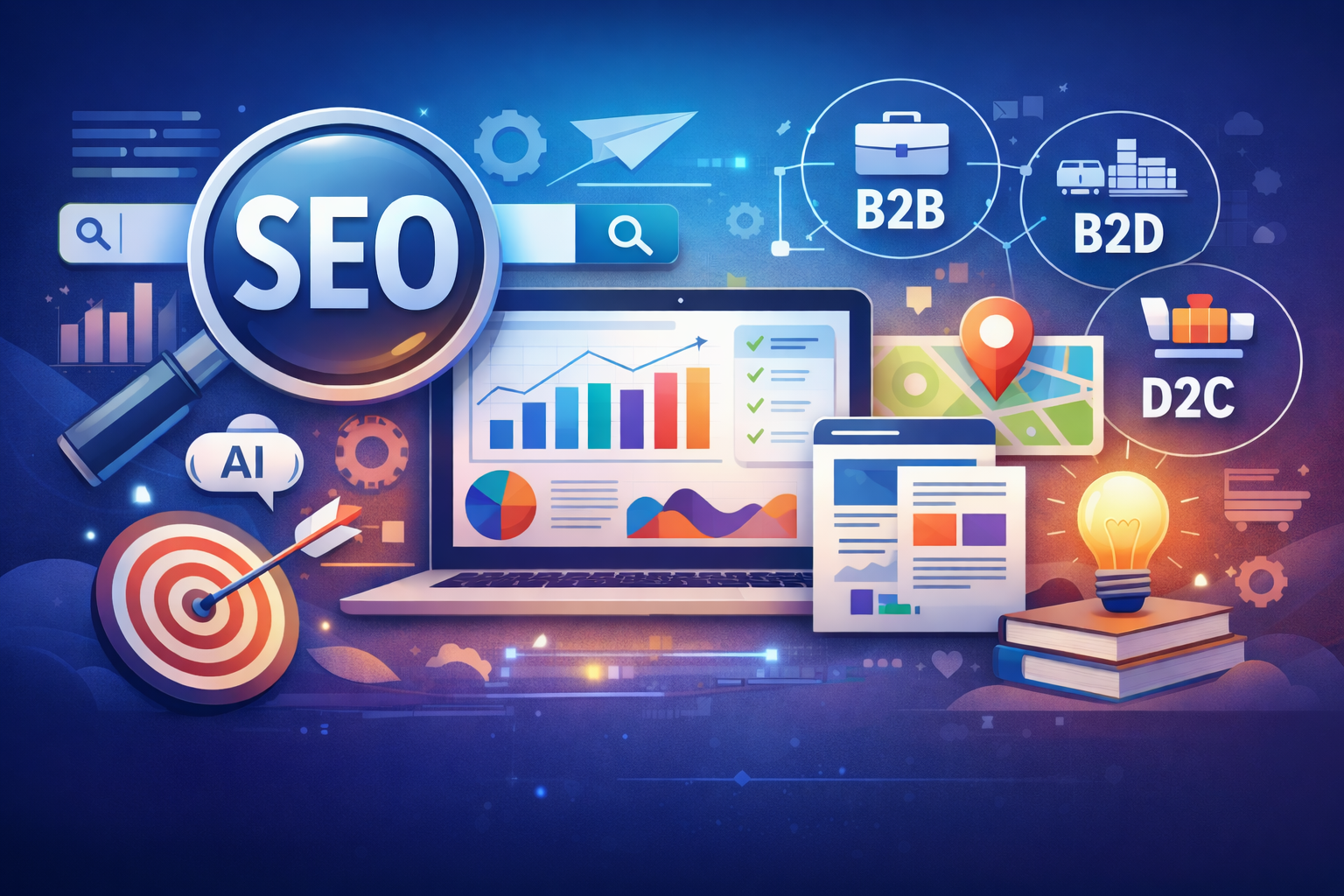
SEO Services for B2B, B2D & D2C Brands | B2The7
Search Engine Optimization (SEO) is the practice of improving your website's visibility in search results by aligning content, technical structure, and authority signals with how buyers actually research and decide. For B2B, B2D, and D2C brands, B2The7 provides intent-driven SEO — combining technical audits, keyword strategy, on-page optimization, and GEO integration — to drive qualified traffic, build authority, and support long-term growth.
What You'll Learn in This Guide
- How SEO supports B2B, B2D, and D2C buying journeys
- Real-world examples across different business models
- Why SEO remains critical as search becomes more AI-driven
- How SEO connects with GEO, content, and digital strategy
- What effective SEO looks like beyond keywords and rankings
What SEO Means for Modern Growth Brands
Search Engine Optimization (SEO) is the practice of making your brand discoverable when prospects are actively researching solutions, products, or partners.
For B2B, B2D, and D2C brands, SEO focuses on:
- ▸ Answering real questions buyers ask before they're ready to convert
- ▸ Supporting multi-touch decision journeys
- ▸ Building trust and authority over time
- ▸ Capturing demand that paid media often misses
Why SEO Matters Across B2B, B2D & D2C
Search behavior is still one of the strongest signals of intent — but intent looks different depending on the model.
B2B SEO
Buyers research deeply, compare vendors, and involve multiple stakeholders. SEO helps:
- Educate early-stage buyers
- Support long sales cycles
- Drive qualified inbound leads
- Reinforce expertise and credibility
B2D SEO
SEO supports both brand visibility and partner enablement by:
- Driving dealer discovery and location-based searches
- Supporting distributor education and onboarding
- Reinforcing brand consistency across regions
- Reducing reliance on paid channel co-op spend
D2C SEO
For D2C brands, SEO captures demand while building brand equity:
- High-intent product and category searches
- Content that answers pre-purchase questions
- Reduced dependency on paid acquisition
- Stronger lifetime value through trust and clarity
Why SEO Is a Strategic Advantage for Brands
SEO is one of the few channels that compounds over time.
For B2B, B2D, and D2C brands, strong SEO delivers:
Demand Capture Without Interruption
SEO continues working even when campaigns pause, budgets shift, or channels fluctuate.
Higher-Quality Traffic
Search traffic tends to convert better because users are actively looking — not being interrupted.
Brand Trust & Authority
Consistent search visibility builds credibility, especially in crowded or competitive categories.
Smarter Marketing Efficiency
SEO improves landing page performance, content effectiveness, and even paid media efficiency.
Core SEO Components That Matter Most
Technical SEO Foundations
Ensures your site is fast, secure, mobile-friendly, and accessible — critical for both users and search engines.
Intent-Driven On-Page Optimization
Aligning page structure, messaging, and copy to how buyers actually search and evaluate options.
Content & Topic Authority
Building depth through Content Development and Thought Leadership & Article Creation, not isolated blog posts.
Local & Geographic Optimization
Essential for B2D and regional B2B brands — supporting dealer searches, service areas, and proximity-based intent.
Measurement & Continuous Optimization
Tracking performance across traffic quality, engagement, conversions, and pipeline impact.
SEO Use Cases by Business Model
A professional services firm builds SEO content around common buyer questions and comparison searches.
Result: Higher-quality inbound leads and shorter sales cycles.
A manufacturer optimizes dealer locator pages and regional content.
Result: Improved dealer traffic, stronger partner relationships, and reduced paid spend.
A product brand refreshes category and product pages around search intent.
Result: Increased organic revenue and improved conversion rates.
SEO and GEO: Built to Work Together
SEO and Generative Engine Optimization (GEO) are not separate strategies — they're complementary.
Strong SEO ensures:
- Your content is trusted and structured correctly
- Your brand is referenced in AI-generated answers
- Your expertise shows up across conversational search
Without SEO, GEO lacks credibility. Without GEO, SEO misses emerging discovery channels.
How SEO Fits Into Your Digital Ecosystem
SEO performs best when integrated with:
- Digital Strategy & Planning for prioritization and focus
- Content Development for scalable relevance
- Website Copy & Content Refresh for clarity and conversion
- Thought Leadership & Article Creation for authority
- Generative Engine Optimization (GEO) for AI-driven visibility
Ready to Turn Search Into a Growth Engine?
B2The7 provides intent-driven SEO for B2B, B2D, and D2C brands. Contact Bernie to get started.
Contact Bernie to Get StartedHow B2The7 Approaches SEO
At B2The7, SEO is built around how your buyers actually search, not how algorithms change.
We focus on:
Intent-driven SEO for B2B, B2D, and D2C models
Content that supports real decision journeys
SEO foundations that power GEO and AI visibility
Measurement tied to pipeline, revenue, and growth
When SEO is aligned with business strategy, it becomes a long-term competitive advantage.
Search Engine Optimization FAQs
-
The foundation of SEO is the same, but the way it’s applied changes based on how people buy. B2B SEO supports longer research cycles, multiple stakeholders, and trust-building before a sales conversation ever starts. B2D SEO focuses on dealer discovery, regional visibility, and consistency between brand and partner pages. D2C SEO is more conversion-driven, capturing high-intent product and category searches while reducing reliance on paid acquisition. The strategy should reflect how your customers research and decide — not just what keywords they search.
-
Yes, and in many ways it’s more important than ever. AI-generated answers rely on trusted, well-structured content as their source material. Brands with strong SEO foundations are more likely to be cited, summarized, and surfaced in AI search experiences. Without SEO, your content may exist — but it won’t be trusted or referenced by search engines or generative tools.
-
SEO is a compounding investment, not a quick switch. Some improvements, like technical fixes or on-page optimization, can create early momentum. More meaningful gains — especially from content and authority — typically build over several months. The longer SEO is maintained and refined, the more efficient and predictable it becomes as a growth channel.
-
No. In fact, many of the biggest SEO wins come from non-blog pages. Service pages, solution pages, product categories, dealer locators, and refreshed website copy often drive more qualified traffic than blog posts alone. Blog content supports SEO, but it works best when it’s part of a broader site and content strategy.
-
SEO and paid media perform best when they support each other. SEO captures demand consistently over time, while paid media accelerates visibility and testing. Strong SEO often improves paid performance by increasing landing page relevance and engagement. Over time, SEO helps reduce dependency on paid spend without sacrificing growth.