The Ultimate Guide to Social Media Marketing for Businesses in 2026
Social media marketing for business has changed dramatically — and most companies are still using a 2022 playbook in a 2026 landscape. With 5.66 billion active social media users worldwide, TikTok, Instagram, and YouTube now accounting for over 60% of all product discovery, and U.S. social commerce projected to exceed $100 billion this year, the opportunity is real — but so is the complexity. In this comprehensive guide, Bernie Fussenegger of B2The7 shares the actual playbook built from 25+ years of digital marketing experience: how to pick the right platforms without spreading yourself thin, what content formats are driving results right now, how to measure ROI beyond vanity metrics, and how to build a social strategy that generates revenue rather than just impressions.
Let me be straight with you. Social media marketing for business looks nothing like it did five years ago. Two years ago, even. The rules shifted, the platforms changed, and now AI is sitting right in the middle of how your customers search, discover, and decide to spend money. I have been doing this for 25 years. I have seen plenty of big swings in this industry. What is happening right now is one of the biggest.
Consider the numbers for a second. There are 5.66 billion active social media users worldwide. TikTok, Instagram, and YouTube account for over 60 percent of all product discovery, which means they have passed Google as the starting point for how people find what they want to buy. U.S. social commerce is expected to crack $100 billion this year. And still, most businesses are posting without a plan, chasing the wrong metrics, and scratching their heads over why it isn't producing revenue.
This guide is my attempt to cut through that. You will get the actual playbook, not the trend-chasing fluff that fills most marketing blogs. Whether you run a small business, lead a team, or are starting from zero, this is what you need to know about social media marketing in 2026.
What You’ll Learn from This Article
How to pick the right social platforms for your audience without spreading yourself too thin
What a real social media content strategy looks like in 2026 and how to build one that produces results
When to rely on organic social and when to use paid becomes non-negotiable
Which content formats are getting the best returns on each major platform right now
How social commerce has reshaped the buying journey and what your business needs to do about it
Which metrics actually connect to revenue, and which ones to stop caring about
Why social platforms are now functioning as search engines and what that means for your content
The mistakes I see businesses repeat constantly, and how to stop making them
Is Social Media Marketing Still Worth It? Yes. Here is Why.
I get some version of this question a lot. My answer is the same every time, and it has been for 25 years. Platforms come and go. Algorithms shift. What does not change is why social media works in the first place: people want to connect, discover things, and share what matters to them. That drive is not going anywhere.
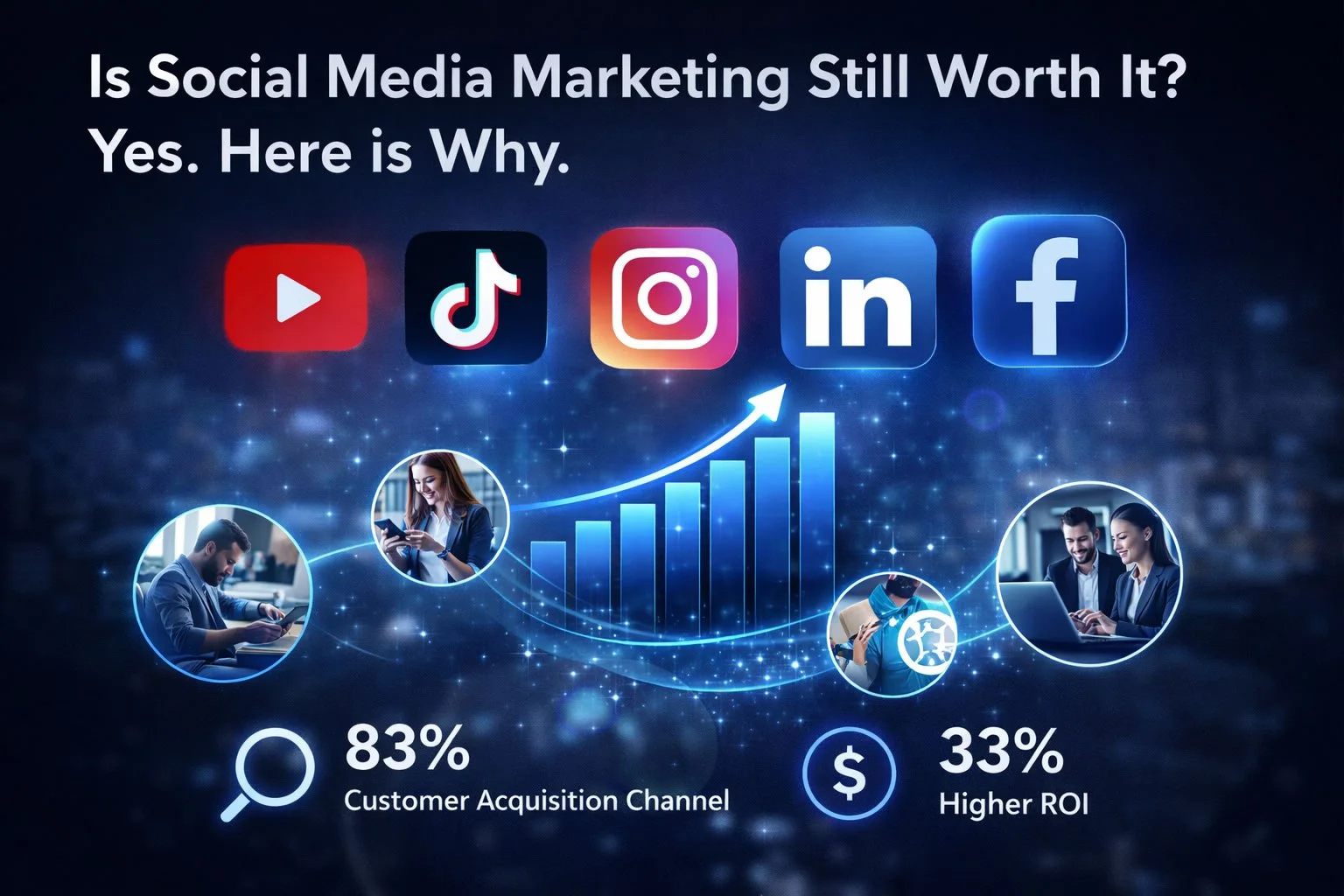
The data is hard to argue with. According to Sprinklr, 83 percent of marketers say social media is now their main customer acquisition channel. Brands that allocate more than 20 percent of their marketing budget to social see a 33 percent higher ROI than those that don't. And 58 percent of consumers say they find new businesses through social media, which puts it ahead of both TV and traditional search for brand discovery.
That last number is the one worth sitting with. For most businesses today, social media is the number one way new customers find them. Not Google. Not a billboard. Social.
Your Customers Are Searching on Social Now
Here is a shift I have watched build over the last couple of years that most businesses still have not adjusted to. People are not just scrolling social media. They are searching for it. Adobe found that 41 percent of U.S. consumers have used TikTok as a search engine. That number jumps significantly for people under 30. Instagram, YouTube, and LinkedIn are all seeing the same thing.
Google started indexing public Instagram posts and LinkedIn content in 2025. That means your social captions are now showing up in Google search results. This is where social media SEO stops being optional. If you are not putting real keywords into your captions, video titles, profile bios, and descriptions, you are invisible in search on two fronts at once.
A simple mental shift that works: before you write any piece of social content, ask yourself what your ideal customer would type into a search bar to find it. Write your caption around that phrase. It does not need to sound forced. It just needs to be there.
Choosing the Right Social Media Platforms for Your Business
One of the most expensive decisions I see businesses make is trying to be active on every platform. I get the thinking behind it. More platforms mean more eyes, more reach, more chances. In practice, it means doing nothing well anywhere. You end up with a thin, stale presence on six platforms instead of a strong one on two.
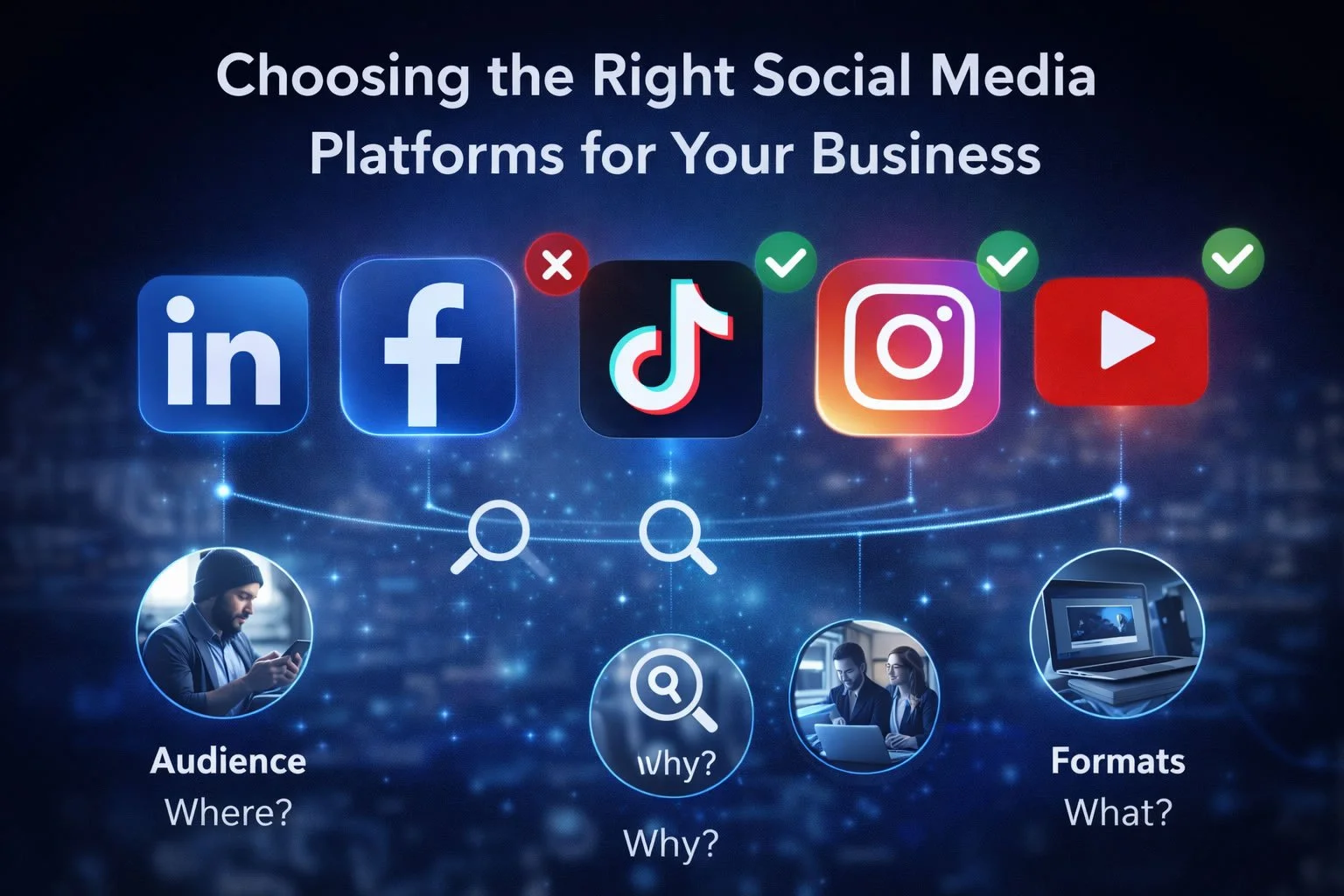
Pick your platforms based on your audience, not popularity (this is so important and will be different for every brand). Before you choose anything, answer three questions about your ideal customer. Where do they actually spend time online? What mindset are they in when they are there? And does your content format match what performs on that platform? If you cannot answer all three clearly, any platform choice is a guess.
Here is where the major platforms stand right now:
Facebook (3.07 billion MAU): Organic reach for brand pages is somewhere between low and negligible. If Facebook is in your plan, build it around paid. Targeting remains one of the best ways to reach specific demographics.
Instagram (3 billion MAU): Reels are still giving the best organic reach on the platform. Stories keep your brand in front of existing followers daily. 500 million people watch Instagram Stories every day. If you sell something visual, Instagram belongs in your mix.
TikTok (1.6 billion+ MAU): The highest engagement rate of any major platform at 3.70 percent, up 49 percent year over year. Users average 55-plus minutes a day. Nearly half have bought something directly in the app. This is not a platform to write off.
YouTube (2.9 billion MAU): The second-largest search engine in the world and badly underused by most businesses. A solid how-to video here keeps generating leads for years. Feed-based content dies in 48 hours—YouTube content compounds.
LinkedIn (1 billion members): 85 percent of B2B marketers name it their top-performing channel. Video is still early enough on the platform that posting now gives you a real head start. Users who post videos are seeing 3x follower growth.
Pinterest: The most overlooked platform for product businesses with longer purchase cycles. Pinterest users are actively planning purchases, which means their intent is higher than on almost any other feed.
Building a Social Media Content Strategy That Converts
Walk into most businesses and ask to see their social media strategy. What they hand you is a content calendar. That is not a strategy. A content calendar tells you what gets posted and when. A strategy tells you why, who it is for, and what it is supposed to produce.
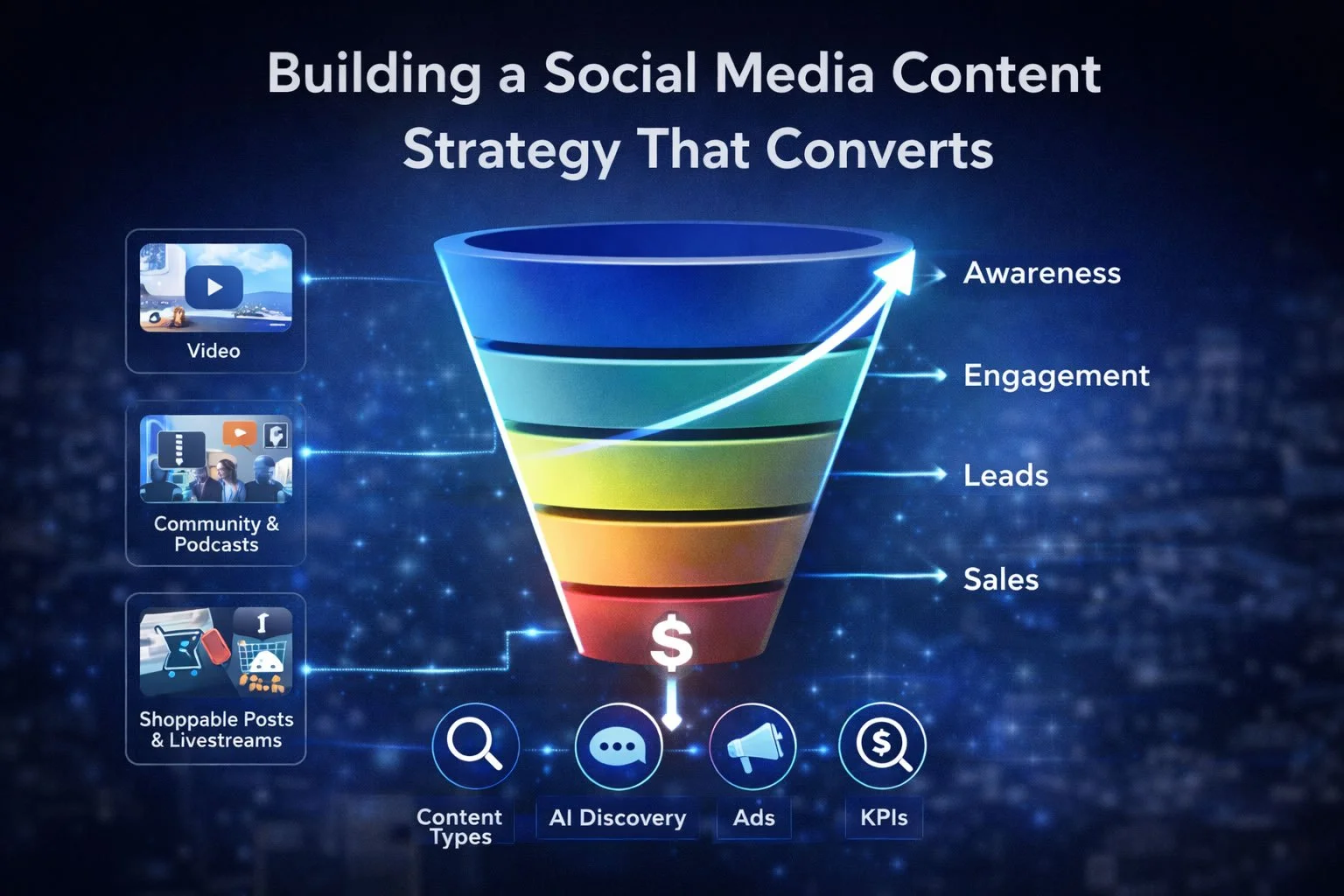
Start with your business objective, then build your content backwards from it. Every post should connect to one of five goals: brand awareness, lead generation, sales, customer retention, or establishing authority. The problem I see constantly is content trying to do all five at once. That content ends up doing none of them.
Start With Content Pillars
Content pillars are the three to five recurring themes that give your social presence direction and your audience a reason to keep following you.
Here is what I typically recommend:
Education: teach people something genuinely useful that connects to what you sell
Here's how to share your journey and celebrate your impact!
Start by showcasing your proof—highlight results, client success stories, and inspiring transformations that show case your commitment to excellence.
Let your audience peek behind the curtain! Share the authentic side of your business, introducing the wonderful people behind the scenes and the dedication that drives your work.
When promoting yourself, keep it balanced—reserve about 20% for direct offers and calls to action
Engage with your community by inviting conversation through questions, polls, and thoughtful responses to comments
Don't forget to enhance your captions with keywords! With search engines indexing social content, lead with your main keyword upfront. Clearly describe the content, and use text overlays and carousel covers to highlight the topic—clarity is key!
The brands showing up consistently in social search right now are the ones thinking about their content as a cluster. Each post supports a core topic. Each caption answers a real question someone is searching for. This helps you rank in Google, get cited by AI search engines, and give the platform algorithm something useful to work with—three wins from one habit.
Organic vs. Paid Social: What to Use and When
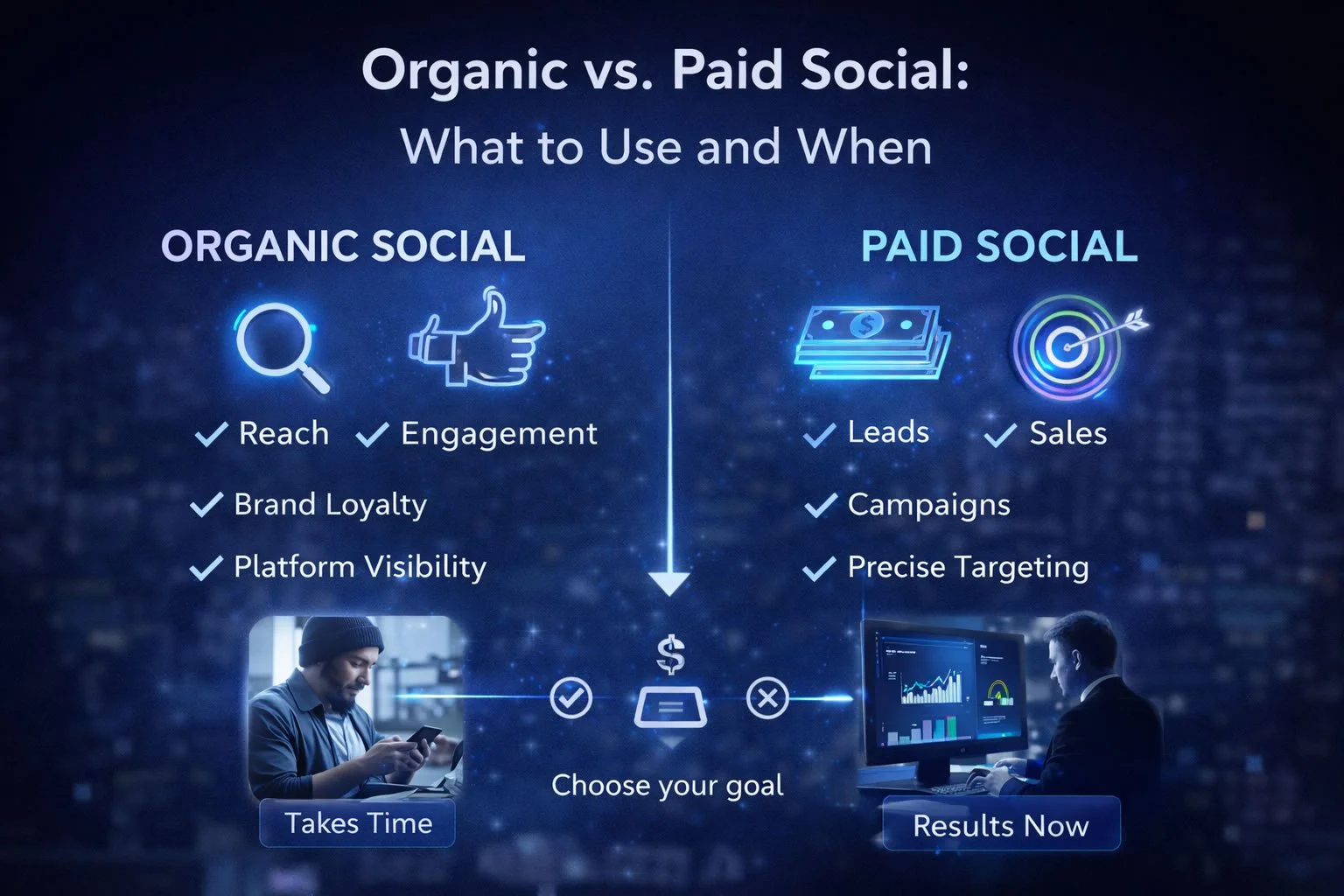
These are not competing approaches. Every business I have worked with that gets strong returns from social is running both. Those treating them as an either-or choice are leaving money on the table.
Organic builds the foundation. It is where your brand voice develops, where you earn trust over time, and where you find out what actually resonates before you spend budget on it. A quick note on that last point: if something isn't working without paid promotion, putting money into it rarely saves it. You end up spending to amplify a flop.
Paid is what scales results. It gets you in front of audiences you cannot reach organically, amplifies content that is already performing, and offers targeting precision that nothing else in marketing can touch. Global social ad spend has crossed $219 billion in 2026. That does not happen unless it works.
Our approach works because it's practical and repeatable. It starts with building your audience the right way, creating content that connects, and paying attention to what actually resonates. Once you see what's working, put paid support behind it to extend your reach and attract new customers. And don't forget about the people who've already shown interest. Retargeting keeps you in front of warm prospects who need another touchpoint.
As a rule of thumb, you'll need about $1,500–$3,000 per month to test on a single platform and gather meaningful insights if you're running campaigns across multiple platforms and want enough data to truly optimize performance, plan on investing $10,000 or more per month. Of course, the size of the brand and budget will be different for every brand.
Content Formats Getting the Best Results Right Now
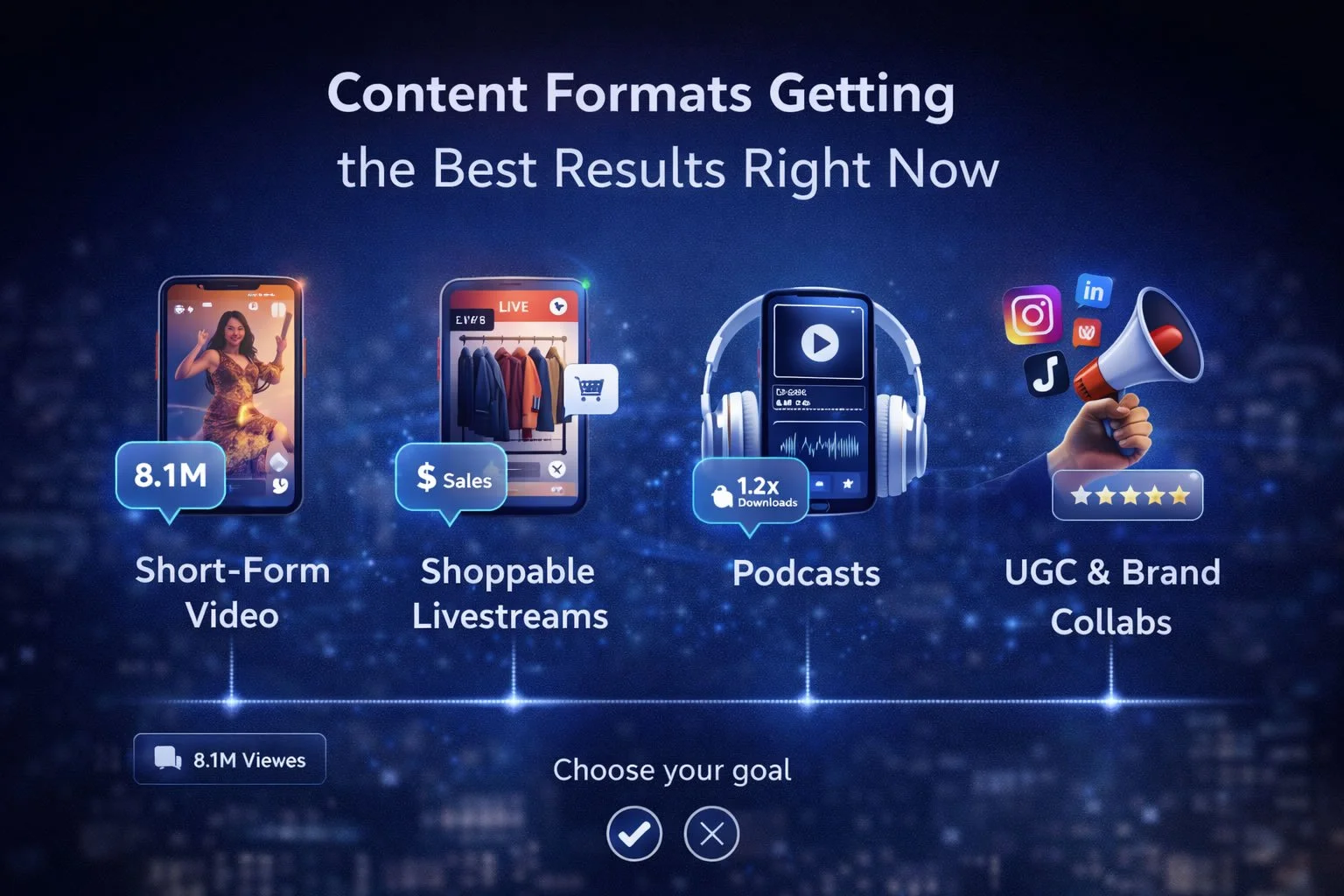
Short-form video is the format to be in. 139 million Instagram Reels get watched every minute. Short-form video is producing the highest ROI of any video type at 41 percent. TikTok's engagement rate jumped 49 percent last year. If you are building a social presence in 2026 and not making videos, you are fighting the fight with half your tools put away.
That said, video is not a blanket solution. What works varies by platform:
Instagram: Reels help you get discovered. Stories keep you relevant. Carousels are where you win saves and shares. If you want the algorithm to work in your favor, give people something useful enough to come back to. Saves matter.
TikTok: You have about two seconds. If it doesn't hit immediately, it's over. Keep it natural. Skip the polish. And write captions the way you'd write a headline for search, clear words people are actually typing in. TikTok isn't just entertainment anymore. People are using it to find things.
LinkedIn: Real-world perspective beats promotional fluff every time. Posts rooted in experience perform better than company announcements. Video is still early on LinkedIn, which means there's an opportunity. Add captions, lead with a strong first sentence, and make it easy for someone to lean in.
Facebook: Video earns 5x more engagement than image posts. Groups are among the most underused organic channels for local and niche businesses. If you have a community angle, Facebook Groups are worth revisiting.
YouTube: Long-form how-to content built around real questions your customers ask. A well-made video here can generate qualified leads for 2 or 3 years. Nothing on a feed-based platform does that.
Social Commerce: Your Customers Are Ready to Buy on Social
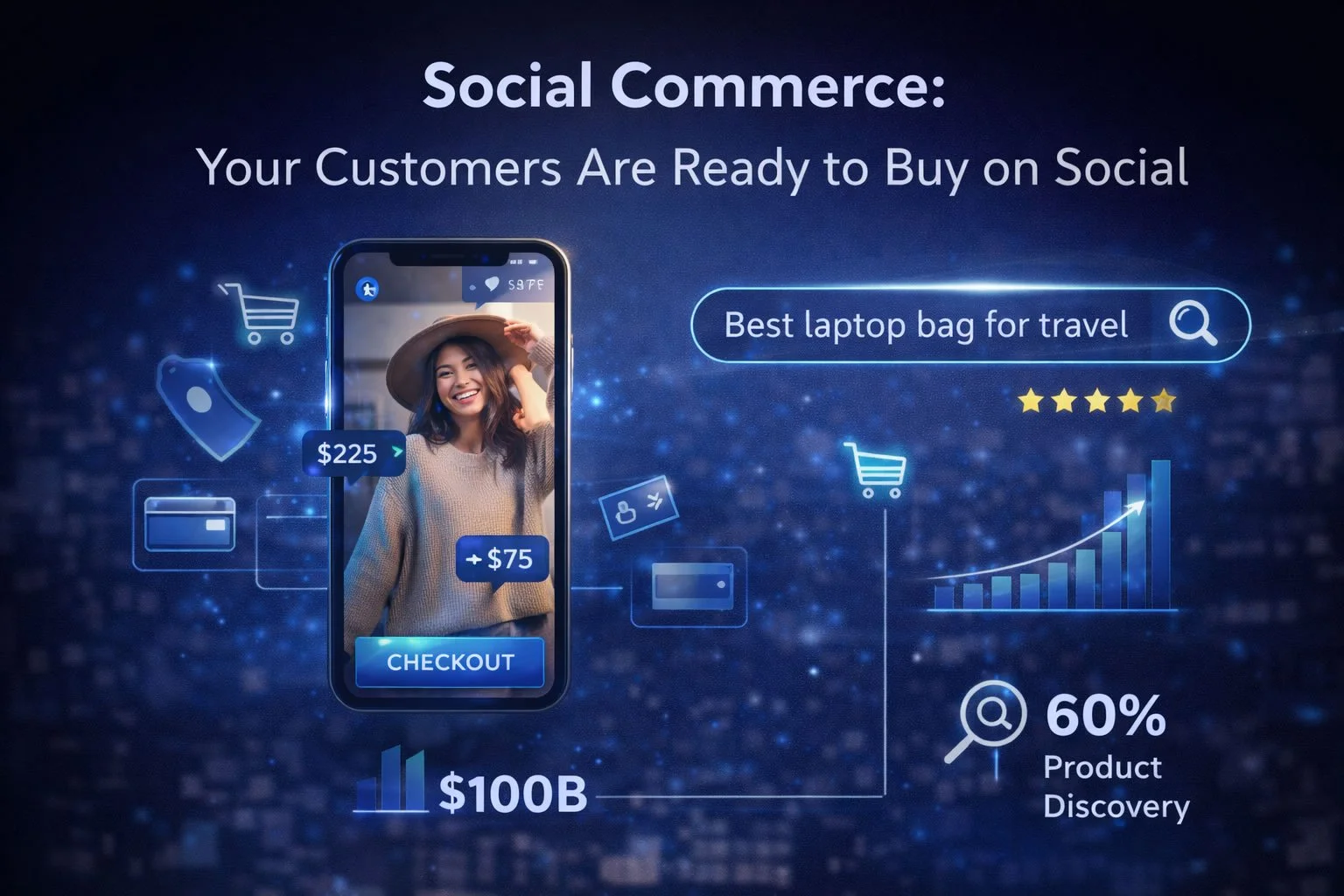
Social commerce is not emerging anymore. It arrived. U.S. social commerce is on track to pass $100 billion this year. Globally, the number sits at $908 billion. 78% of shoppers research social media before buying. One in seven global shoppers says social media will be their primary shopping channel within five years. If your social strategy has no path to purchase built in, you are driving people to a dead end.
What a real social commerce engine looks like…
Every relevant post includes product tags. Your link-in-bio isn't a dead end; it's a storefront hub that guides people where you want them to go. Your feed shows products in action, used by real customers in real situations. And you consistently share user-generated content.
That last piece is the one most brands underestimate. People trust other customers more than polished brand creative. And it shows up in the numbers. Customers who interact with a brand on social spend 35–40% more than those who don't.
UGC isn't filler content. It drives revenue.
Spending on influencer partnerships is projected to surpass digital display advertising in 2026. And it's not just hype, 94 percent of organizations say influencer campaigns outperform traditional ads.
Many brands often focus on follower counts, but having a large audience doesn't guarantee genuine influence or success. Interestingly, creators with 10,000 to 100,000 followers frequently foster deeper engagement, cultivate closer-knit communities, and achieve impressive conversion rates, all because their audiences truly trust them. Plus, collaborating with these creators is usually much more affordable than celebrity partnerships, making them a smart and impactful choice for businesses looking to maximize their investment and reach.
Measuring Social Media ROI Without Getting Lost in Vanity Metrics
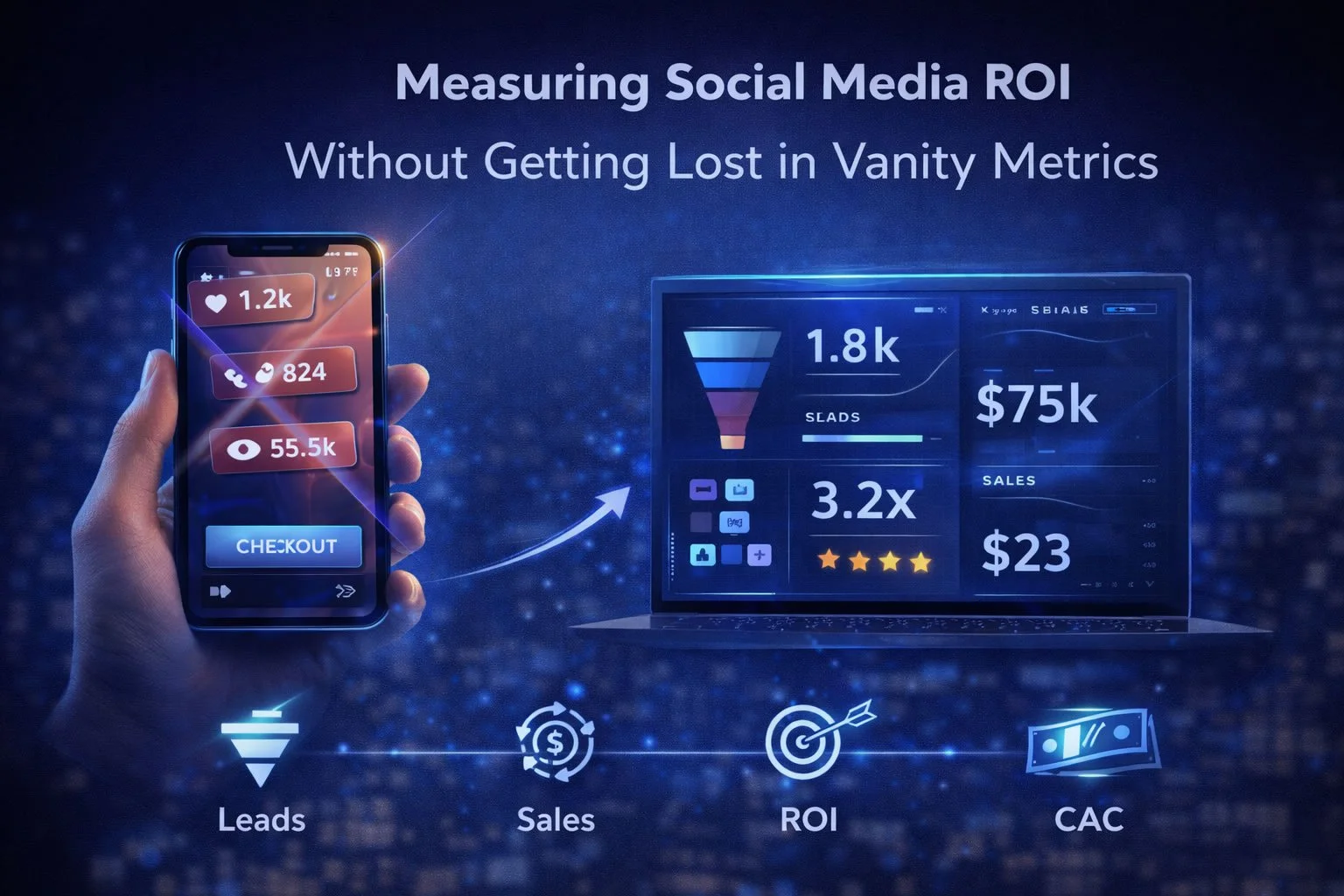
I have sat in more than a few meetings where someone leads with how much the follower count grew last month. Then the CFO asks what it did for revenue. Most of the time, there is no good answer. That is a measurement problem, not a social media problem.
Likes, reach, and follower numbers tell you almost nothing useful about business performance. LinkedIn has already shifted its algorithm to prioritize dwell time over likes. The platforms are moving away from vanity metrics. Your reporting should too.
Three Tiers of Metrics That Matter
To understand the real impact of social media, look at it in three layers. First are business outcomes: revenue tied to social, leads generated, and pipeline influenced. Second is conversion behavior, including click-through rates, landing page actions, and email signups. Third is engagement quality, saves, shares, thoughtful comments, and video watch time. Those signals tell you far more about future growth than likes ever will.
Many businesses struggle with effective attribution
Using UTM parameters on every social link is essential, and you should set conversion goals in GA4 or your CRM before launching any campaign. It's also crucial to move beyond last-click attribution, as it can overlook the customer's journey across multiple platforms. This approach will help us truly appreciate the value of social media in our marketing strategies!
QUICK ROI FORMULA
Social Media ROI = ((Revenue Influenced by Social minus Total Social Investment) divided by Total Social Investment) x 100. Your investment needs to include ad spend, content creation costs, team time, and tools. Only counting ad spend makes your ROI look great until someone asks how you calculated it. A 5:1 revenue-to-cost ratio is a solid benchmark to aim for.
Mistakes I See Businesses Make on Social Media Every Single Year
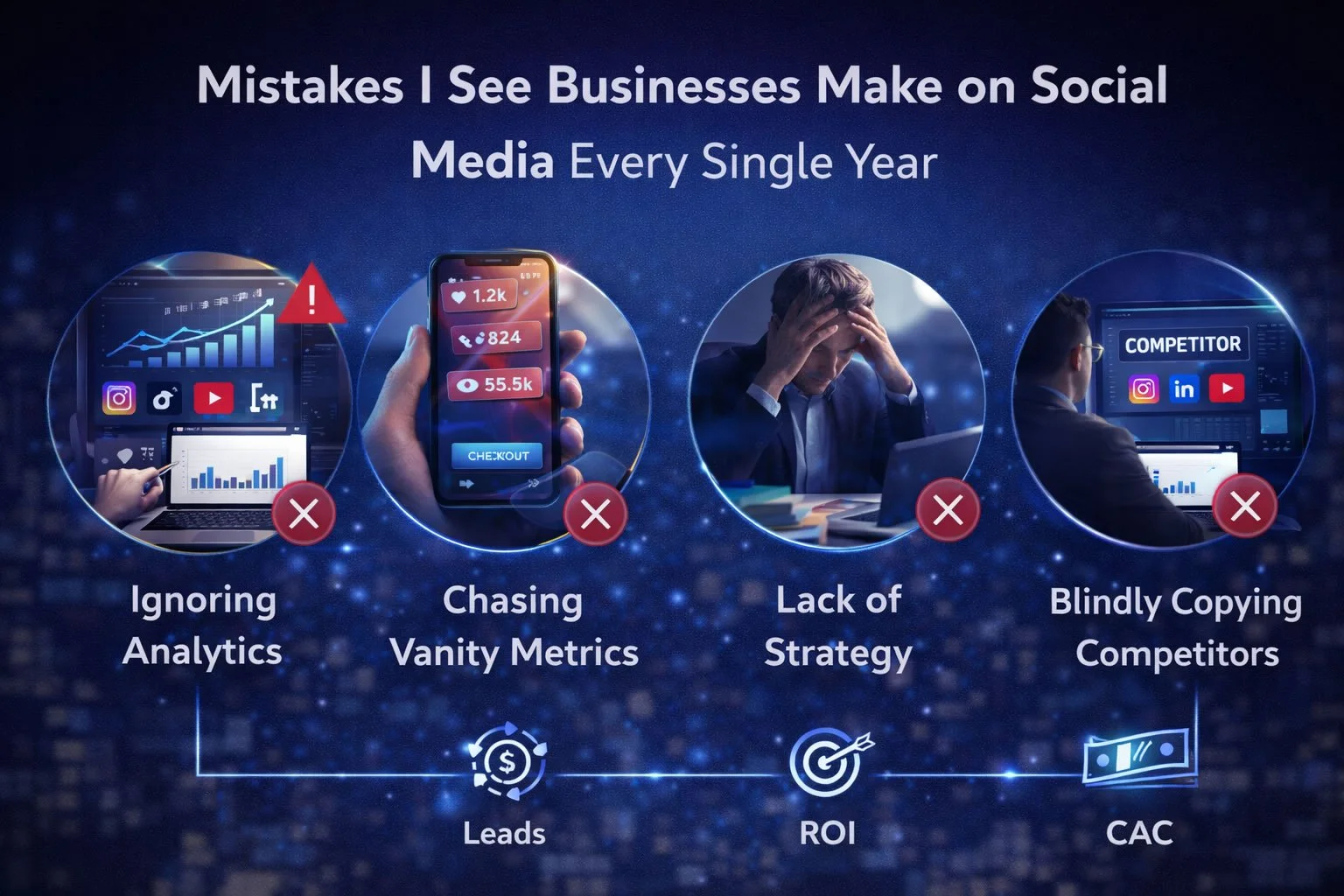
None of these is new. I have watched businesses walk into the same walls for 25 years across every industry and every size. If you see yourself in any of them, that is the most useful part of this guide.
Posting without a goal. A content calendar is not a strategy. Every post needs a reason to exist beyond filling a slot in a scheduler.
Running the same content on every platform. Copy-pasting the same post everywhere tells your audience that nobody thought about them specifically. It also ignores how differently each algorithm works.
Tracking vanity metrics. A screenshot of 10,000 new followers is a great Instagram post. It is a terrible business result unless those followers are becoming customers.
Disappearing. Going quiet for weeks at a time destroys both algorithmic standing and audience trust. Post less if you have to, but post consistently.
Not responding. 73 percent of consumers say they will leave a brand for a competitor if they do not respond on social. Social is a conversation. Brands that broadcast without engaging are leaving customers on the table.
No next step. Social drives attention. Attention needs somewhere to go. Click the link, book the call, download the guide, shop the product. Without a clear next step, social is just entertainment.
🙋♀️ Frequently Asked Questions
Is social media marketing for business still worth it in 2026?
Yes. Social media is now one of the top customer acquisition channels for businesses. Platforms like Instagram, TikTok, YouTube, and LinkedIn are functioning as search engines and discovery platforms. When treated as a revenue channel with clear goals and measurement, social media marketing consistently drives qualified leads and sales.
Which social media platforms are best for business growth?
The right social media platforms for business depend on your audience and objectives. Instagram and TikTok dominate product discovery. YouTube drives long-term search visibility. LinkedIn remains the strongest platform for B2B social media marketing. Facebook is still powerful for paid targeting and community groups. The best strategy is to focus on two or three platforms and do them well.
How do you measure social media ROI?
Social media ROI should be tied to revenue, leads, and conversion performance —not likes or follower counts—by tracking revenue influenced by social, cost per lead, conversion rate, and pipeline contribution. Use UTM tracking and multi-touch attribution to understand how social supports the full buying journey.
What is the difference between organic social and paid social?
Organic social builds credibility the right way. It takes time, but it earns trust, sharpens your voice, and attracts people who genuinely want to hear from you, while paid social serves a different purpose by expanding your reach, introducing you to new audiences, and fueling content that's already gaining traction. The strongest strategies don't treat these as separate lanes; they use insights from organic performance to refine messaging and then apply paid support to scale what's working and extend that impact.
What type of content performs best on social media in 2026?
Short-form videos currently offer some of the best returns on investment (ROI), but results vary by platform. Instagram Reels and TikTok are effective tools for discovery, while YouTube excels at building depth and long-term authority. LinkedIn, on the other hand, tends to reward practical insights from real experience.
Across all platforms, a consistent trend emerges: content that educates, addresses genuine customer questions, or showcases clear expertise tends to perform better than mere promotional messages.
What Wins on Social Media in 2026
I have watched businesses with 3,000 followers build six-figure pipelines from social every quarter. I have watched businesses with 300,000 followers produce almost nothing. The budget is never the difference. The follower count is not the difference. Strategy is always the difference.
In 2026, social media is a revenue channel. The businesses treating it like one are winning. The ones still treating it like a PR exercise are confused about why it is not working.
Know your audience. Pick two or three platforms and do them well. Build content that solves real problems or creates real interest. Optimize your captions for search. Run organic and paid together. Track what connects to revenue. Keep showing up.
That is the whole thing. It does not require a big budget. It requires a clear plan and the consistency to follow it.
READY TO BUILD A SOCIAL STRATEGY THAT DRIVES ACTUAL REVENUE?
I have spent 25 years helping businesses figure out what actually works on social media and what is just noise. If you want an honest look at where your strategy stands right now and a clear path forward, let's talk. Book a complimentary strategy session at b2the7.com
📩 Get Weekly Trend Alerts in Your Inbox
Want these insights delivered straight to your inbox every week?
Sign up here to subscribe to the Trend Brief
Stay ahead of what’s moving in marketing, social, and tech.