SEO Is Not Dead. It is no longer just the first touchpoint.
SEO is not dying — it's expanding. While AI tools like ChatGPT, Google AI Overviews, and Perplexity are changing how people find information, the core of what makes content rank hasn't disappeared: relevance, structure, authority, and genuine value still drive visibility whether in traditional search results or AI-generated answers. In this post, Bernie Fussenegger of B2The7 explains the relationship between traditional SEO, Answer Engine Optimization (AEO), and Generative Engine Optimization (GEO) — why they work together rather than replacing each other, and why the brands that understand this layered approach are building sustainable visibility advantages that traffic-chasing tactics can't replicate.
After leading performance marketing across hundreds of healthcare locations and building search strategies through B2The7, I have seen enough platform shifts to know this is not the end of SEO. It has just moved.
Traffic is changing because search engines now answer questions directly on the results page with summaries, snippets, and discussion threads. People often get what they need without having to click through.
This changes how you need to think about SEO; getting found still matters. You need to show up earlier in the search journey.
What You’ll Learn from This Article
Why organic traffic is changing
How zero-click results affect perception and trust
The gap between rankings and real influence
What generative search optimization means
Which metrics matter past traffic numbers
How to structure content for current search behavior
Search Has Shifted From Links to Answers
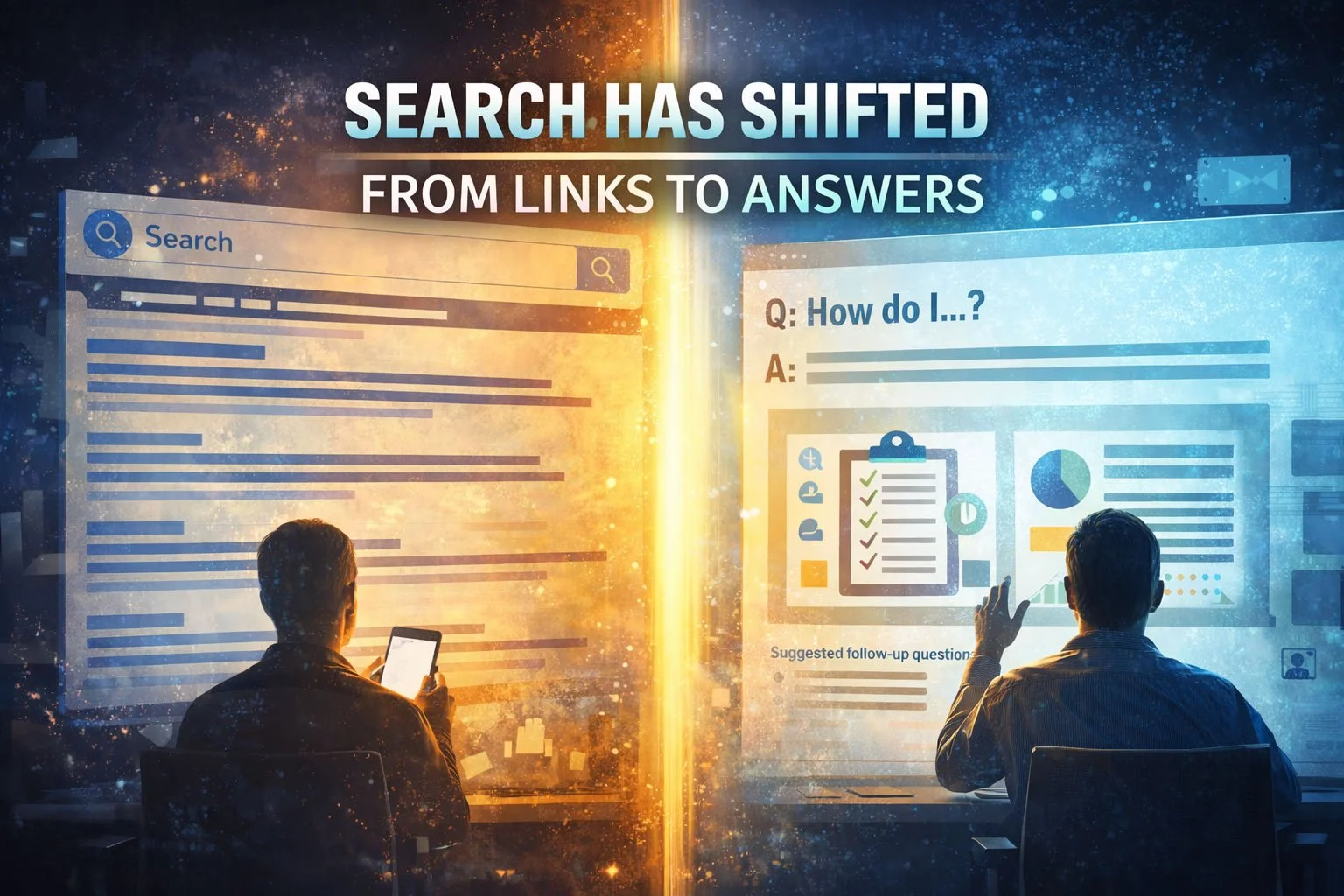
For years, search worked in a fairly simple way. Someone typed a question, scanned a page of links, and clicked one. Most SEO strategies were built around winning that click and driving the visit.
That is no longer the full picture.
Today, the results page is layered. You see instant summaries, featured snippets, comparison tables, People Also Ask sections, local listings, and community discussions all competing for attention. In many cases, a user can get what they need without ever leaving the results page.
Research continues to show that a large percentage of searches end without a click. That does not mean your brand is absent. It means the decision-making process often starts and sometimes finishes right there on the search results page.
If your content is being referenced, summarized, or pulled into those features, you are influencing the outcome even if the visit is not recorded in your analytics.
Most dashboards track traffic. Very few track the role your content plays in shaping the decision before the click.
AI Did Not Replace SEO. It Depends on It.
There is a growing belief that new search tools make SEO irrelevant. They do not. These systems still rely on well-organized, credible content.
They pull from existing sources, reorganize information, and surface what they determine is most useful. If your content is clear, structured, and supported by real insight, it stands a better chance of being included. If it is vague or thin, it will be overlooked.
The fundamentals still matter:
Technical SEO and clean site architecture
Clear keyword intent alignment
Internal linking and topic clustering
Schema markup and structured data
Page speed and mobile usability
Authority signals and backlinks
In fact, clarity is more important now than ever. AI systems favor content that is organized, direct, and supported by data. Vague, thin articles are easy to ignore. Well-structured insights are easy to extract.
This is where generative search optimization comes into play.
What Is Generative Search Optimization
Generative search optimization (GEO) is about making your content work with search tools that generate answers rather than list links. Traditional SEO chases rankings and clicks. GEO focuses on whether your content gets pulled into those AI-generated responses and how clearly it comes across.
That means writing content that:
Clearly answers specific questions
Uses logical headers and subheaders
Includes data and supporting evidence
Defines terms and concepts explicitly
Builds topical authority across related subjects
When SEO and GEO work together, your content is more likely to appear both in traditional organic rankings and within AI-generated overviews.
This dual optimization strategy is quickly becoming the standard for modern content performance.
Organic Traffic Is Still Foundational
Despite all the noise, organic search remains one of the largest traffic drivers across industries. In many sectors, it accounts for 50 percent or more of website sessions.
In healthcare marketing, where I have spent much of my career, organic search consistently drives high-intent users who are actively researching conditions, treatments, or providers. At Confluent Health, supporting more than 700 clinic locations, organic visibility directly influenced appointment bookings and local patient acquisition.
What changed was not the importance of SEO. What changed was the journey.
Patients made multiple stops before booking. They read articles, checked reviews, pulled up Google Business Profiles, and circled back through paid ads. The first click never told the full story.
The First Touchpoint Has Moved Upstream
Consumers today do more research before engaging directly with a brand.
When people search for broad topics, such as the evolution of search or the best CRM for small businesses, they take their time to explore. They scan the page, read the summaries, and compare options and related questions, all of which help them form an opinion before visiting a site. This thoughtful approach reflects their desire to make informed decisions and truly understand the information they seek!
By the time someone lands on your site, they have often already done some homework. They have read the summary at the top of the page, glanced at comparisons, and started forming an opinion. Your content may have played a role in that, even if it was not the first click tracked in your reports. That is why SEO is no longer just about getting the visit. It is about influencing the thinking that happens before it.
Why Rankings and Sessions Are Not Enough
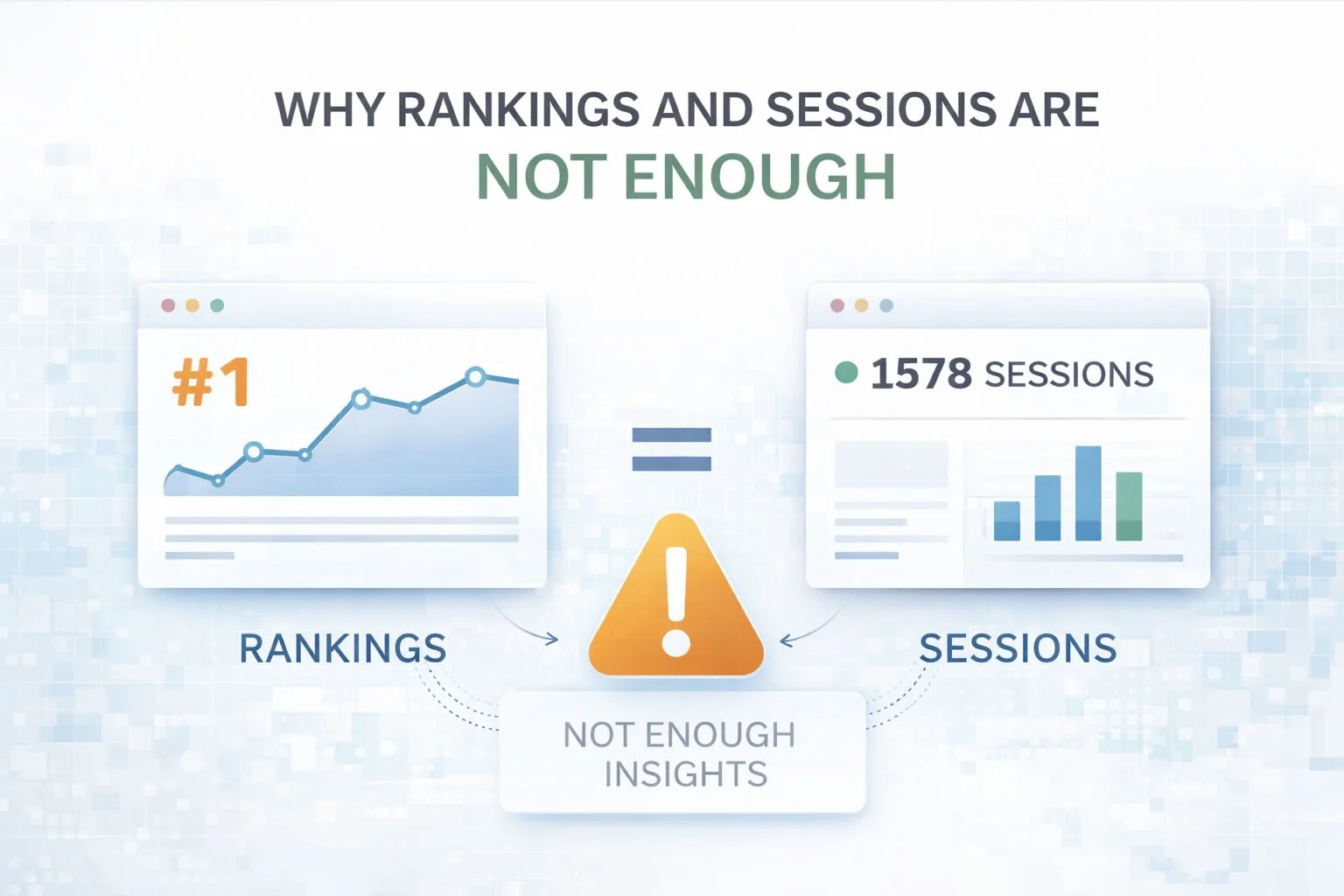
Most SEO reports still lead with rankings, impressions, and organic sessions. I also look at those metrics because they provide useful signals. But if that is the full extent of what you are measuring, you are only seeing part of the story and likely missing the real impact your content is having.
The better questions are:
Did this content assist a conversion in GA4
Are more people searching for our brand by name
Are readers coming back after their first visit
Is content showing up in CRM attribution before a deal closes
How long does it take from first content touch to actual conversion
In performance-driven environments, especially in healthcare, I have seen this play out repeatedly. Someone reads an educational article first. They do not book immediately. They come back later, search the brand directly, click on a paid ad, and then convert.
Those who take that path usually convert with greater confidence. They understand what they are buying. They trust the brand more. And over time, they tend to be more valuable customers.
That early education phase is where SEO quietly does its best work.
Building Topical Authority Instead of Isolated Articles
Strong SEO comes from building depth around a topic, not publishing one-off articles. Instead of dropping a single post on a trend and moving on, create related pieces that connect and build on each other. When your content works together, it becomes more useful to readers and more valuable in search.
AI search impact
Zero-click results
Content optimization strategies
Paid and organic alignment
Measurement frameworks
Building content in clusters strengthens relevance and shows depth on a topic.
When you use consistent language, connect related pages clearly, and cover the subject thoroughly, your site is more likely to be seen as a credible authority.
SEO as Infrastructure
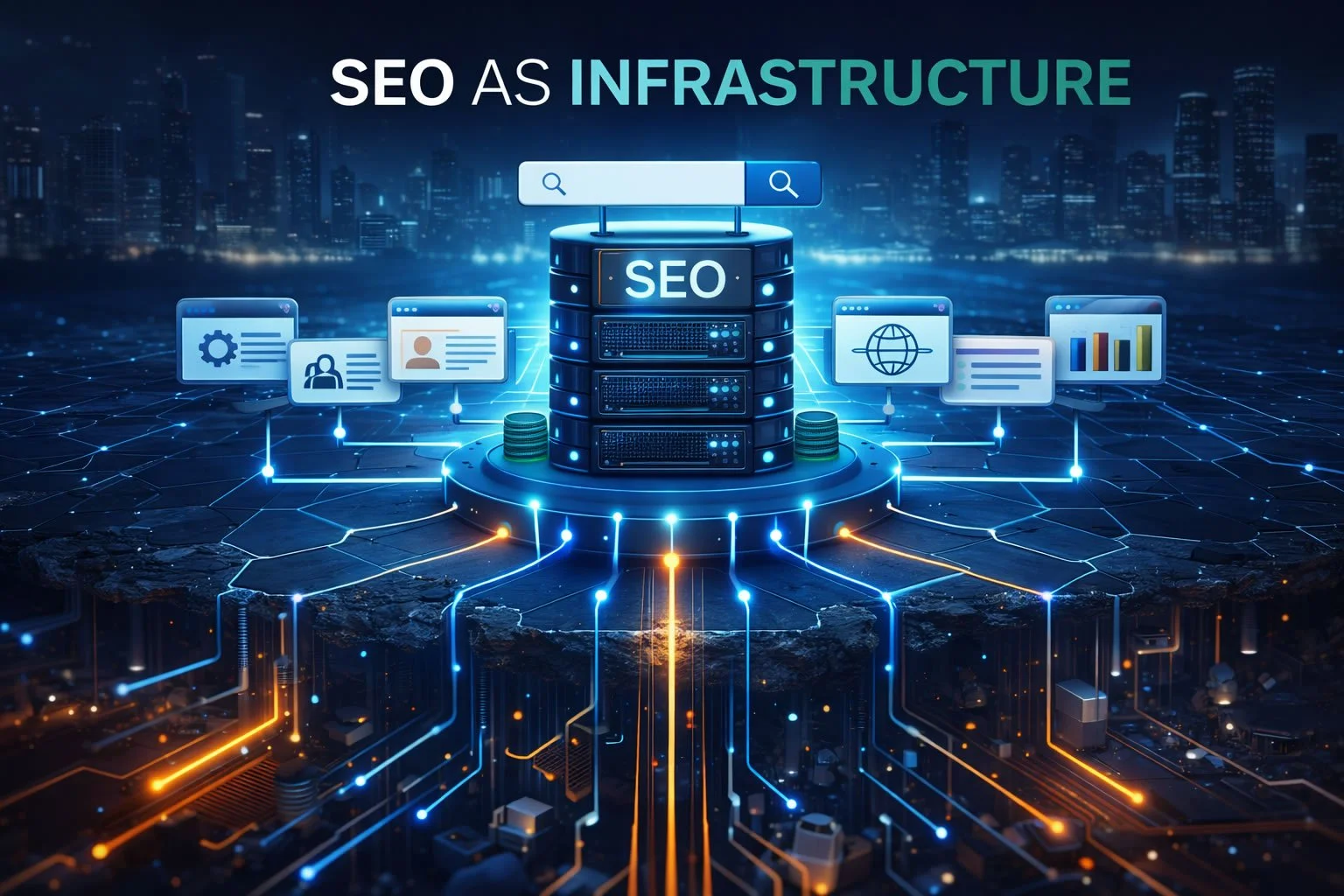
One of the biggest mindset shifts I encourage clients to adopt is viewing SEO as infrastructure rather than a campaign.
Infrastructure supports everything else.
When your technical foundation is strong and your content is authoritative, paid campaigns perform better because landing pages convert more effectively. Social distribution gains traction because the content is credible. Email campaigns benefit from deeper educational resources.
When SEO is weak, every other channel has to compensate.
Treating SEO as a long-term strategic investment rather than a short-term tactic is what separates brands that sustain visibility from those that chase temporary spikes.
The Data Supports Evolution, Not Extinction
More than 90 percent of online experiences still begin with a search engine. Organic search remains one of the most trusted channels for information discovery. Long-form, well-researched content continues to earn more backlinks and engagement than thin content.
The difference is that the search results page is now more dynamic. Answers appear earlier.
Comparisons are surfaced instantly. AI organizes information before users evaluate it.
This does not eliminate SEO. It increases the need for precision.
🙋♀️ Frequently Asked Questions
Is SEO still worth investing in, given the rise of AI search?
SEO is still one of the strongest long-term investments in digital marketing.
Search platforms still depend on content that is organized and trustworthy. If your site is messy or unclear, it will struggle to show up where it matters. The tools and features may change, but the basics remain the same. Clear structure and real authority are what earn visibility that actually means something.
What is generative search optimization, and how is it different from traditional SEO?
Generative search optimization comes down to how you build your content so it performs in today's search results. Traditional SEO is still about rankings, keywords, and technical structure. This next layer is about making your content clear, well-organized, and deep enough on a topic that it can be surfaced in summaries and answer features. The best strategy is not picking sides. It is about ensuring that both approaches support each other.
Why is organic traffic declining for some websites?
Organic traffic can decline due to increased competition, algorithm updates, zero-click search results, and AI-generated summaries that answer questions directly on the search results page. In many cases, visibility still exists, but fewer users need to click through to get basic information. This shift makes it more important to measure assisted conversions, branded search growth, and content influence rather than relying only on session volume.
How should SEO performance be measured in 2026?
You cannot judge SEO solely by rankings and traffic.
Look at assisted conversions. Look at how deeply people engage with the content—track return visits. Watch branded search growth. Connect content touchpoints inside your CRM to actual revenue.
When you measure how content supports the pipeline over time, you get a much clearer picture than you ever will from first-click attribution alone.
How can I structure content to perform better in AI search results?
If you want to show up more often in search results, start by tightening your content's structure. Use straightforward headlines. Answer the questions people are typing into Google. Link your related pages together so the path feels natural. Get specific, back up what you say, and stop cranking out posts to stay active. Pick the topics that matter and cover them thoroughly. Over time, depth and credibility are what move you up.
The B2The7 Final - The Real Question
The real question is not whether SEO is dead.
The real question is whether your content is shaping decisions before the click.
If your strategy is focused only on driving traffic, you are playing a shrinking part of the game. If your strategy is focused on building authority, clarity, and retrievability across search environments, you are adapting to where search is headed.
SEO is still one of the most powerful growth levers available. It simply operates earlier in the decision cycle than it used to.
And in many ways, that makes it even more valuable.
Because influence, not just traffic, is where revenue begins.
📩 Get Weekly Trend Alerts in Your Inbox
Want these insights delivered straight to your inbox every week?
Sign up here to subscribe to the Trend Brief
Stay ahead of what’s moving in marketing, social, and tech.