Why Your Content Is Visible but Not Driving Revenue (And How to Fix It)
Getting traffic to your content is not the same as generating revenue from it — and for most businesses, that gap is where marketing budgets quietly disappear. In this post, Bernie Fussenegger of B2The7 breaks down the most common reasons content earns clicks but fails to convert: misaligned intent, weak calls to action, missing conversion pathways, no lead capture strategy, and content that educates without ever advancing the buyer toward a decision. More importantly, it covers the specific structural and strategic fixes that turn a high-traffic blog into a lead generation and revenue asset.
Most brands are not struggling to create content.
They are publishing blogs, updating landing pages, posting on social media, ranking for keywords, and showing up in AI summaries. Seeing traffic move in the right direction.
And yet, when leadership asks a simple question, the room gets quiet.
What is our content actually doing for the business?
This is the disconnect that more marketing teams are feeling right now. Content looks successful on the surface, but revenue impact feels hard to explain, harder to prove, and even harder to improve.
The problem is not that the content is broken. It is that the way content influences decisions has changed faster than most strategies have adapted to it.
What You’ll Learn from This Article
Why content visibility no longer guarantees business impact
How AI search and zero-click discovery changed the first touchpoint
The hidden structural reasons content fails to convert
What actually influences buyer decisions today
How to turn existing content into revenue-driving assets
What to measure instead of traffic alone
This is not about chasing the next algorithm tweak. It is about understanding how people now discover, evaluate, and decide before they ever fill out a form or talk to sales.
Content Visibility Has Never Been Easier
A decade ago, getting content seen was the hard part.
There was a time when a top ranking actually meant something. You had to earn it. Authority was built slowly. Links came from real relationships and real value. Publishing consistently took focus and effort. Moving up the results page felt like real momentum.
Content can be produced faster than ever. Optimization tools spell out exactly what to tweak. Social platforms never slow down. Ten years ago, getting content noticed was the challenge. Rankings had to be earned. Authority took time. Consistency mattered.
Now, publishing is easier. Tools tell you what to optimize. Search results often answer the question before anyone clicks through. Many people decide what they think before they ever visit your site.
More than half of Google searches end without a click. That means visibility does not guarantee a visit.
Being seen is no longer rare. Turning attention into action is the real challenge. Traffic alone isn't what it used to be.
Search Is No Longer the First Click. It Is the First Impression.
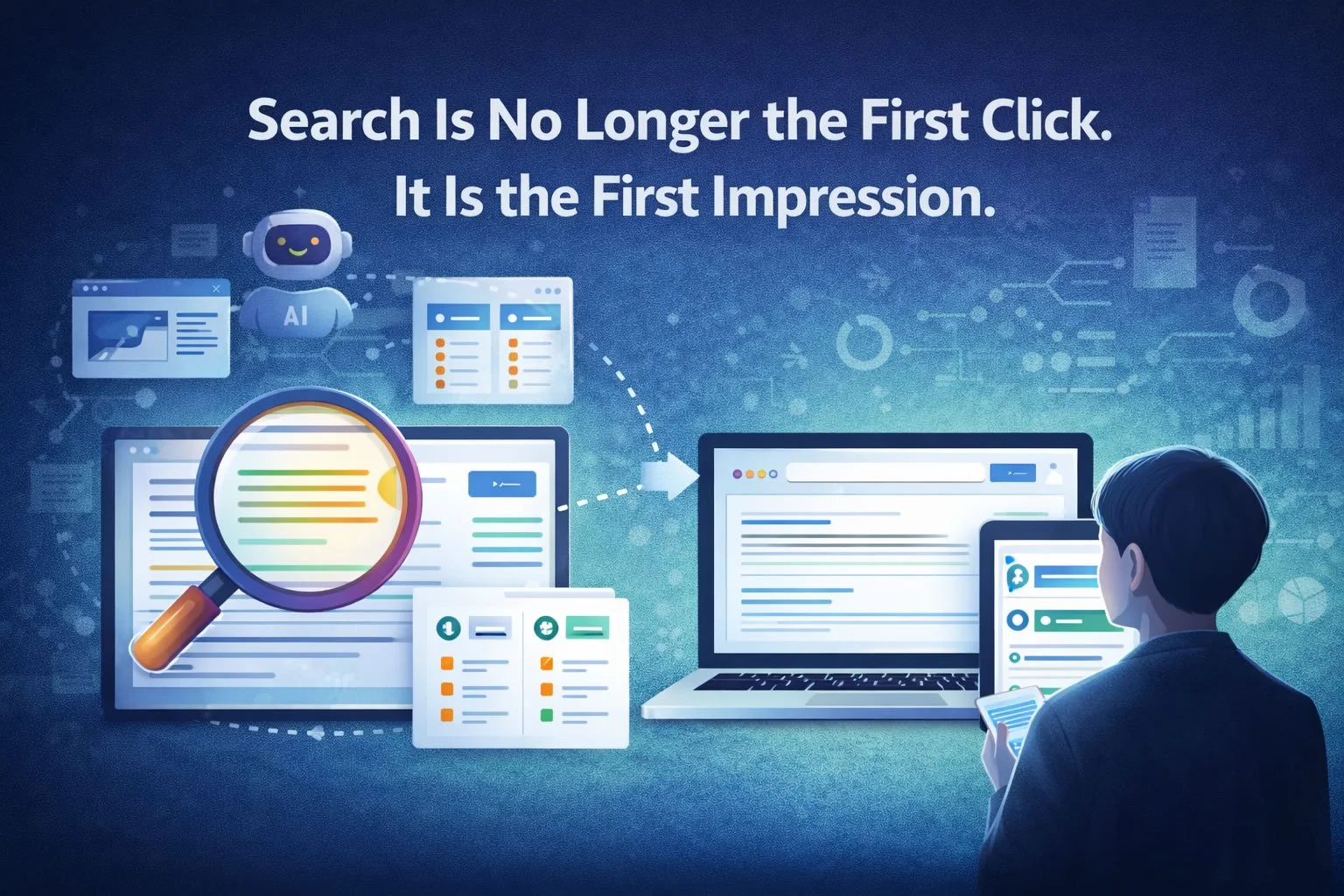
One of the biggest shifts most brands missed is where discovery actually starts now.
Search engines are not just pages of blue links anymore. They pull information together, highlight key points, and show answers right on the results page, often before someone visits your site.
So the first interaction might be:
A summary at the top of the results
An answer pulled into a chat-style response
A comparison that blends insights from several sources
A list of pros and cons created from your content
By the time someone clicks, they may already have an opinion.
By the time someone lands on your website, they often already have an opinion.
This changes everything.
Your content is no longer just about ranking. It is shaping understanding early, often invisibly.
If your content lacks clarity, structure, or a point of view, AI fills in the gaps. And when AI fills gaps, nuance is usually the first thing to go.
Why Traffic No Longer Equals Impact
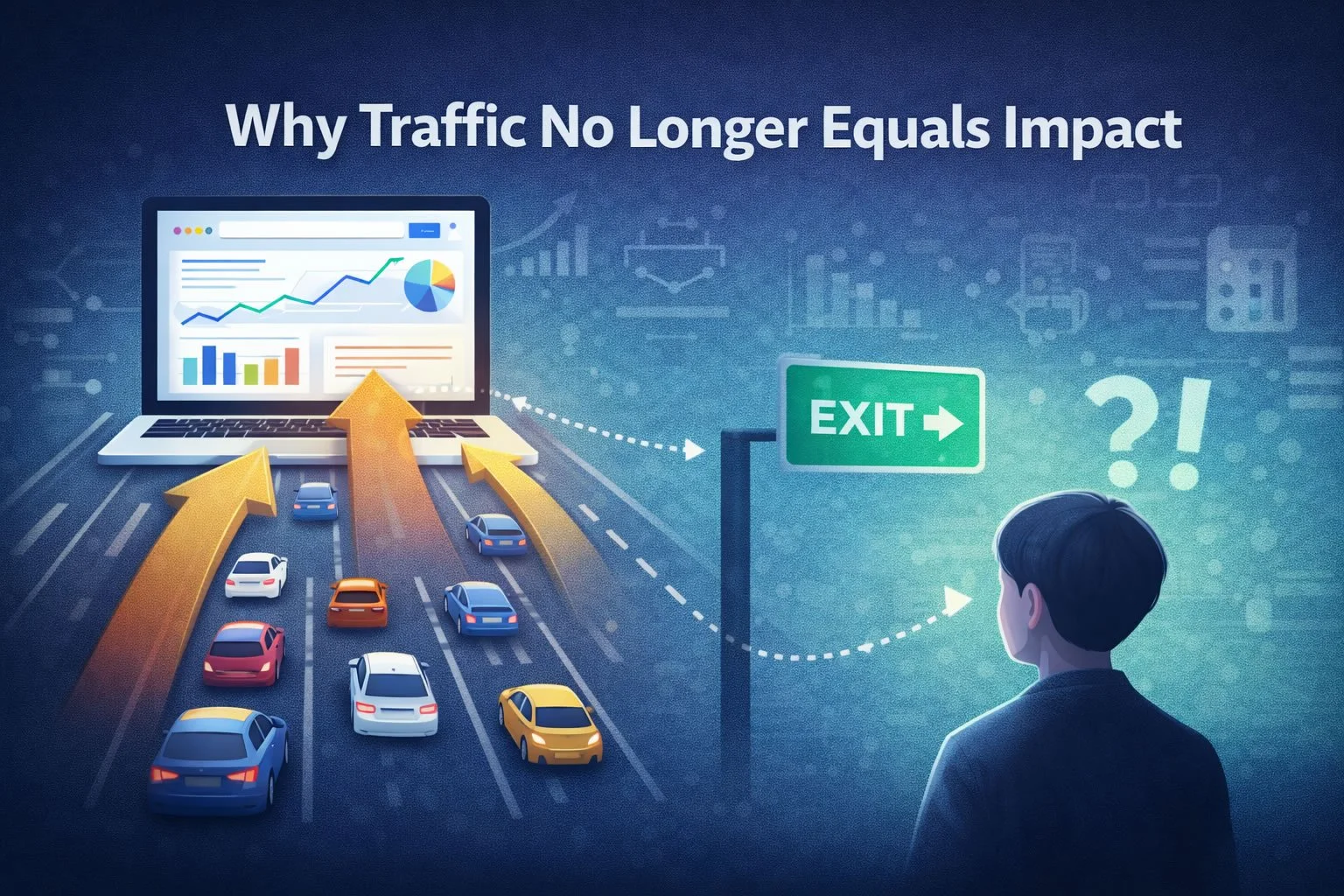
The analytics are healthy. Traffic is consistent, and rankings remain stable. However, this does not demonstrate that the content had a significant impact on a buyer's decision.
High-traffic pages fall short when they:
Answer the question, but stop there
Share information without explaining the options
Teach something without helping the reader choose
Gartner reports that B2B buyers spend just 17 percent of the buying process meeting with potential suppliers. The majority of their time is spent researching independently, often by reading articles, comparing options, and reviewing content online.
That means your content is either helping shape the decision or quietly stepping aside while someone else does the shaping.
Traffic is awareness. Influence is performance.
The Hidden Content Problem Is Structure, Not Quality
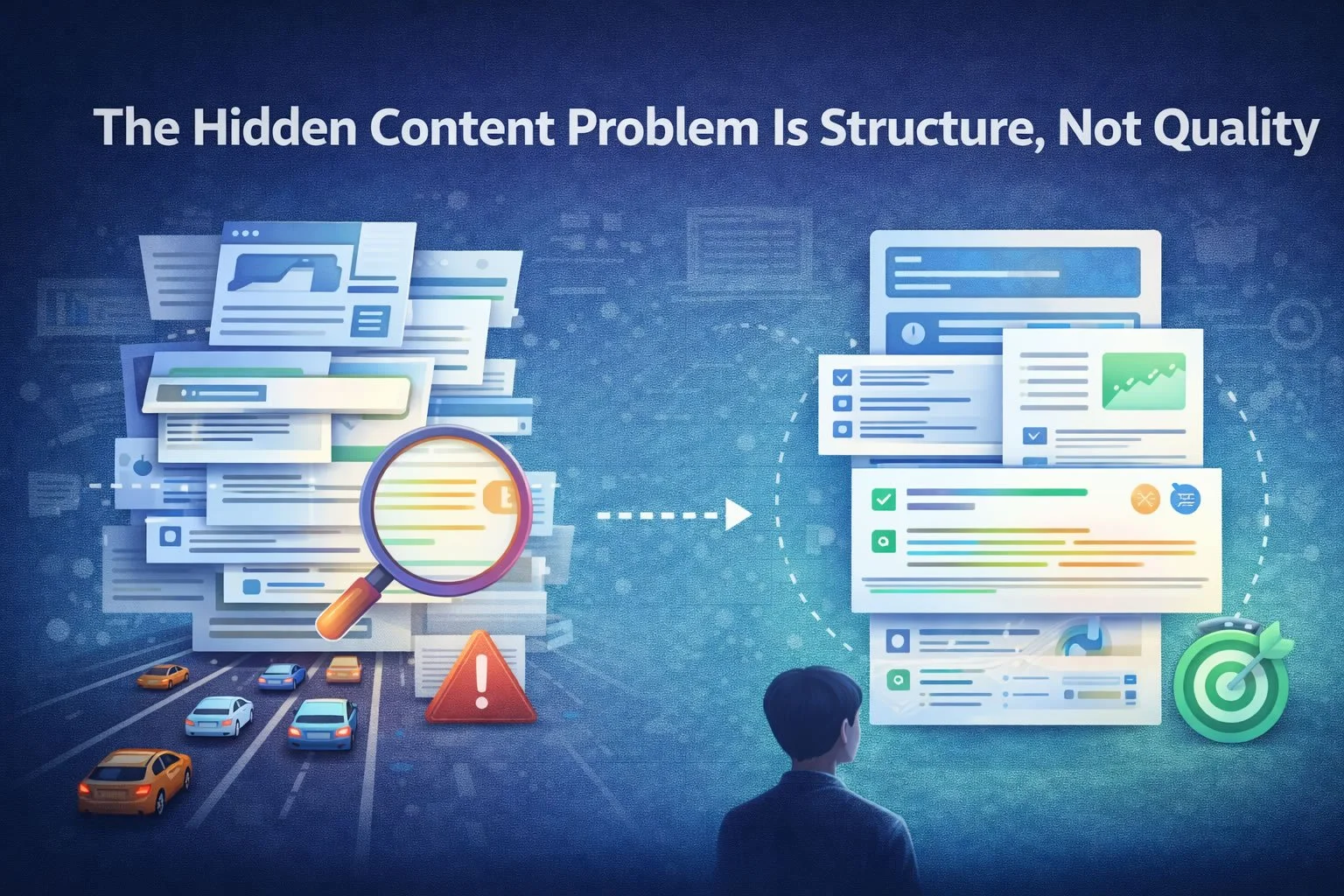
Most marketers respond to poor performance by trying to write better content.
More depth. More words. More examples. More tweaks.
But the issue is rarely effort. It is structured.
A lot of content is written to fill a page, not to move someone forward.
Common problems look like this:
No clear point of view
Sections that explain ideas but never tie them together
No comparison or context
No clear direction for what to do next
Clarity builds trust. Confidence builds momentum. Neutral, surface-level content does neither.
If the reader finishes and still does not know what to choose, the content did not do its job.
What Actually Influences Decisions Today
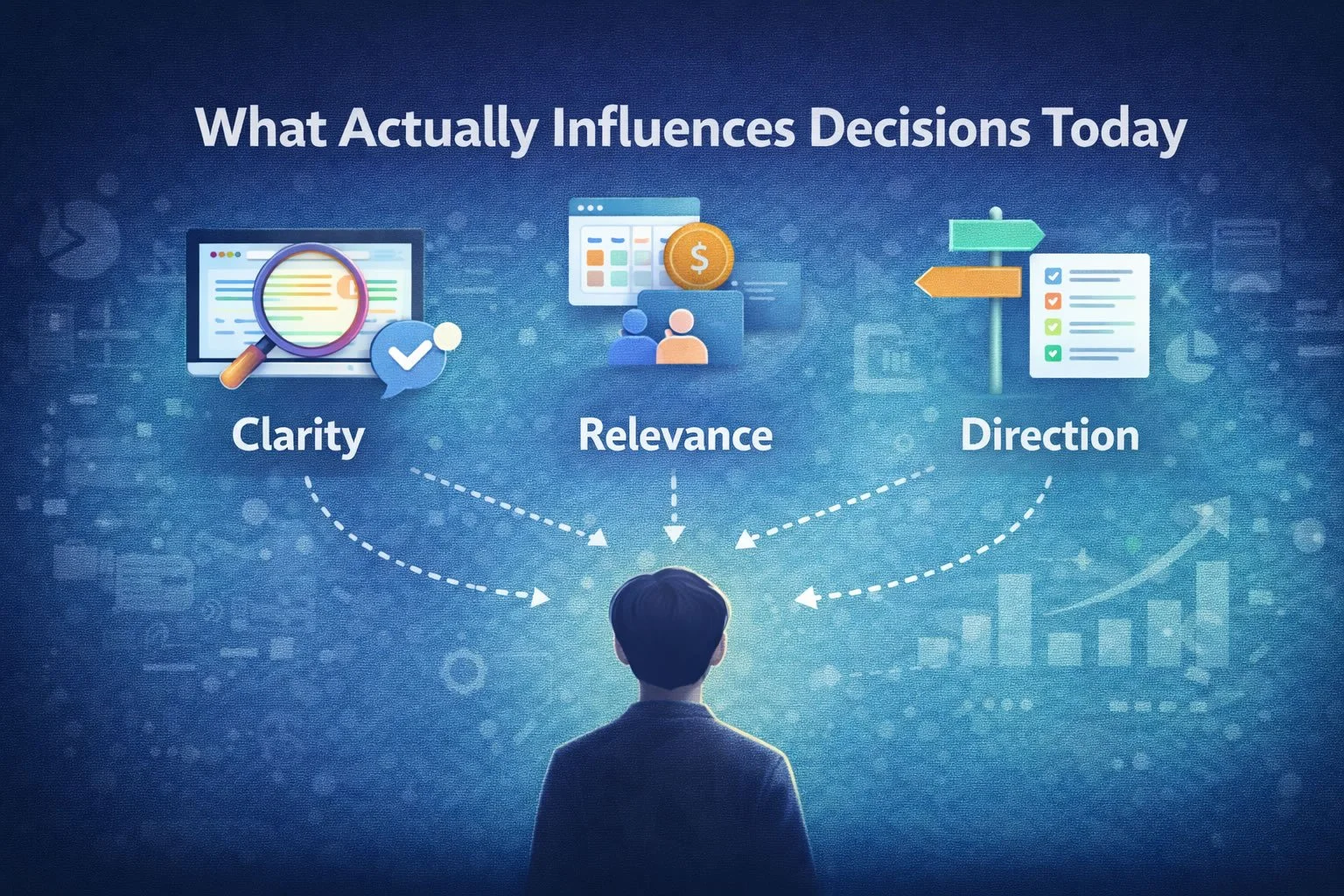
Influence still matters. It just takes place earlier than most teams realize. And it comes from doing the simple things right, consistently.
The content that performs consistently shows:
A clear understanding of the problem
Context around why options exist
Tradeoffs explained honestly
A point of view grounded in experience
Proof that the author has been there before
According to Edelman's Trust Barometer, 71 percent of buyers say they trust brands more when content demonstrates expertise and real-world understanding.
This is why thought leadership works when it is earned and fails when it is performative.
Buyers are not looking for perfect answers. They are looking for confident guidance.
How AI Search Evaluates Your Content
Discovery today favors clarity over creativity.
The content that rises to the top is well-organized, direct, and consistent. Each section builds on the one before it. Key ideas are reinforced, not buried.
This is not about shortcuts. It is about making your thinking obvious.
When your message is easy to process, it earns confidence. That is the foundation of effective optimization.
How to Fix the Gap Between Visibility and Revenue
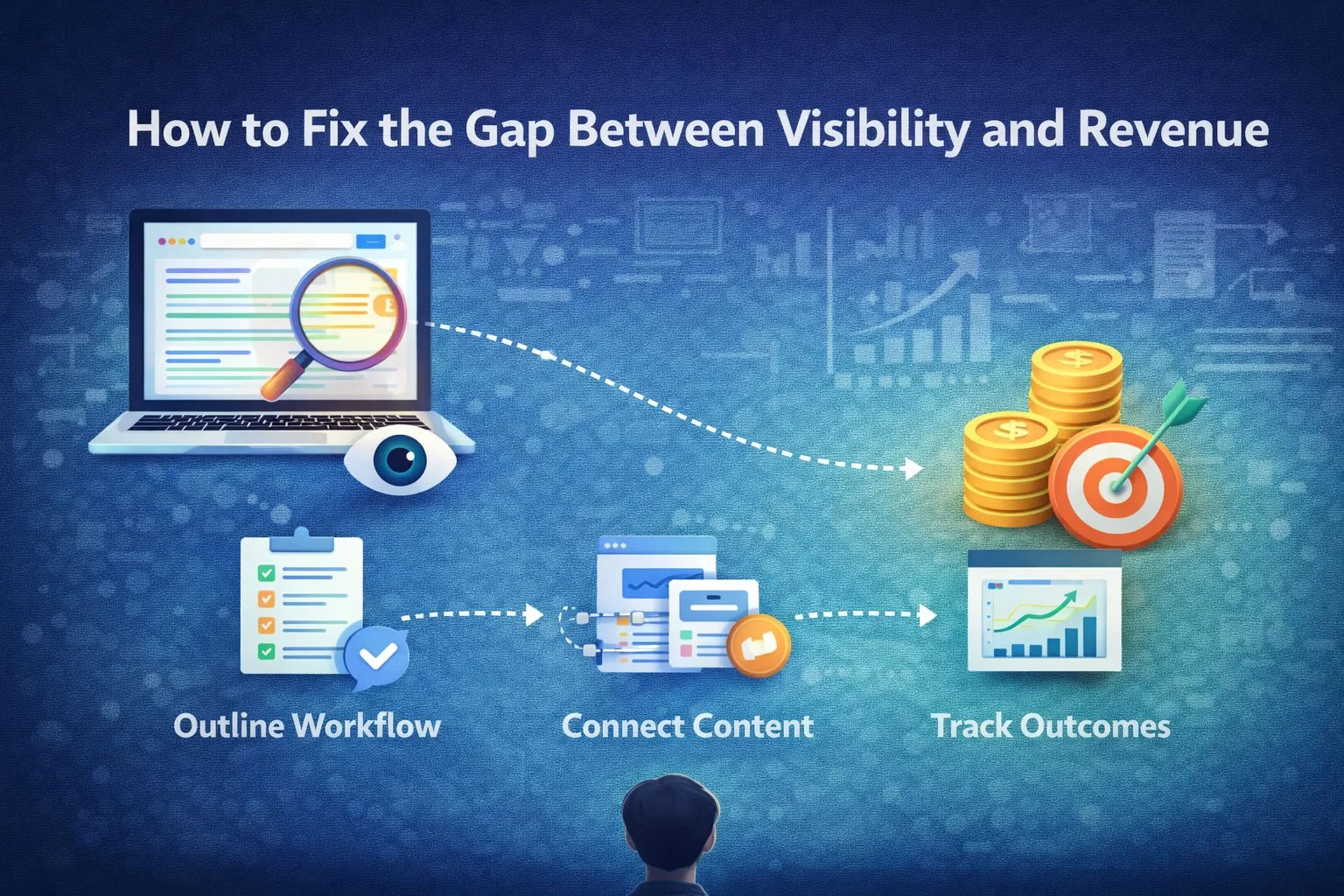
The answer is not more content. There is a more purpose behind it.
Change the question.
Instead of asking what keywords this should rank for, ask what decision this piece is meant to shape.
Then apply these principles:
Rebuild High-Traffic Pages First
Your biggest opportunity is not new content. It is the pages that are already getting attention.
Add:
Clear problem framing at the top
Context about why the issue matters
Comparison points or alternatives
A logical next step
Small structural changes often outperform new blog launches.
Write for Decisions, Not Just Answers
Information feeds curiosity. Decisions move the business forward.
Do not stop at explaining the topic. Walk the reader through:
What this really means in practical terms
Why it matters to their specific situation
What they should consider doing next
If someone finishes your content and feels clearer about their next move, you did your job.
Design Content Paths
Publishing more is not the solution. Publishing with purpose is.
Stop starting with keywords. Start with the decision you want to influence.
What to Measure Instead of Just Traffic
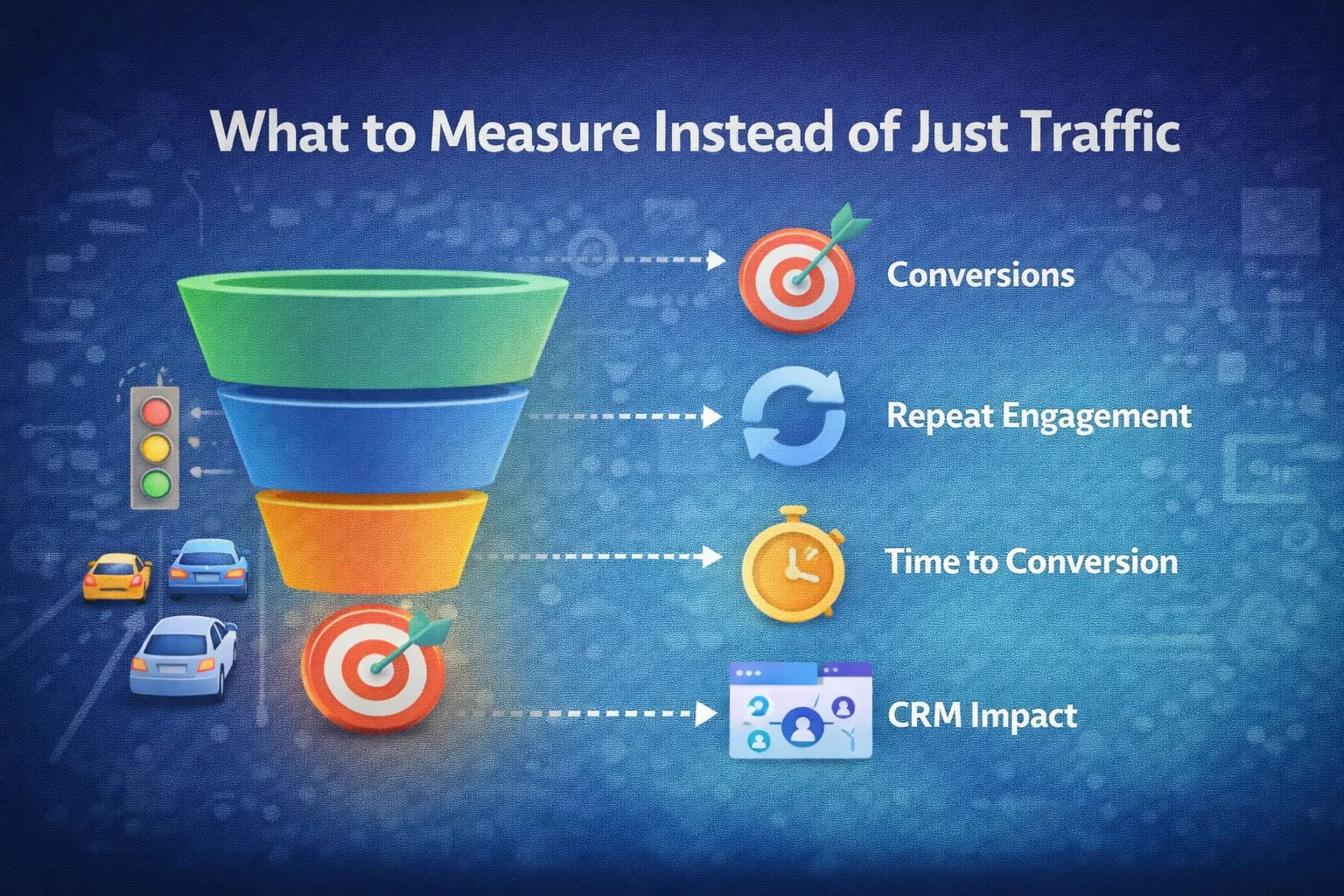
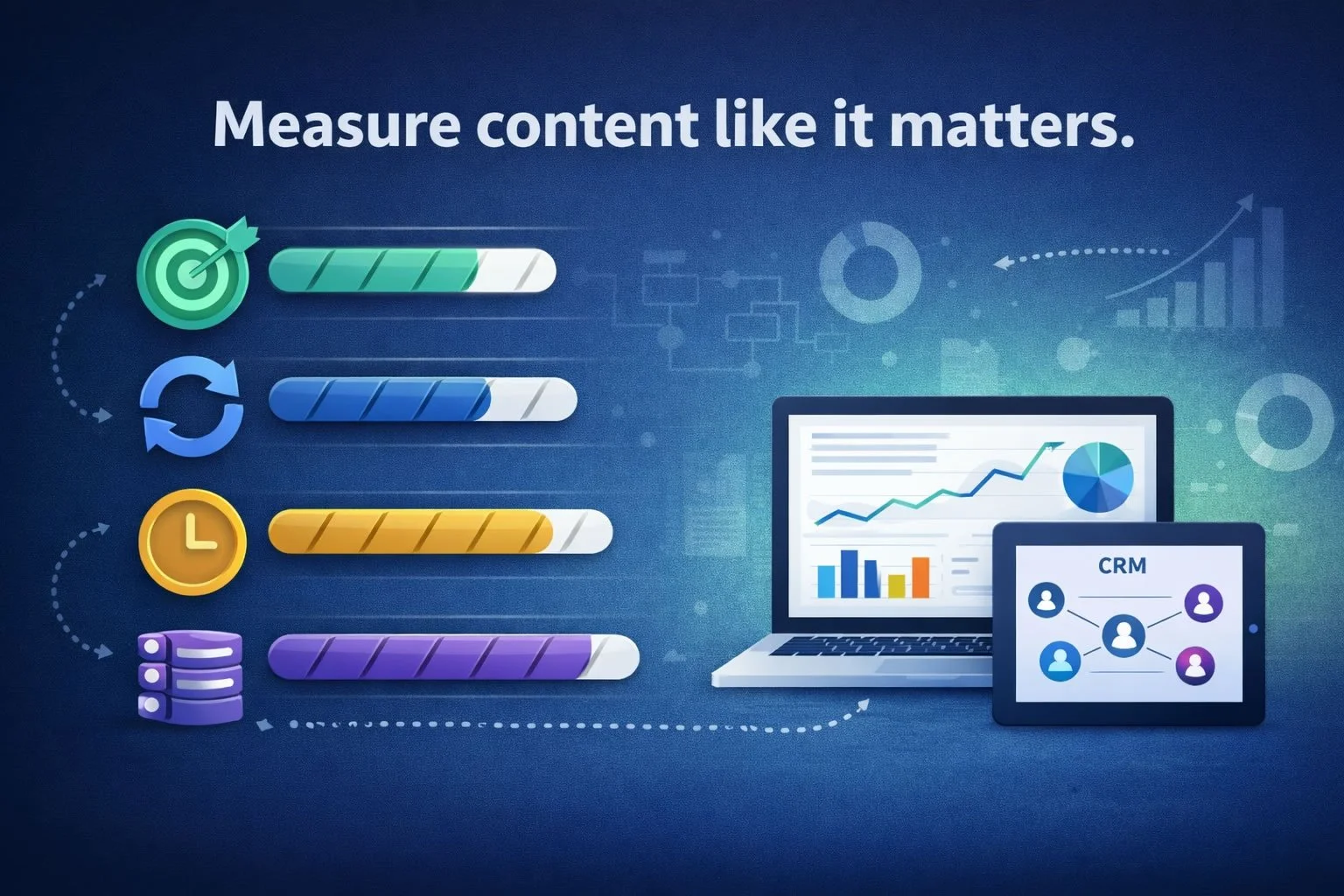
If you want content to earn a seat at the table, you have to measure it like it matters.
Look beyond surface traffic and pay attention to signals such as:
Assisted conversions tied to content views
Repeat visits from readers who first came through a blog or resource
The time between someone’s first read and their next meaningful action
Content interactions tracked inside your CRM or attribution platform
Those are the numbers that show whether content is influencing real decisions, not just generating clicks.
According to HubSpot data, companies that track content influence across the buyer journey are significantly more likely to see positive ROI from content marketing.
The goal is not to abandon traffic. It is to stop worshipping it.
🙋♀️ Frequently Asked Questions About Content Ranking
Why is my content ranking but not converting?
Ranking means search engines see your page as relevant. It does not mean readers feel confident enough to take action. Content can answer a question clearly and still leave someone unsure about what to do next.
How is search changing content marketing?
Search platforms now summarize and interpret information before people ever visit your site. If your message is unclear or poorly structured, your main point can get lost or diluted before the reader even reaches you.
Is SEO still important?
Absolutely. SEO still determines whether people can find you. But being found is only the first step. What truly drives results is how clearly your content guides someone toward a decision.
What type of content converts best today?
The most effective content does more than merely explain. It identifies the problem, outlines the options, candidly discusses tradeoffs, and relies on real-world experience. This method cultivates confidence, which encourages action.
How should I optimize for modern search experiences?
Ensure your writing is clear and well-organized. Use effective section headings and maintain consistent terminology. Each section should connect logically to the next. When your ideas flow clearly, readers can understand them more quickly and trust them more.
The B2The7 Final - Content Is Not Broken. Strategy Is.
Most brands do not need a content overhaul. They need better alignment.
Being seen is not enough anymore. Influence happens earlier, often before it ever shows up in a report.
The brands that grow are not fighting for attention. They are shaping perspective before someone clicks.
That is where revenue begins.
📩 Get Weekly Trend Alerts in Your Inbox
Want these insights delivered straight to your inbox every week?
Sign up here to subscribe to the Trend Brief
Stay ahead of what’s moving in marketing, social, and tech.