Why Most Brands Are Optimizing for AI Wrong (And How to Fix It Before You're Left Behind)

Most brands making their first attempt at AI search optimization are making the same foundational mistakes — and those mistakes are actively hurting their visibility in ChatGPT, Google AI Overviews, and Perplexity rather than helping it. In this post, Bernie Fussenegger of B2The7 identifies the most common AI optimization errors: treating GEO as a separate strategy from SEO, producing thin or unstructured content, ignoring author credentials and E-E-A-T signals, neglecting schema markup, and failing to write in the direct answer-first format that AI engines prefer. Each mistake comes paired with a concrete fix you can implement immediately.
You're here because something feels broken, right? Your rankings look great on paper, but traffic keeps dropping. Or you may be watching your impressions climb while clicks fall off a cliff. And I bet you're sick of everyone talking about AI optimization like it's some magic solution without telling you what the hell actually to do about it.
The shift happened faster than anyone expected. One day, we're all doing SEO the way we've always done it. Then ChatGPT explodes. Google starts cramming AI Overviews into everything. Marketing teams start saying "just Perplexity it" instead of "Google it." And boom, every strategy that worked for years stops delivering the same results.
But here's the thing, most people aren't telling you: This isn't about learning a new set of tricks. It's about understanding how people actually search now, how AI systems surface information, and what it takes to be the source those systems cite and recommend.
I've spent the better part of two years testing, measuring, and refining what actually works in this new environment. Not theory. Not the best practices from 2022. What moves the needle right now in 2026, when AI-powered search is handling billions of queries every month? Check out why SEO is still alove and evolving.
What You’ll Learn from This Article
Why traditional SEO tactics fail in AI-powered search environments
The actual data showing how AI Overviews are changing user behavior
What generative engine optimization really means for your brand
Proven strategies that work right now (backed by real performance metrics)
How to measure success when traditional analytics don't tell the whole story
The Problem Nobody Wants to Talk About
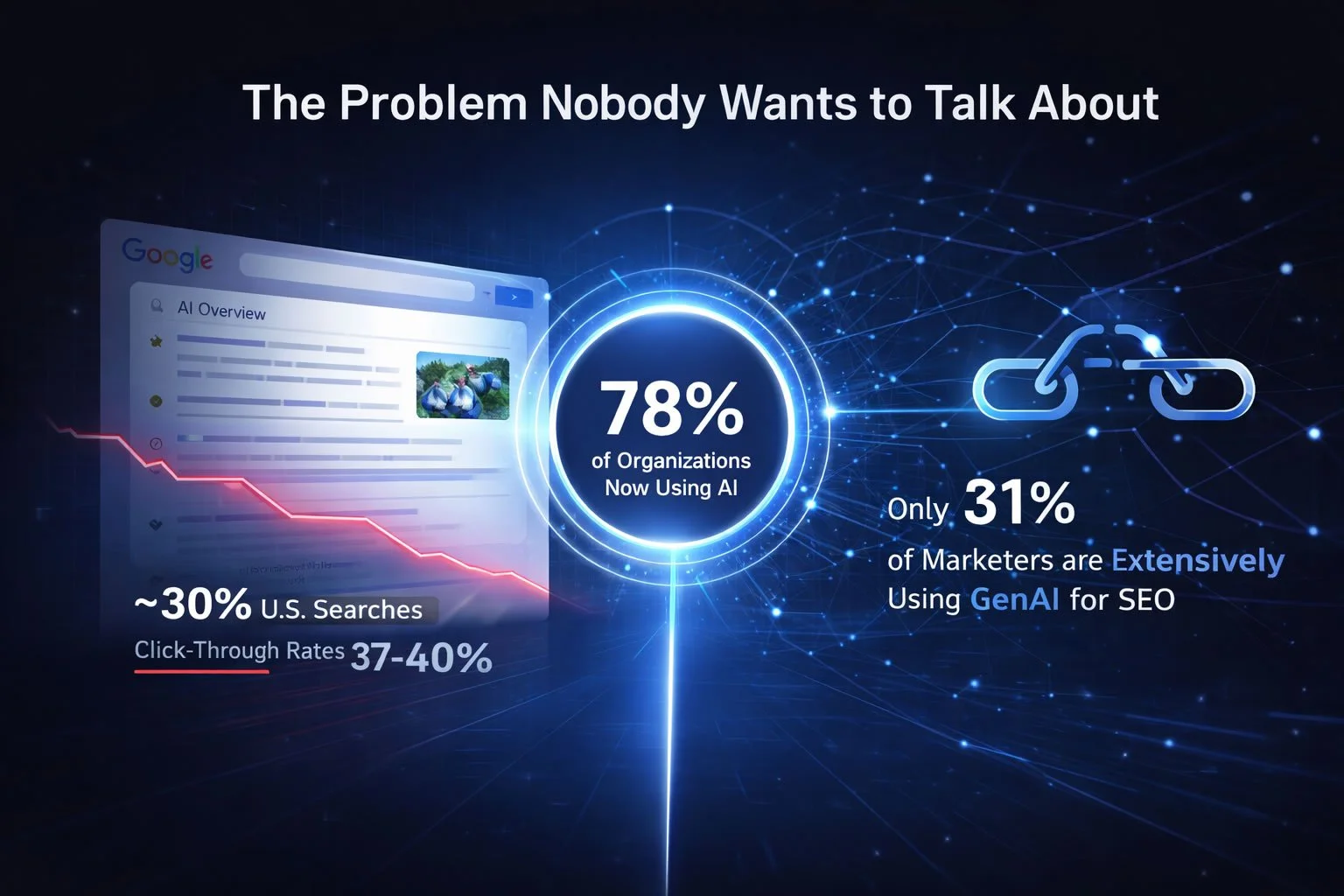
Let me paint you a picture of what's happening right now in search. Google's AI Overviews are appearing in roughly 30% of U.S. searches. When they appear, click-through rates drop by 37-40%. That's not a small dip. That's the traffic you used to get just disappearing.
Here's the kicker: 78% of organizations are now using AI in at least one business function, up from 55% just last year. But only 31% of marketers are using generative AI extensively for SEO. There's this massive gap between AI adoption and actually knowing how to optimize for these new search experiences.
And while everyone's focusing on being "AI-ready," most brands are just applying old SEO playbook tactics to a completely different game.
What Brands Are Getting Wrong
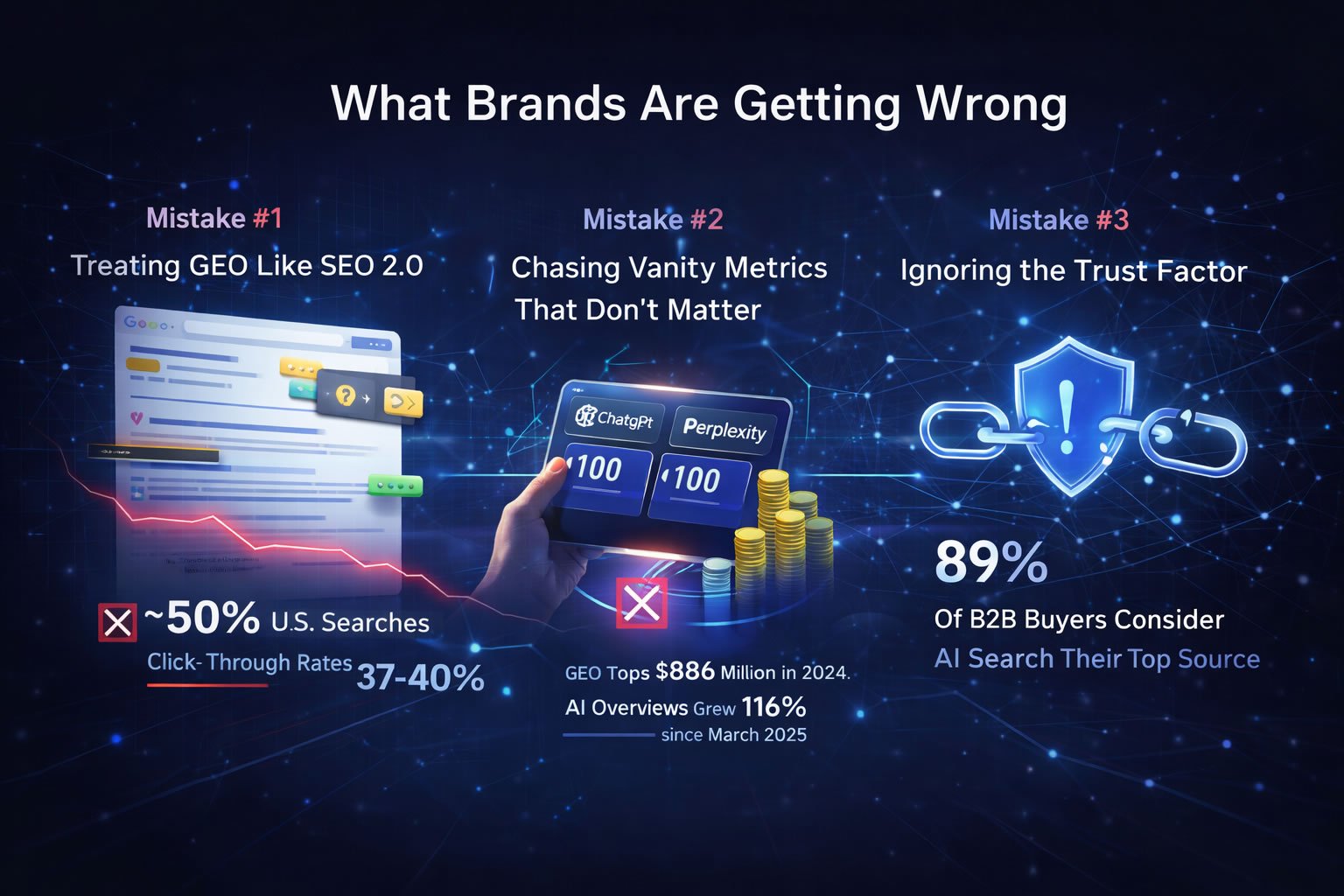
I see three major mistakes happening across the board, and I need to call them out because they're burning budget and wasting time.
Mistake #1: Treating GEO Like SEO 2.0
Brands are keyword stuffing for AI. They're trying to game citations. They're obsessing over being mentioned in AI responses without understanding how these models actually work. The reality? Only 52% of sources cited in Google's AI Overviews come from the top 10 traditional search results. That means your number one ranking doesn't guarantee you show up in the AI answer. Check out the Marketer’s Guide to GEO.
Let that sink in for a second. You could own the number one spot in Google, have flawless SEO, and still be completely invisible to people who are finding their answers through AI.
Mistake #2: Chasing Vanity Metrics That Don't Matter
Companies are obsessed with tracking "AI mentions" right now. They'll count every single time their brand pops up in ChatGPT or Perplexity, as if it were some trophy. But nobody's asking the questions that actually matter: Do these mentions bring in customers? Is this building a real authority or just creating more noise?
The GEO market pulled in $886 million last year. AI Overviews jumped 116% since March. Those aren't made-up numbers. But here's the brutal truth: if you're chasing visibility to chase it, you might as well set your budget on fire.
Mistake #3: Ignoring the Trust Factor
Here's what bugs me most about this whole mess. AI doesn't fall for SEO tricks the way Google used to. It's scanning for real credibility. Real expertise. You show up trying to game it? You look like you don't know what you're talking about.
And this matters more than you think. Almost 9 out of 10 B2B buyers use AI tools to research before they buy. If the AI doesn't trust you enough to recommend you, those buyers never even know you exist.
Are the companies doing well right now? They gave up on gaming systems a long time ago. They just became the best source of information in their space.
The Data You Need to See
The numbers tell a story you need to hear.
Perplexity now handles 780 million searches per month. Back in August, it was only 230 million. ChatGPT owns nearly 60% of the entire generative chatbot space. We're not talking about experimental tools that early adopters play with. This is how regular people search for information now.
And here's where it gets interesting: 68% of LLM users are using these platforms to research and summarize information. 48% use them to stay up to date on the latest news. But only 21.3% of ChatGPT prompts are actually "search-like" according to OpenAI research.
So what's really happening here? Search changed. People don't just type in keywords and scan results anymore. They ask questions, get answers, then dig deeper with follow-ups. They want the full context and the nuances, not ten blue links to sort through themselves.
What Actually Works: The Framework That Delivers Results
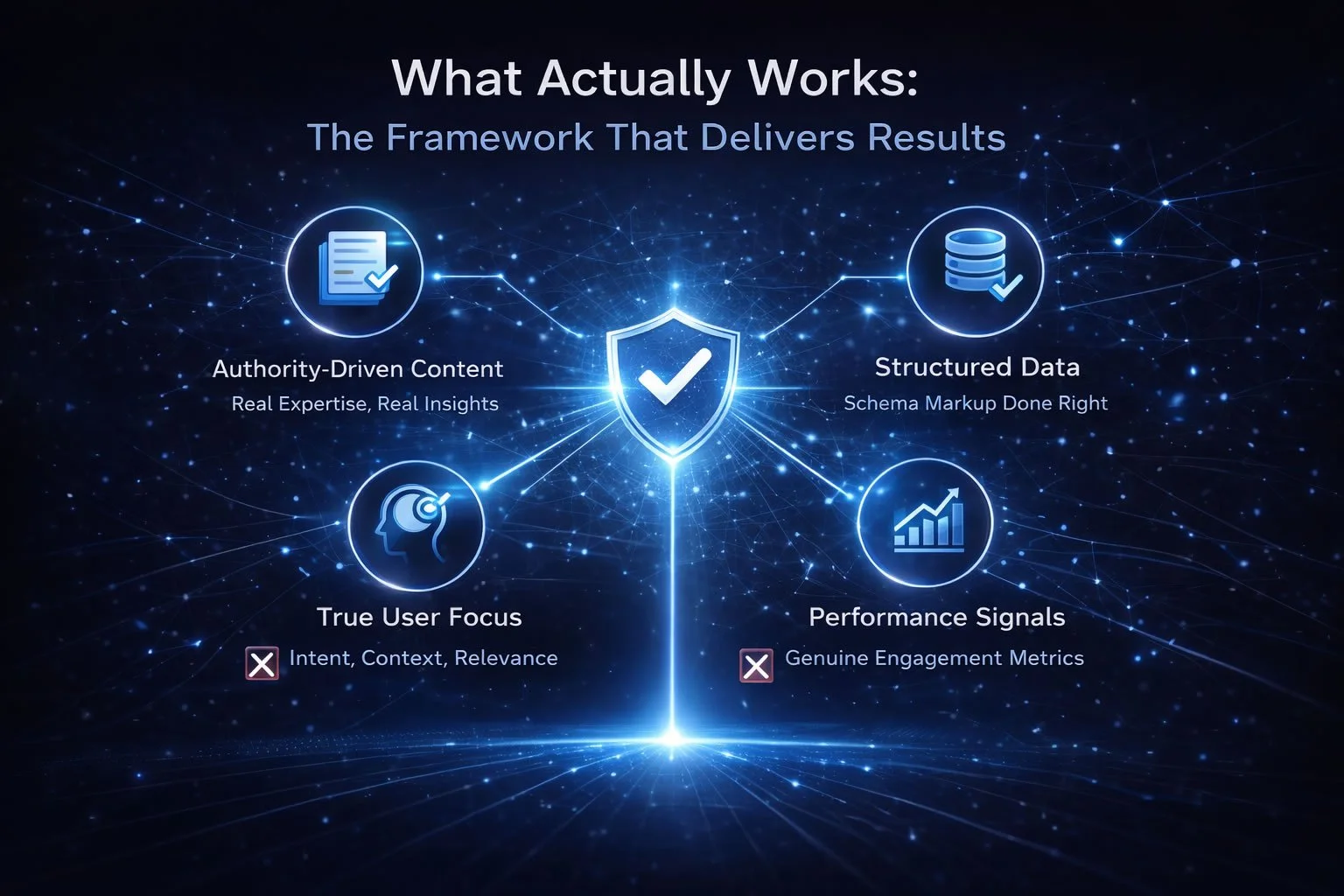
After working with brands across industries and analyzing what's actually moving the needle, I've developed a framework that focuses on what matters. Not theory. Not what should work. What does work?
Build Real Authority, Not Just Backlinks
Authority in the AI era isn't about link volume. It's about being the definitive source in your space. That means original research. First-party data. Expert perspectives that can't be replicated by scraping 100 other articles.
When 86% of enterprise SEO teams have integrated AI and 82% plan to invest more, the ones winning are those creating citable content. Not content optimized to be cited, but content worth citing.
Structure for Machine Understanding
AI models need to parse and understand your content. That means schema markup matters more than ever. Clear hierarchies. FAQ sections that actually answer real questions. Data presented in formats AI can extract and use.
This isn't about gaming algorithms. It's about making your expertise accessible to the systems people are using to find information.
Focus on Topical Authority Over Keyword Rankings
Here's what changed: Google's AI Overviews appeared in a rising share of queries throughout 2024-2025, going from single digits to over 13% by March 2025. That's 72% growth in one month.
But longer queries, eight words or more, are 7x more likely to trigger AI Overviews. That means traditional short-tail keyword strategies are becoming less relevant. You need depth. You need comprehensive coverage of topics, not just keyword optimization.
Create Context, Not Just Content
AI gets context in a way Google never could. It's about analyzing how entities connect, whether your content actually relates to the topic, and where you fit into the broader industry conversation. Check out why Content Is Your Growth Engine.
Single blog posts don't cut it anymore. You need content that links together and builds on itself. Writing one article about a topic won't establish you as an expert. Covering that topic consistently over months or years? That's what creates real authority.
How to Measure What Matters
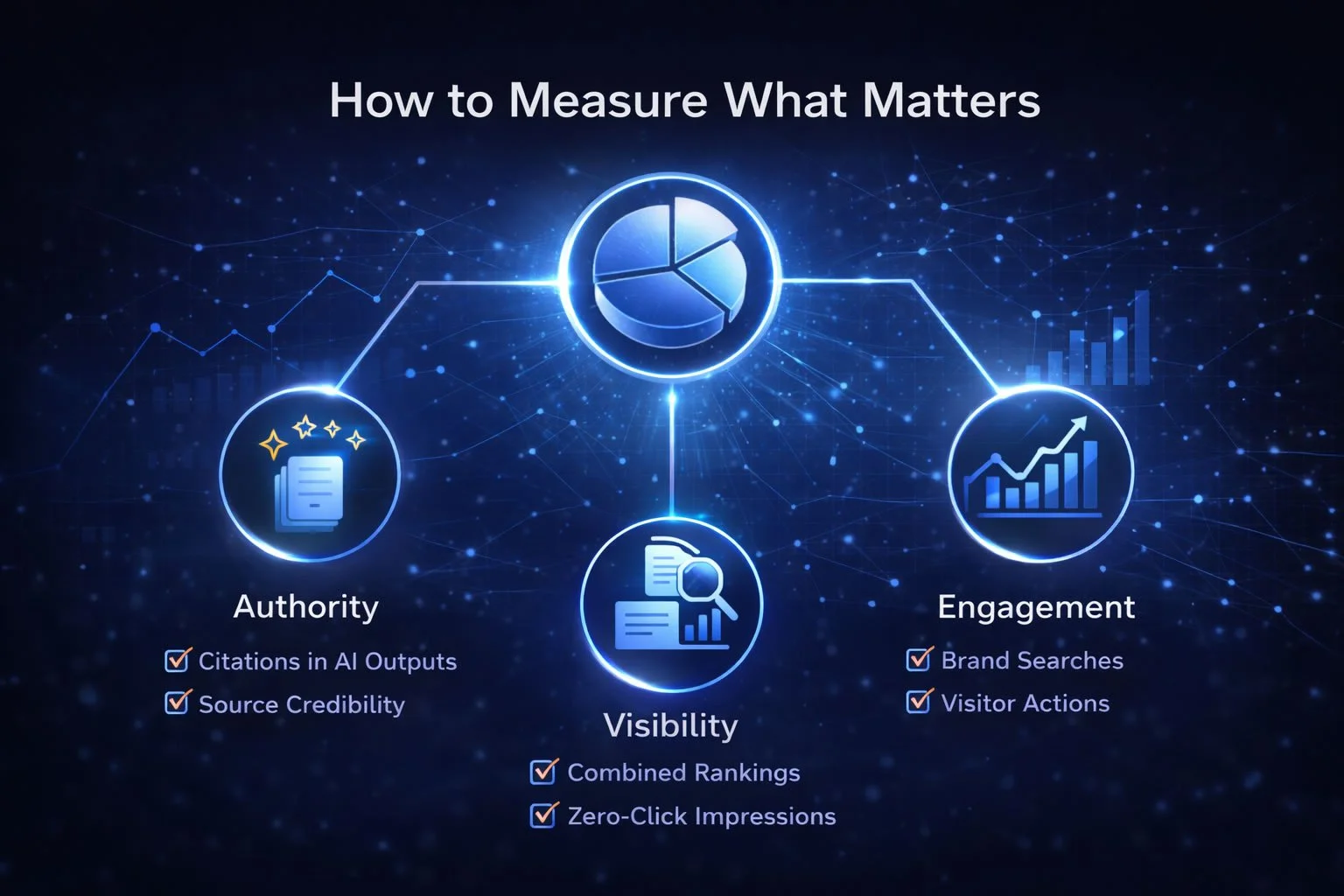
The old analytics no longer work. Everyone's seeing traffic drops because people get their answers without clicking through. But your visibility didn't disappear. It just moved somewhere else.
I've worked with brands that saw 41% traffic drops but were actually gaining more qualified leads. Why? Because the traffic they were getting from AI-driven discovery was higher intent. People had already done their research through AI tools and were coming in ready to act.
New KPIs you should be tracking:
AI Citation Share: How often does your brand appear as a source in AI-generated responses? This is your share of voice in the new search landscape. Test your brand queries across ChatGPT, Perplexity, and Google's AI Overviews. Document what comes up and where you're positioned.
Overview Visibility: Are you showing up in Google's AI Overviews when relevant queries are made? Remember, AI Overviews now appear on 13% of all searches and 7x more often on longer queries. If your target audience asks detailed questions, you need to be there to answer them.
Zero-Click Displacement Rate: Understanding what traffic you're losing and where it's going. This isn't about panic. It's about reallocation. If users are getting their answers from AI summaries, your content strategy needs to shift toward becoming the authoritative source those summaries cite.
Follow-Through Rate: So someone clicked through from an AI answer. Great. But did they stay? Did they read anything? I'd rather have 100 visitors who spend five minutes exploring my site than 1,000 who hit the back button in ten seconds. Pay attention to session length from AI traffic, how many pages they visit, and if any of them turn into actual customers or leads.
Entity Recognition: Are AI models correctly identifying your brand, your experts, and your products as authoritative entities in your space? This is foundational. If the models don't understand who you are and what you do, you can't show up in relevant responses.
The brands that succeed here are building their own measurement frameworks. They're using combined toolchains, crawl data, and LLM prompts to understand how they're performing in generative experiences. They're running weekly or monthly audits of how their brand appears across different AI platforms. They're treating this like a new channel, not an extension of existing SEO.
The Competitive Window Is Closing
Here's my assessment after watching this space evolve: We're in a first-mover advantage window right now. AI keyword competition could be 150% above 2024 levels by the end of this decade in some niches. That's not far away.
Private AI investment hit $109.1 billion in 2024. Venture capital is flooding into AI-driven search startups. The market is maturing fast, and the strategies that work today won't be secrets much longer.
What You Should Do Right Now
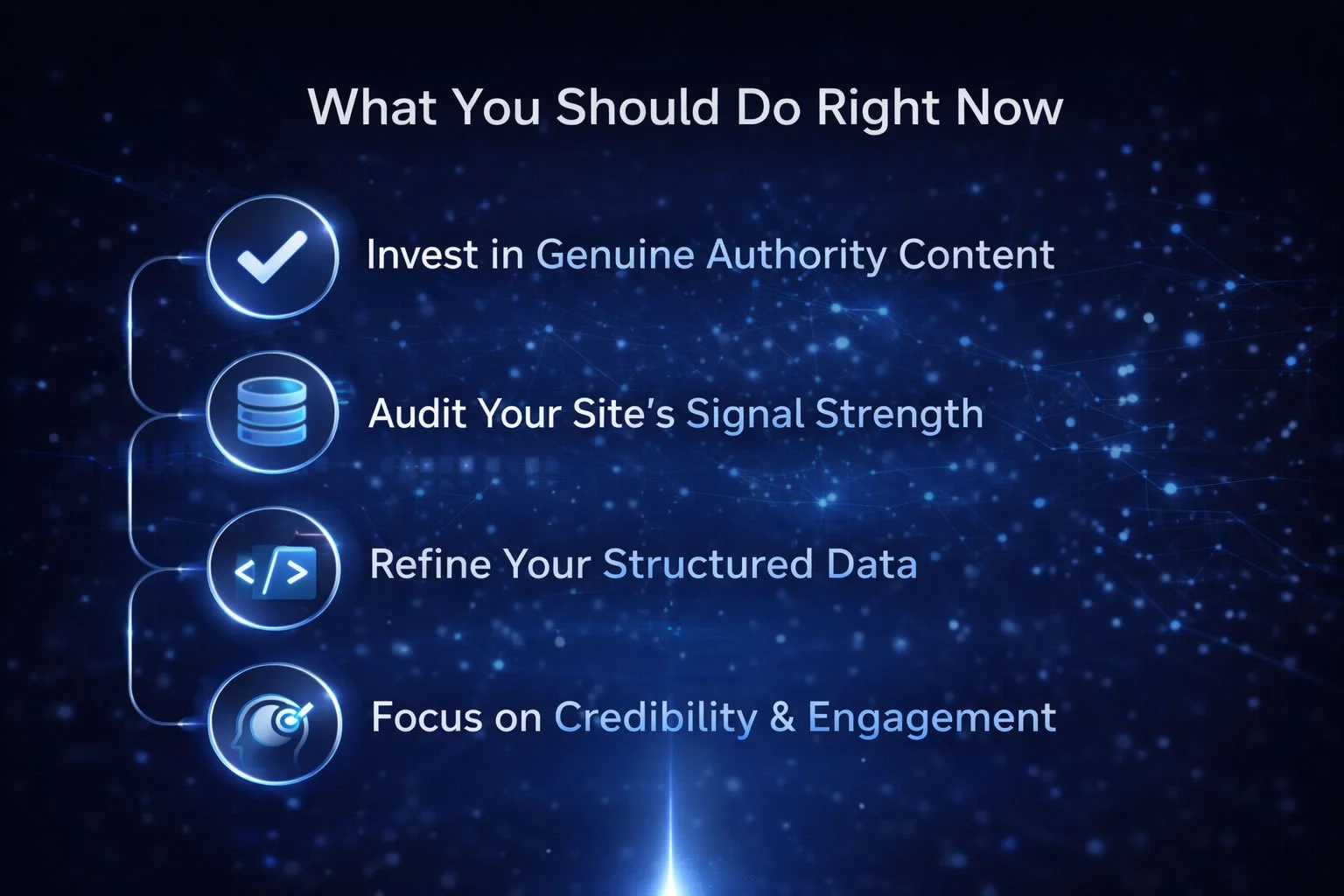
Here's the one thing I need you to remember: quit trying to game AI and just become an actual expert worth citing.
Here's your action plan:
Start creating primary source content. Original research. Case studies with real data. Expert analysis that demonstrates depth of knowledge in your space.
Audit your existing content through an AI lens. Is it structured? Is it comprehensive? Does it actually answer questions or dance around keywords?
Identify your authoritative topics. Where can you legitimately claim expertise? Focus there. Go deep, not wide.
Implement proper schema markup. Make it easy for AI systems to understand who you are, what you do, and why you're trustworthy.
Build measurement into your strategy from day one. Don't wait until you need to prove ROI. Start tracking now, even if the metrics aren't perfect.
🙋♀️ Frequently Asked Questions About AI Optimization
Will traditional SEO become obsolete with AI search?
Not dead, just different. SEO still matters. Your site needs to load quickly, work on mobile devices, and have high-quality content. That stuff isn't going anywhere. What changed? Authority and depth now matter more than keyword tricks. Those exact-match domains people used to buy? Pretty much worthless now. Old SEO was about gaming robots. New GEO is about proving you know what you're talking about to systems that can actually tell the difference.
How is my content showing up in AI search results?
Test it yourself. Start by running relevant queries in ChatGPT, Perplexity, Google's AI Overviews, and Claude. Will traditional SEO become obsolete with AI search?
Not dead, just different. SEO still matters. Your site needs to load quickly, work on mobile devices, and have high-quality content. That stuff isn't going anywhere. What changed? Authority and depth now matter more than keyword tricks. Those exact-match domains people used to buy? Pretty much worthless now. Old SEO was about gaming robots. New GEO is about proving you know what you're talking about to systems that can actually tell the difference.
How is my content showing up in AI search results?
Test it yourself. Pull up ChatGPT, Perplexity, Google's AI Overviews, and Claude. Type in the questions your customers actually ask. See if your brand shows up. Where does it appear? What's the context? Yeah, some tools are starting to track this stuff, but manual testing works best right now. Do it monthly. Pick 20 or 30 queries that matter to your business and watch what happens over time.
Should I be creating different content for AI search versus traditional search?
Same content, better structure. AI wants comprehensive answers with clear organization. Add better headers. Include FAQ sections. Use structured data. Be more definitive in your statements. Instead of "5 Quick Tips for Marketing," try "The Complete Performance Marketing Guide for 2025." Stop writing shallow listicles. One deep 3,000-word guide beats five generic 600-word posts every time.
What's the ROI timeline for generative engine optimization?
This takes time, period. I usually see brands start getting traction somewhere between 3 and 6 months out, assuming they're actually putting in the work. The winners here aren't the ones looking for shortcuts. They're the ones who started months ago. Yeah, building real authority is slow. But here's what makes it worth it: once AI systems trust you, that trust builds on itself. Every article you publish makes the next one more powerful. The brands who jumped on this early? They're crushing it right now compared to the ones still sitting on the sidelines.
Can small businesses compete with enterprise brands in AI search?
Yeah, and you might even have an edge. AI doesn't care how big your marketing budget is. It cares if you actually know your stuff. I've watched local businesses beat national brands in AI results because they created better, more niche-specific content. The trick? Pick your lane. Don't try to compete everywhere. Find the topics where you're genuinely the expert and own them completely. Focused beats broad every single time.
The B2The7 Final
The brands winning in AI search aren't the ones with the best optimization tricks. They're the ones building genuine expertise and making it accessible to both humans and machines.
Your competition is already figuring this out. The question is whether you'll adapt now or play catch-up later when the competitive landscape has shifted even more dramatically.
This isn't about choosing between SEO and GEO. It's about understanding that search behavior has fundamentally changed, and your strategy needs to change with it.
The window to establish yourself as an authority in AI-driven discovery is open. But it won't stay open forever.
📩 Get Weekly Trend Alerts in Your Inbox
Want these insights delivered straight to your inbox every week?
Sign up here to subscribe to the Trend Brief
Stay ahead of what’s moving in marketing, social, and tech.