Why SEO Is Still Alive and Evolving in the Age of AI: Search EVERYWHERE Optimization Explained
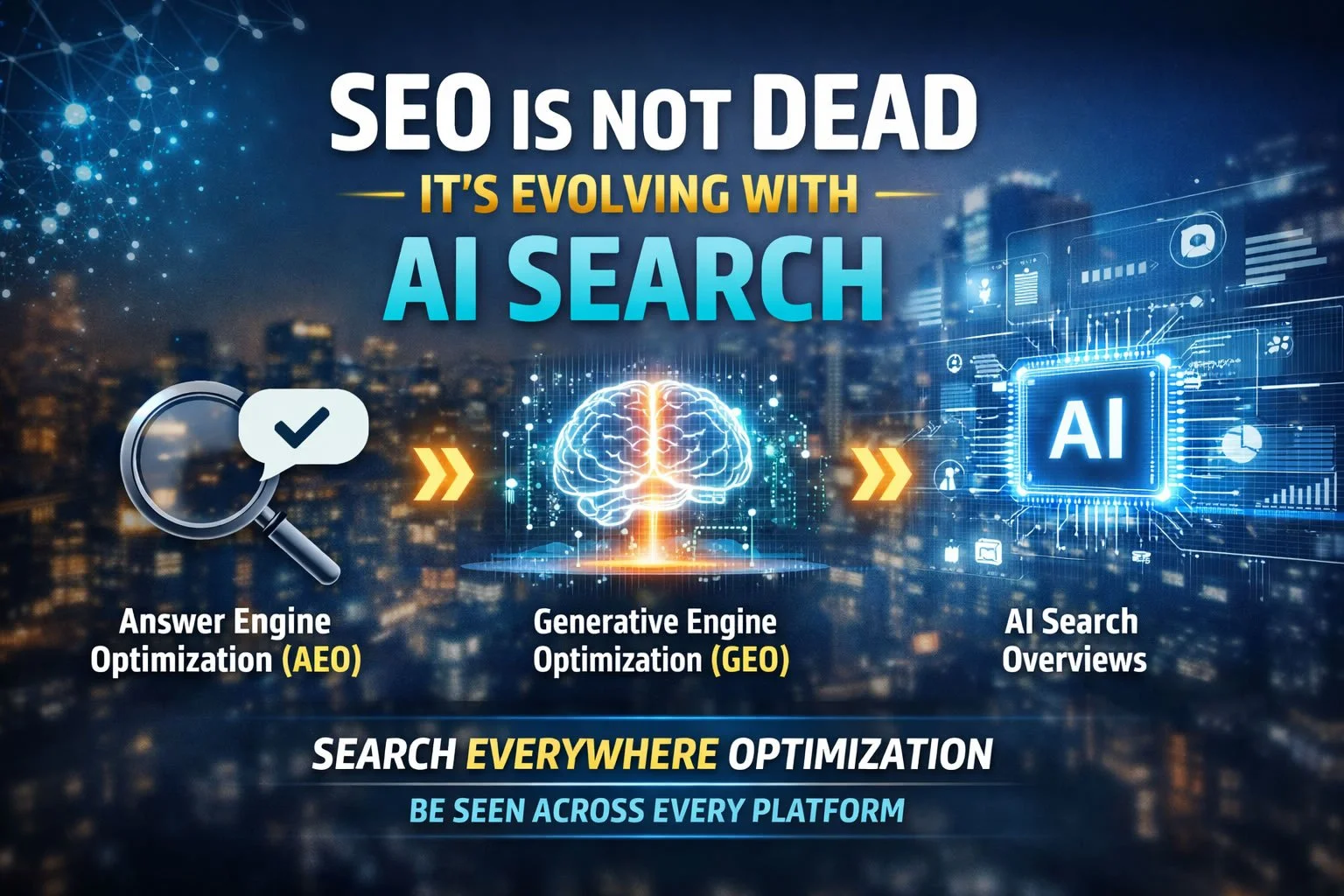
SEO isn't going anywhere — it's showing up in more places than ever before. As AI search tools like ChatGPT, Perplexity, and Google AI Overviews handle more queries, the brands that understand how Answer Engine Optimization (AEO) and Generative Engine Optimization (GEO) build on top of traditional SEO are gaining visibility advantages their competitors can't see yet. In this post, Bernie Fussenegger of B2The7 breaks down the relationship between all three disciplines, explains which SEO fundamentals directly support AI citation, and gives you a practical framework for optimizing content that performs across traditional rankings, direct answer boxes, and AI-generated summaries simultaneously.
In this article, I'm going to show you why SEO is still alive, why it's transforming, and how you can win in a world powered by both traditional engines and AI‑driven interfaces.
What You’ll Learn from This Article
How SEO is not dead and remains essential, no matter what new terms emerge
Why SEO is evolving but not being replaced by AI search models
The difference between traditional SEO, Answer Engine Optimization (AEO), and Generative Engine Optimization (GEO)
Data and trends that show the future of search and how marketers must adapt
Actionable strategies to optimize for both traditional and AI‑powered search environments
SEO Is Not Going Anywhere
Traditional search engine optimization has been a core marketing discipline for decades. Even as new terms like AEO (Answer Engine Optimization) and GEO (Generative Engine Optimization) have emerged, the underlying principles of SEO remain central: provide relevant, structured, authoritative content that answers user needs.
Some breed of SEO has existed since the earliest days of the internet. Google's algorithms have changed, but the essence hasn't: deliver value to users and provide signals that search engines understand. That's the foundation of good SEO, and it still holds today.
Here are a few evergreen statistics that show how SEO still drives the majority of web traffic and continues to matter:
Organic search accounts for more than half of all website traffic worldwide. Around 53% of all website traffic comes from organic search, according to recent data.
68% of all online experiences begin with a search engine.
Traditional SEO still outperforms many paid channels, and organic leads convert at 14.6% vs. 1.7% for outbound leads.
Those numbers show that organic visibility itself, the core output of SEO, is far from dead.
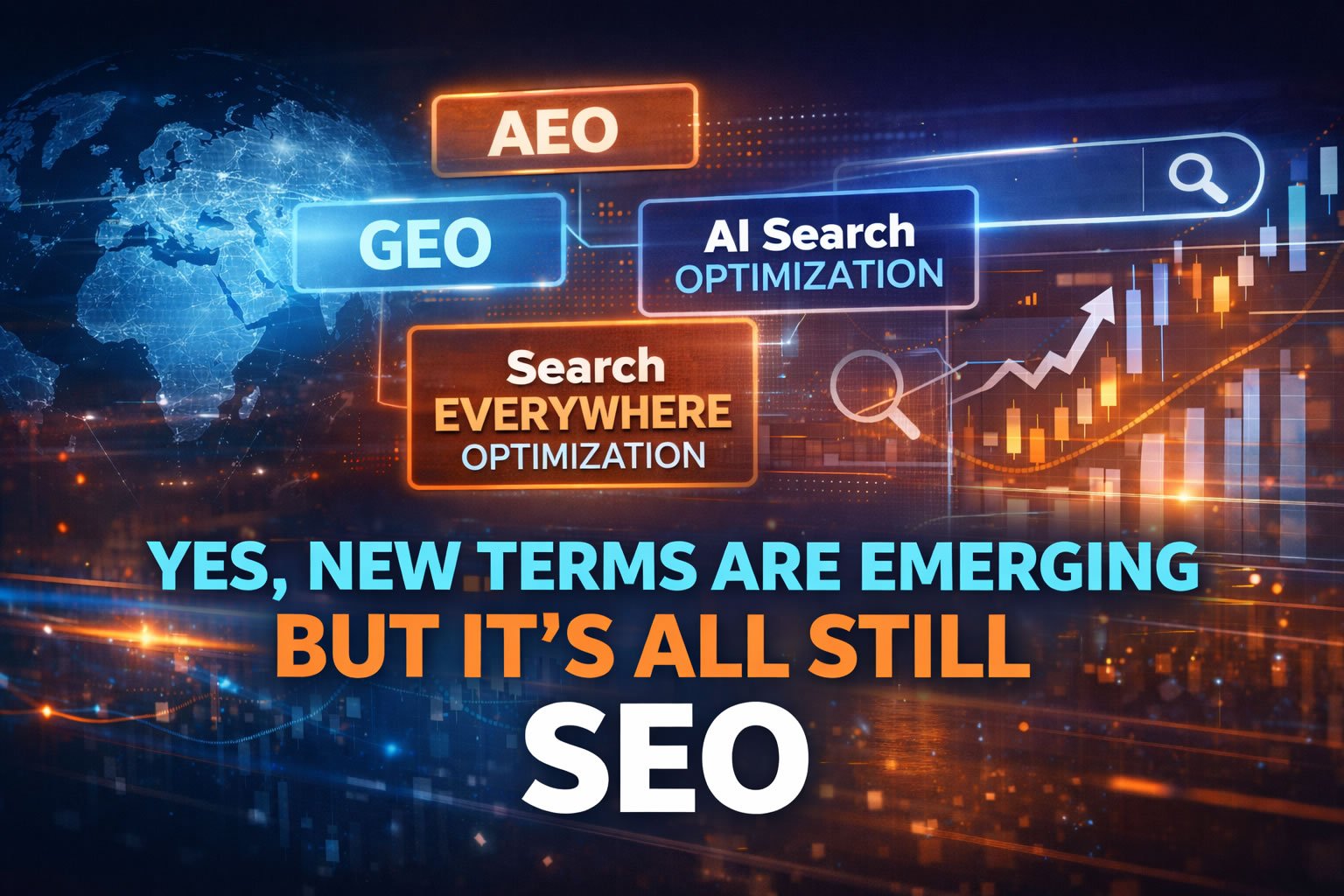
Yes, New Terms Are Emerging, But It's All Still SEO
Let's unpack some of the buzzwords you may have heard:
Answer Engine Optimization (AEO)
This is a term for optimizing your content so that it can be pulled and cited directly by AI answer systems like ChatGPT, Google AI Overviews, Perplexity, Cortana, Bing Copilot, voice assistants, and others.
Because generative systems increasingly summarize content and deliver direct answers, AEO is about structuring your content to make it extractable and trustworthy when an AI is generating an answer rather than just listing links.
According to some studies, more than 60 percent of searches now end without a click because users get their answers right on the results page or from an AI summary.
That doesn't mean search is dead; it means the format of discoverability is changing.
Generative Engine Optimization (GEO)
GEO refers to strategies that help your content appear within generative AI search results and summaries, especially in systems that stitch together information from many sources.
Some sources project that the global generative optimization market could grow from under $1 billion in 2025 to more than $33 billion by 2034, reflecting the investments marketers and businesses are making in this next layer of search optimization.
AI Search Optimization / AI SEO
Being visible online goes beyond just climbing Google rankings! Today, your content must also shine through in search engines, AI summaries, and intelligent assistants. Whether it's dubbed AIO, LLM SEO, or anything else, the key is clear—let's ensure your valuable knowledge is easily accessible when others seek it. Your experience truly matters, and together we can showcase it where it will make a real difference!
The Big Shift: From Links to Answers
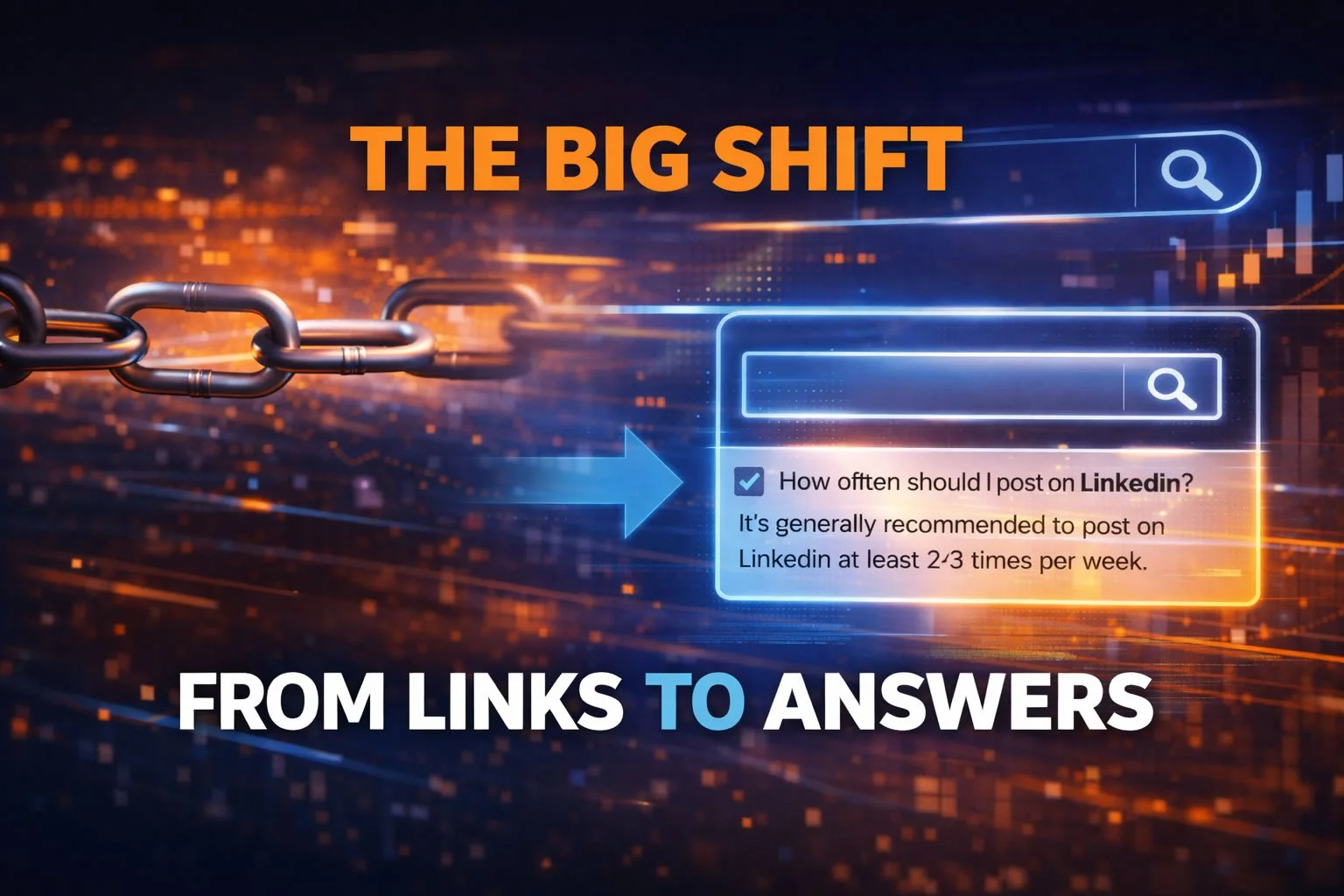
Traditional SEO was built around web pages, links, and rankings. In a generative search world, visibility becomes just as important—if not more—than where you rank.
AI-driven experiences, like Google AI Overviews and chatbots, often provide answers directly, eliminating the need for user clicks. Recent data shows a shift in search behavior:
AI Overviews now appear at the top of the results in more than 50% of searches across several markets.
When these summaries are present, click-through rates can drop significantly—organic CTR can fall by over 60%.
Users often end their search sessions faster, satisfied with the AI-delivered answer.
This zero-click world is already here. Your content shapes the answer someone sees, even if they never visit your site. That's visibility without a pageview—and it calls for a strategy that goes beyond traditional SEO metrics.
But none of this indicates that SEO is useless; instead, SEO is evolving to encompass multiple discovery channels.
SEO, AEO, and GEO Are Interconnected
Despite buzzword fatigue, the truth is that good SEO is foundational to both AEO and GEO.
Many of the tactics used for AI discovery, such as:
Structured data and schema markup
Clear, authoritative topical coverage
Semantic relevance and user‑intent mapping
High‑quality content that answers questions comprehensively
…are simply good SEO practices extended for the AI era. These practices help you rank in traditional search and get cited in generative answers.
One crucial idea: AI optimization does not replace SEO; it builds on it.
For example, one study even found that traditional SEO signals, such as referring domains, were strong predictors of visibility in large language model discovery.
Everything you've built with solid SEO still matters, and now it plays an even bigger role. The key is blending that foundation with the way AI surfaces content today. It's not about replacing one with the other; it's about making them work together. That's where the real opportunity is.
What Marketers Must Do Now
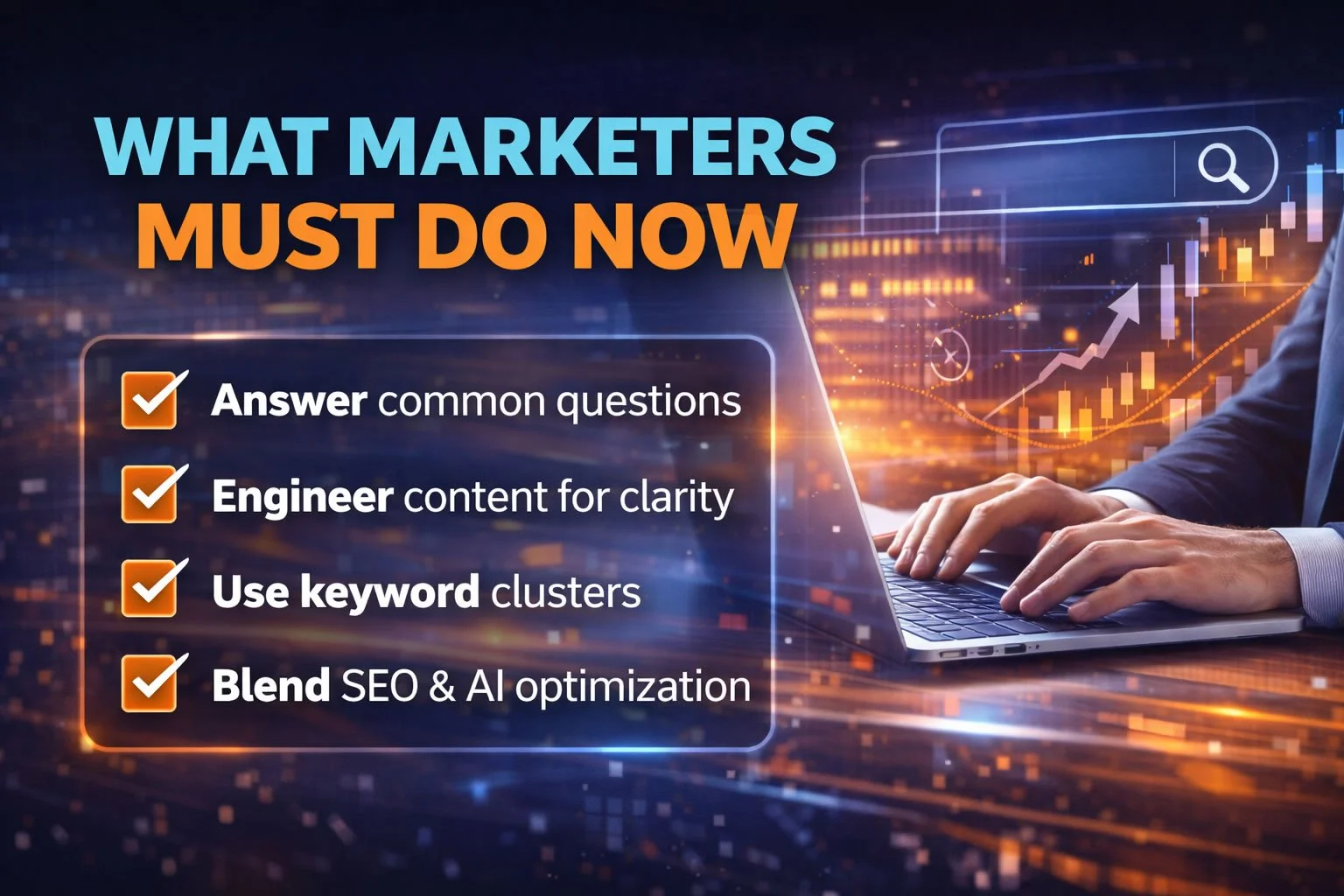
In the current search landscape, getting noticed means thinking beyond just rankings. It's about showing up across multiple formats and platforms. A good starting point? Focus on how people actually ask questions—and how clearly you answer them.
Focus on the user's intent with clear and direct answers.
AI tools and search engines are more likely to surface your content when it's easy to understand and structured well:
Use FAQs that reflect how people naturally ask questions
Put clear answers right after your headers
Break up info with bullet points, lists, or tables
When you improve how your content is laid out, you make it easier for people to read—and for search engines and AI tools to understand. Clean formatting helps your content get picked up in more places, from Google results to AI-generated summaries. Even minor tweaks can go a long way in getting your message in front of the right audience.
Use Schema and Structured Data Everywhere
Schema markup organizes your content, enabling search engines and AI to spotlight essential details. It’s a great way to boost your visibility in search results and AI-generated content!
Build Authority and Trust
Authority matters more than flashy formatting. While structure helps, AI tools are built to rely on credible, well-sourced content. That's why trust signals still lead the way.
Earning links from reputable sites, delivering more profound insights than your competitors, and showing evident subject-matter expertise all increase your chances of being found—whether it's through a traditional search or an AI-generated answer.
Track New Metrics
Traditional metrics still matter, but they’re just one piece of the puzzle. You’ve also got to look at how often your content is showing up in direct answers, being mentioned by name, or cited across AI-driven platforms. That’s where you really start to see if your content is trusted and making an impact where it counts.
Common Misconceptions
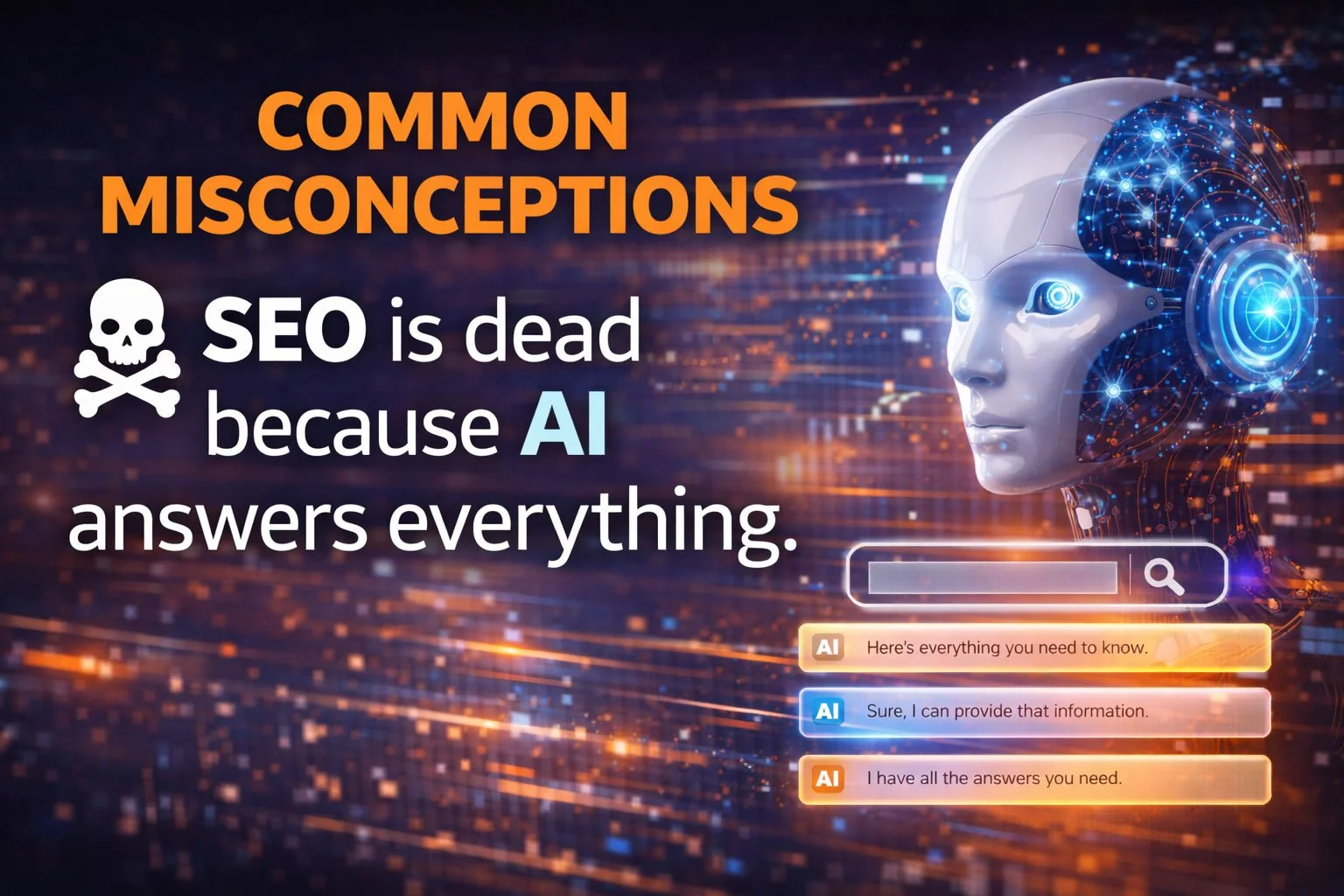
SEO is dead because AI answers everything.
SEO isn't going anywhere. It's showing up in more places than ever. AEO takes what you've already built and gives it more reach, helping your content show up in direct answers. GEO adds to that by getting your content into AI summaries, while still sticking to the basics that make SEO work. These aren't just new terms. They're added layers that keep you in front of your audience no matter how or where they're searching.
🙋♀️ Frequently Asked Questions Organic Social
Is SEO still relevant in 2026 with AI search becoming more common?
SEO is still very much alive. While AI is changing how people find and consume information, the core of SEO hasn't gone anywhere. Structuring your content well, making it easy to understand, and focusing on real value are still key to showing up—whether in traditional search results or in AI-generated answers.
What is the difference between SEO and AEO (Answer Engine Optimization)?
SEO is designed to help your content rank in search engines like Google by targeting keywords, building links, and creating a solid user experience. AEO takes a different path; it focuses on getting your content featured in direct answers from tools like Bing Copilot, Google's AI Overviews, and others. To stand out there, your content needs to be clear, structured, and reliable. The goal hasn't changed—it's still about being seen, just through a different lens.
What is Generative Engine Optimization (GEO)?
GEO is about preparing your content for AI systems that create summaries from multiple sources. It builds on traditional SEO but places greater emphasis on how clearly and contextually your information is written. Using structured formats, natural language, and complete answers helps ensure your content is included when AI pulls together results for users.
How can I make my content show up in AI Overviews and generative search results?
Start by answering real questions your audience is asking. Use clear headings, break things down with bullet points or tables, and add structured data like FAQ schema. These small tweaks make your content easier to scan and more likely to be pulled into featured results.
Does keyword research still matter in a world shaped by AI search?
Definitely. Even as search shifts toward understanding meaning and context, keyword research is still how you find out what people are actually looking for. Focus on keyword groups and broader topics instead of chasing one phrase at a time.
Can I optimize for both traditional SEO and AI search at the same time?
You can—and you should. Keep your SEO basics strong, then build on that with tactics like clean formatting, answer-focused sections, and content that’s easy for both people and machines to understand. It’s all part of one bigger strategy.
The B2The7 Final - SEO Will Keep Evolving
Search keeps changing. As people look for faster and clearer answers, the way content is discovered continues to evolve. But the core idea hasn’t changed. Your content still needs to deliver real value and answer real questions.
Clarity, structure, and trust have always been part of good SEO. Now they matter even more. AI tools rely on well-organized and reliable content to surface answers. This isn't a move away from SEO. It's a deeper focus on what has always worked.
The way I see it, SEO is still here because people are still searching. It keeps evolving because how they search is changing. And it remains essential because visibility always matters. Whether you call it SEO, AEO, GEO, AI search optimization, or Search EVERYWHERE Optimization, the goal is the same: being found when your audience needs you.
📩 Get Weekly Trend Alerts in Your Inbox
Want these insights delivered straight to your inbox every week?
Sign up here to subscribe to the Trend Brief
Stay ahead of what’s moving in marketing, social, and tech.