AI in Branding and Marketing in 2026: Key Applications, Strategic Shifts, and What Brands Must Do
AI is no longer on the horizon for marketing — it's the engine running the most competitive campaigns right now. In this guide, Bernie Fussenegger of B2The7 breaks down how generative AI is reshaping every layer of marketing and branding strategy in 2026: from faster content production and AI-driven personalization at scale to the emergence of Generative Engine Optimization and the new brand visibility dynamics created by AI search. More importantly, it covers how to integrate AI as a strategic multiplier without losing the human authenticity and brand voice that makes marketing actually work.
Every decade has its shift — 2026 is marketing's. What began as light experimentation is now changing how brands show up, scale personalization, and deliver results that matter.
The data doesn't lie: AI adoption is scaling fast. Brands are mixing machine precision with human creativity — using AI to unlock more innovative personalization, faster insights, more relevant content, and tighter campaign execution. By now, AI isn't a bolt-on. It's the backbone of creative marketing and brand growth.
What's ahead? Major shifts. Strategic ones. The kind that redefine how brands connect and compete. Here's what to know — and what to move on to — to stay ahead of the curve.
What You’ll Learn from This Article
How AI is reshaping branding and marketing strategies in 2026
Key technologies and applications driving brand innovation
Data‑backed trends that every marketer should know
How generative AI enhances personalization and campaign efficiency
Strategic recommendations for brand teams navigating the AI era
Let’s dig in!
The AI Marketing Landscape in 2026
Growth and Adoption Trends
AI adoption in marketing isn't slowing — it's accelerating.
Nearly all marketers use AI in some form, with studies showing that up to 99% personally leverage AI tools.
More than 70% of businesses already deploy generative AI in marketing workflows, from content generation to personalization.
Daily use of AI tools in marketing has increased, with more than 60% of marketers using them daily.
The AI in marketing market itself reflects this shift: valued at around $47.32 billion in 2025 and projected to grow rapidly, companies investing in AI are building for both scale and precision.
For brands, this signals a central strategic inflection point: AI is no longer a niche capability — it's infrastructure.
Key AI Applications in Branding
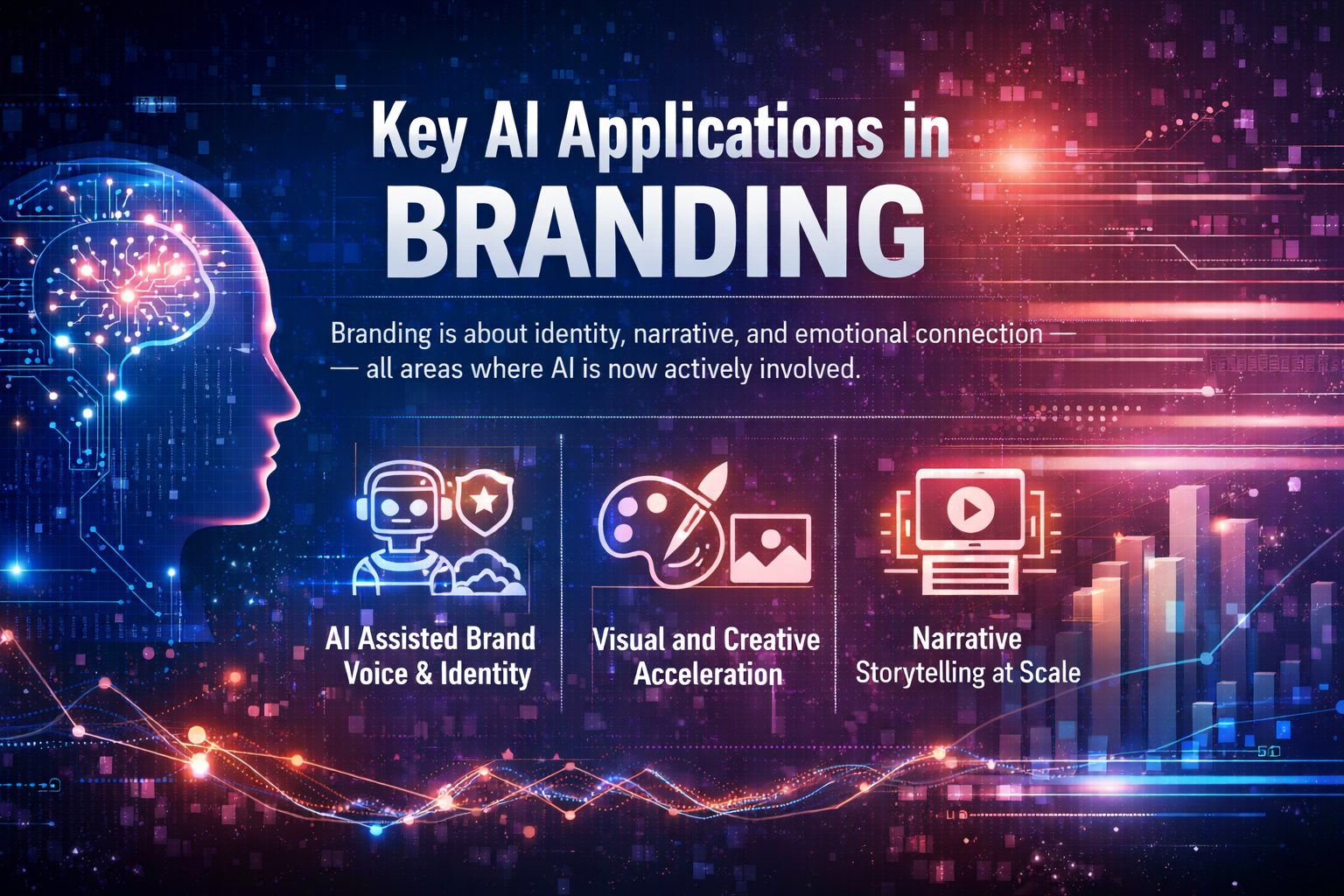
Branding is about identity, narrative, and emotional connection — all areas where AI is now actively involved.
1. AI‑Assisted Brand Voice & Identity
Generative AI tools help brands define and refine their tone, style, and messaging frameworks. Instead of leaning on templated outputs, strategic teams are using AI to explore variations of brand voice at scale — accelerating ideation while ensuring consistency across channels.
2. Visual and Creative Acceleration
AI‑generated imagery and video are familiar in digital campaigns, with tens of millions of images now created by AI platforms daily.
Brands can:
Rapidly prototype visual concepts
Personalize the creative based on audience segments
Test multiple visual variants without heavy production costs
3. Narrative Storytelling at Scale
It's not just about faster content. The real value lies in how teams use data to shape stories that land—grounded in what audiences feel, want, and respond to.
Key AI Applications in Marketing
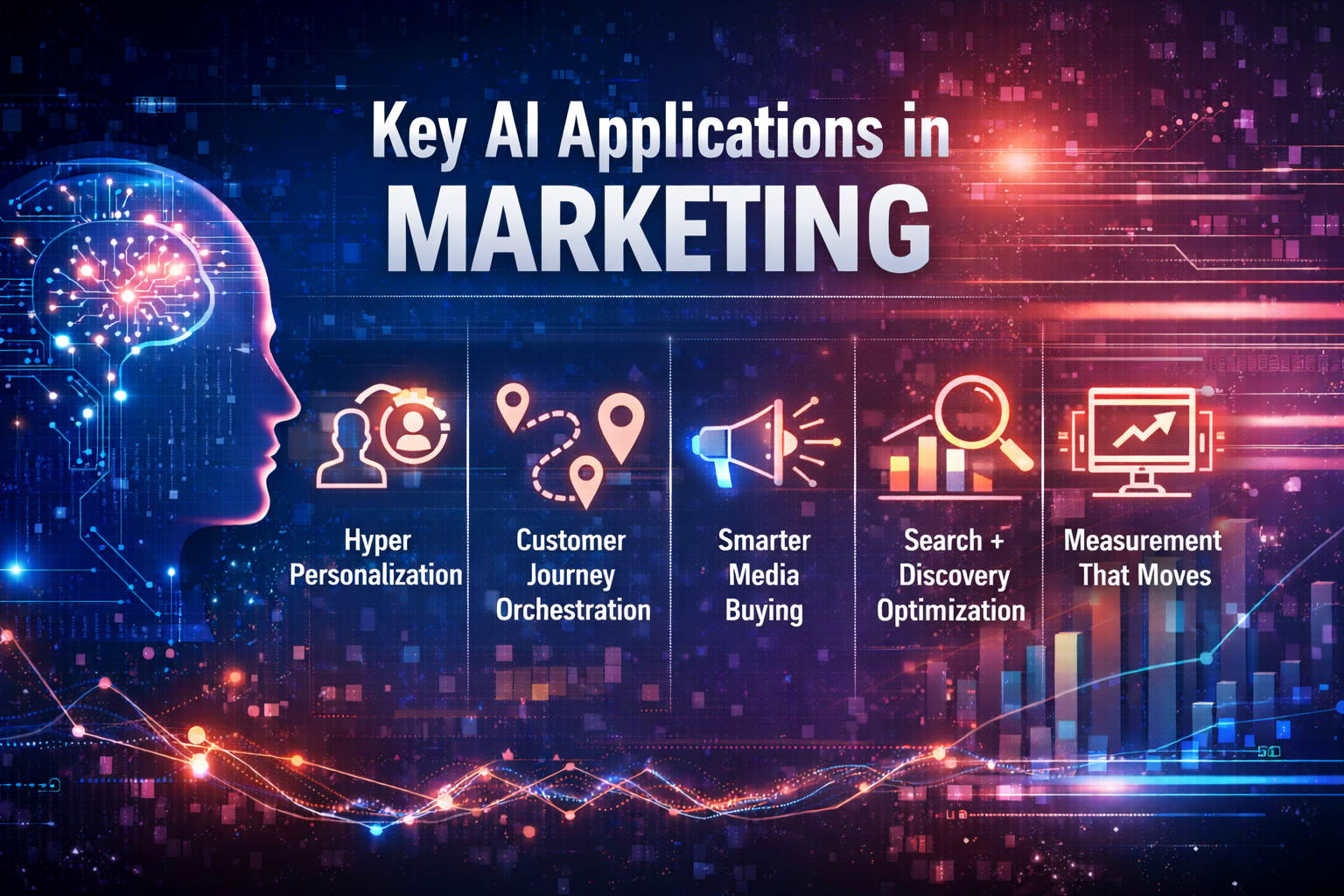
Branding sets the tone — but marketing needs to perform. This is where tech drives personalization, efficiency, and results you can measure.
1. Hyper‑Personalization
Consumers increasingly expect individualized experiences:
91% of consumers prefer personalized brand experiences, and AI personalization has been shown to significantly improve conversions.
AI now allows brands to tailor messaging in real time — at the individual level — based on behavior, preferences, and predictive modeling.
2. Customer Journey Orchestration
AI tools map and optimize journeys across channels, enabling brands to respond instantly to changes in user intent.
Instead of one‑size‑fits‑all strategies, marketing becomes a living system driven by data feedback loops.
3. Smarter Media Buying
Programmatic’s no longer fire-and-forget. It’s hands-on. Teams are adjusting bids, creative, and
targeting in real time to get more out of every spend.
4. Search + Discovery Optimization
People don’t just search on Google anymore. Discovery happens on TikTok, voice, chat — wherever attention lives. The win? Show up with purpose, not just presence.
5. Measurement That Moves
Marketers aren't just tracking — they're predicting. With sharper data and faster insights, brands are spotting what works, who matters most, and what's coming next.
Strategic Shifts Brands Must Embrace in 2026
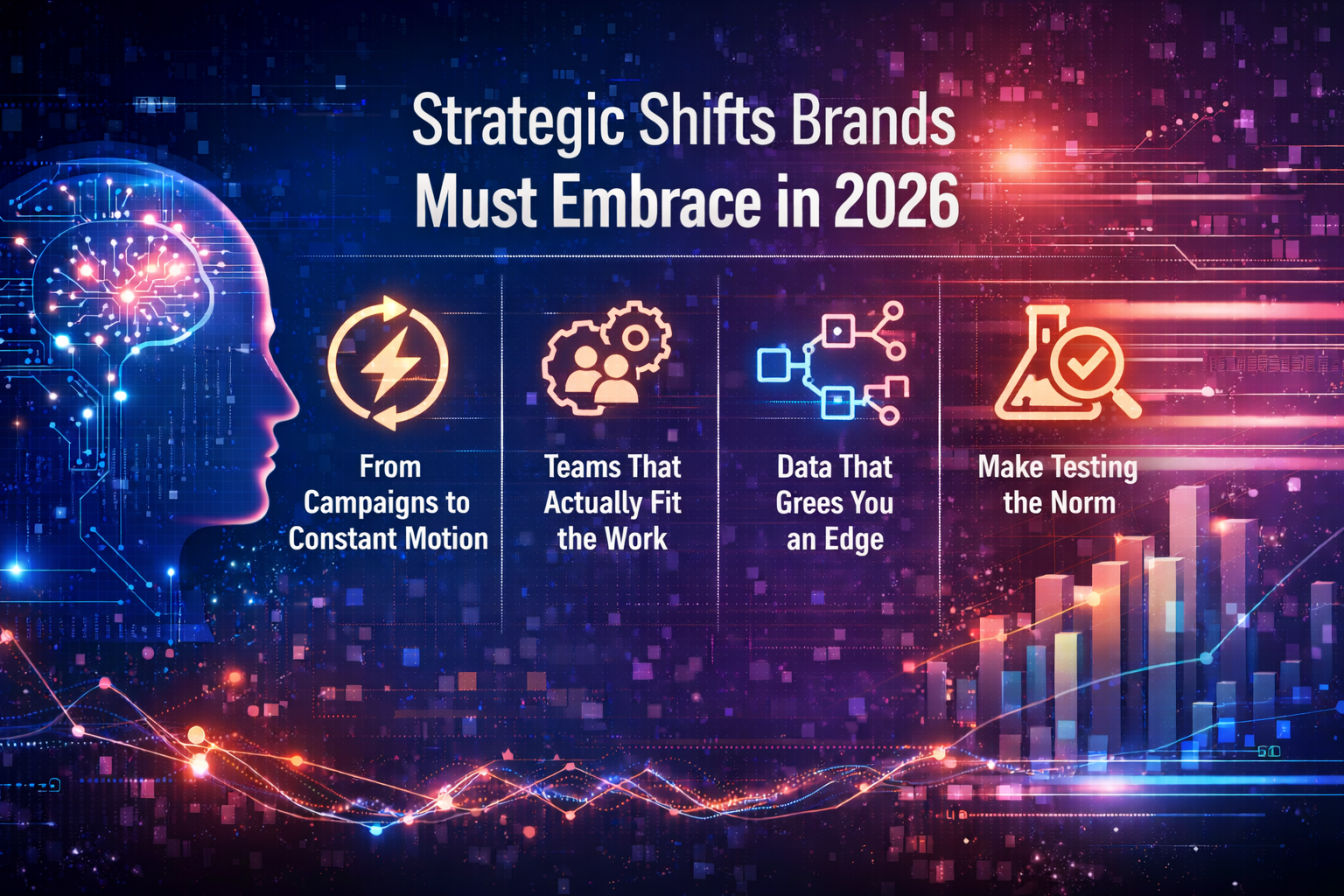
AI isn't just a tool to use — it's a system to integrate strategically. Here's how brands must evolve.
1. From Campaigns to Constant Motion
Marketing isn't seasonal anymore. Things move too fast. Brands need to respond in real time — not wait for the next calendar drop. If you're not adjusting on the fly, you're already behind.
2. Teams That Actually Fit the Work
The work's changed — the team needs to match. New skill sets are in play, and old roles are leveling up. Innovative brands are rethinking structure so people can focus on what moves the business, not just keep the lights on.
3. Data That Gives You an Edge
Data isn’t a report — it’s an advantage. The brands getting personalization right treat it like infrastructure. Clean, connected, and built to drive action. That’s the baseline.
4. Make Testing the Norm
Over-planning slows teams down. The brands that move fast test early, tweak often, and learn as they go. It’s not about being perfect — it’s about staying sharp.
Risks and Ethical Considerations
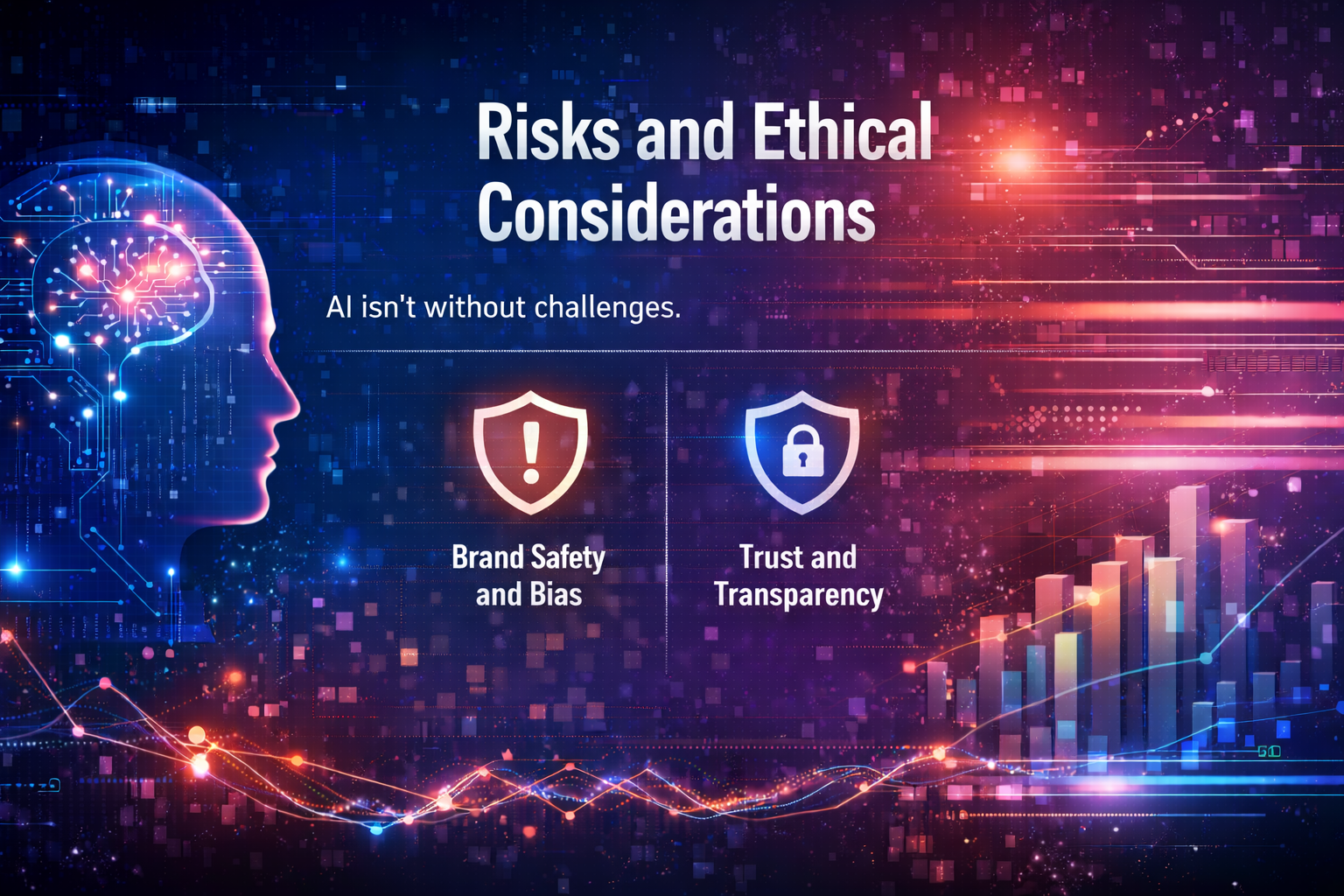
AI isn't without challenges.
1. Brand Safety and Bias
AI outputs can reflect bias or misinterpret context. Brands must ensure:
Guardrails for content quality
Bias mitigation strategies
Human review of AI outputs
2. Trust and Transparency
Consumers increasingly care about how their data is used. Brands that lead with ethical AI practices — clearly communicating how AI enhances experience without compromising privacy — will earn loyalty and trust.
Concrete Recommendations for Brands in 2026
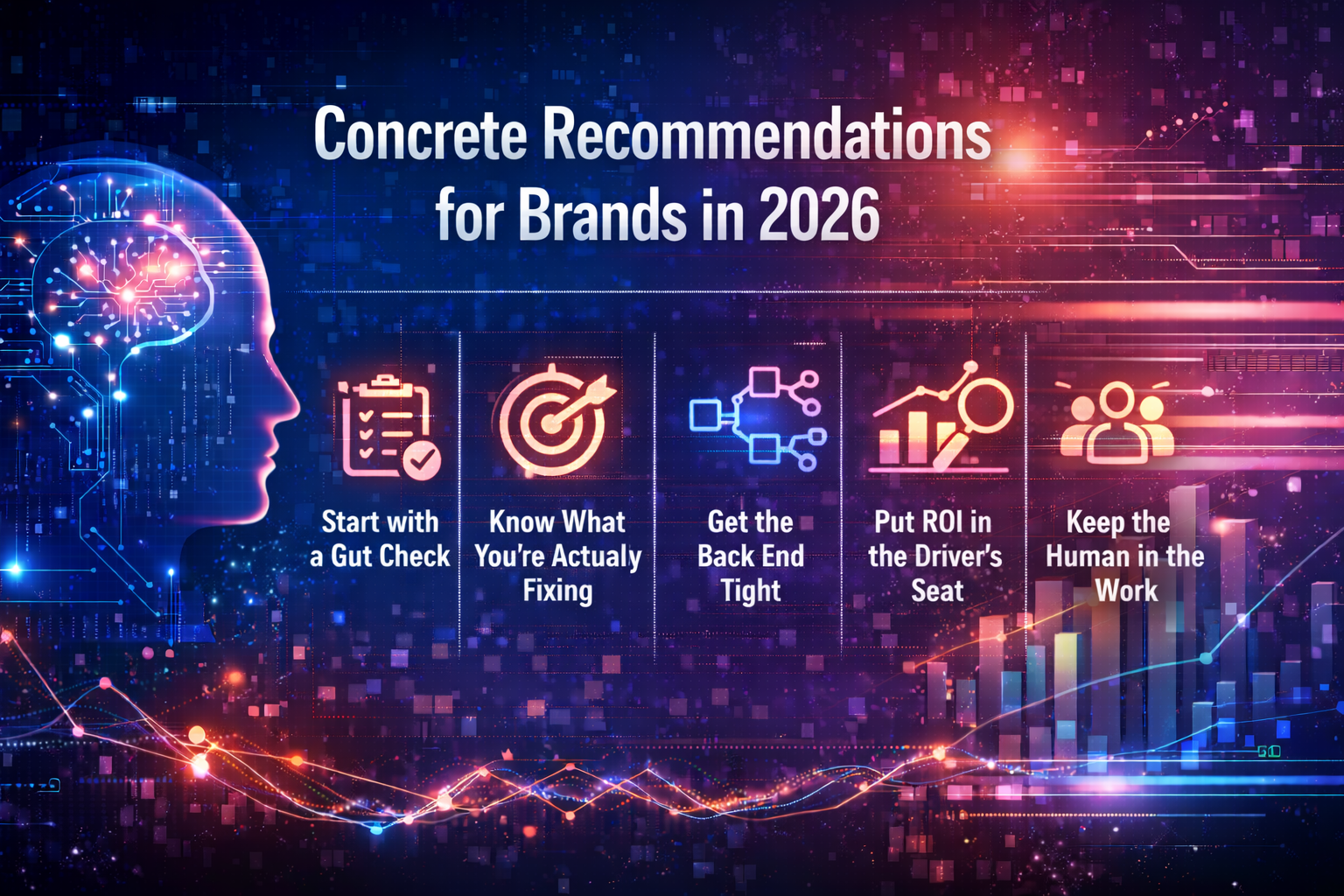
To thrive, brands should take these actions now:
1. Start with a Gut Check
Look at your setup — tech, data, team. Where are you solid? Where are you exposed? Be honest. If the core’s not right, nothing else scales clean.
2. Know What You’re Actually Fixing
Don’t jump at tools. Anchor to real business problems. What’s the outcome you’re chasing? Growth? Conversion? Efficiency? Stay focused on what moves the business, not what fills a slide.
3. Get the Back End Tight
If your data’s all over the place or your systems can’t talk, it’s already broken. Clean it up.
Connect it. Protect it. Then you’re ready to build on it.
4. Put ROI in the Driver’s Seat
Start with the stuff that pays off fast — smarter targeting, faster creative, tighter personalization. Prove the value early. Then go bigger.
5. Keep the Human in the Work
Scale’s great, but story still wins. Tech helps you move fast — people make it matter. The brands that get both working together? They’re the ones pulling ahead.
Real‑World Examples of AI in Branding & Marketing
1. Meta's AI‑Driven Advertising Vision
Platforms like Meta are building fully automated advertising systems that generate and optimize ad creative and targeting by 2026.
This illustrates how platforms themselves are betting on AI to drive scalability and personalization for brands.
2. Consumer Goods & Creative Innovation
Brands are augmenting long‑standing creative campaigns with generative tools — enabling faster production at lower cost while maintaining human oversight in storytelling and emotional appeal.
Looking Ahead: Predictions for AI in 2026 and Beyond
The next wave of AI in marketing and branding will bring:
AI agents optimizing entire journeys autonomously
Greater blending of human creativity and machine precision
Broader regulatory framing around data and AI ethics
Search and discovery optimized for AI platforms, not just traditional engines
🙋♀️ Frequently Asked Questions
How is AI changing branding in 2026?
In 2026, brands are using tech to scale storytelling, sharpen their voice, and stay consistent across every touchpoint. It's not replacing creative — it's helping teams move faster, stay on-brand, and connect with more relevance. Instead of replacing creative thinking, AI is expanding it — giving brands the ability to move quickly, stay aligned, and connect with audiences with greater relevance than ever before.
What are the top AI marketing trends in 2026?
Marketing in 2026 is all about speed, relevance, and more thoughtful execution. Brands are personalizing in real time, automating cross-channel journeys, and making media and content work harder. Search is shifting too — voice and visual are changing how people discover and engage.
What tools are brands using for AI marketing in 2026?
Brands are using tools that streamline content creation, automate media, and personalize at scale. Platforms like Jasper, Runway, and Performance Max are helping teams move faster, test smarter, and spend more time on strategy than execution. It's not about having more tools — it's about using the right ones to unlock real marketing impact.
How can marketers use AI ethically?
Using AI responsibly starts with transparency and intent. Brands need to be transparent about how they use AI, mainly when it affects customer experiences or content creation. Ethical use also means protecting consumer data, minimizing bias, and keeping humans involved in decision-making — particularly in areas that affect trust and brand perception. When AI governance is built into the strategy, it becomes a long-term asset rather than a risk.
How should brands prepare for AI in marketing?
Start with clarity. Know what matters, double down on what delivers, and build with intent. Skip the basics — data, structure, trust — and it all falls apart. This isn’t a shortcut. It’s the strategy.
The B2The7 Final
In 2026, this is the way modern brands work. It's how they move faster, stay relevant, and compete at scale—the upside's real — sharper execution, better traction, and growth that actually sticks.
But here's the thing — slapping on a few AI tools doesn't change the game. What does? Making AI part of your core: how you think, how you plan, and how your teams work. The brands that are going to win aren't the ones chasing trends — they're the ones using AI to amplify what humans do best, staying transparent, and evolving with how people actually behave and expect to engage.
📩 Get Weekly Trend Alerts in Your Inbox
Want these insights delivered straight to your inbox every week?
Sign up here to subscribe to the Trend Brief
Stay ahead of what’s moving in marketing, social, and tech.