Advertising Industry News September 2026: What Matters
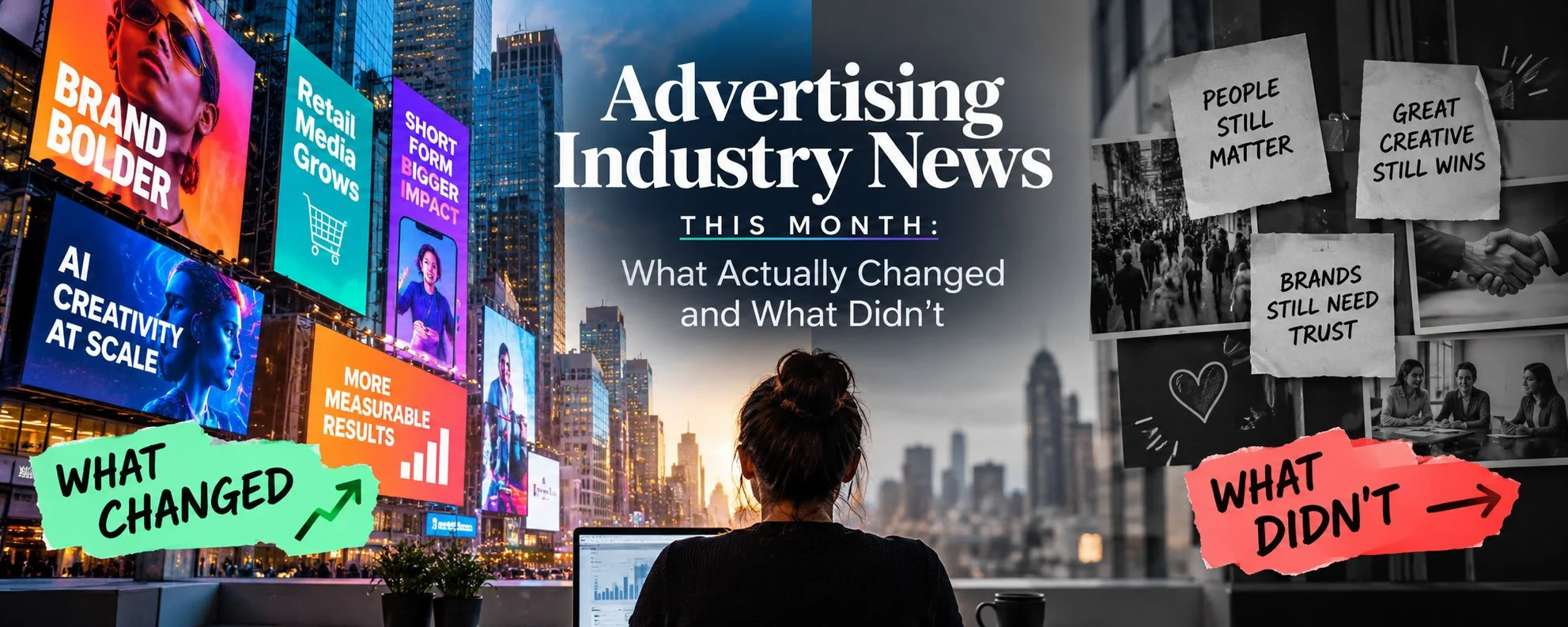
Four advertising stories from September 2026 are worth a small business's time: Microsoft's AI Max default, California's AI performer law, Amazon's push toward automation, and the FTC rule on AI-written ad copy. Here is what each one means for a small budget and the checks I'd run in your accounts this week.
The Short Answer
The advertising industry news that matters for small businesses from September 2026 comes down to four things. Microsoft switched AI Max on by default for new Search campaigns. California became the second state to require labels on AI-generated ad performers. Amazon keeps folding more automation into Sponsored Products. And the FTC's rule that you own your ad claims still applies when AI writes the copy. None of it is a crisis. All of it is worth fifteen minutes before your next ad budget decision.
What You Will Learn
- What Microsoft's AI Max default means for any business running Search ads
- What California's new law says about AI-generated people and voices in ads
- Where Amazon's push toward automation fits in if you advertise there
- Why "the platform did it" has never worked as a defense
- The four small checks I'd run in your ad accounts this week
How I Read Advertising News Now
Most advertising industry news is written for people who sell ad software, or for people who are afraid of missing something. I read more of it than is probably healthy, so I'm allowed to say that.
What I do now is simpler. I ask one question. Does this change how money moves, or how a small business gets found? Early on I wrote up every platform update like it was urgent, because that's what gets clicks. What changed my mind was watching how few of those updates mattered a month later. Most platform news is a company describing its own feature in the most exciting language it can find. That doesn't make it wrong. It makes it marketing about marketing.
Four items passed the test. And if you want the Google and Meta side of the month, I covered it in digital marketing news for September 2026.
Microsoft Ads
Change One: Microsoft Makes AI Max the Default
Microsoft Advertising made AI Max generally available in September and switched it on by default for new Search campaigns. Not a box you tick. A default you have to go find and turn off.
Google's version, which I broke down in marketing trends for September 2026, widens search matching, writes ad copy variations, and can send clicks to pages other than the ones you picked. Microsoft's follows the same playbook. Sometimes that finds customers you'd never have thought to target. Sometimes it spends your money on searches that have nothing to do with what you sell. You won't know which one you're getting unless you look.
So open your campaign settings this week, newest campaigns first. Check whether AI Max is on, then compare search terms and cost per lead against the weeks before. And if you're newer to running paid ads across more than one platform, my paid social advertising guide is a good place to get the lay of the land.
AI and Advertising Law
Change Two: California Puts a Label on AI Performers
On September 16, California signed SB 1050, which requires a clear disclosure when an ad prominently features an AI-generated performer. It takes effect January 1, 2027. The suggested wording is plain: "This performance features a synthetic performer" or "No human performer is depicted."
Three details make this one worth a small business's attention. It reaches AI-generated voices, not just faces. It's enforced through California's false advertising law, which opens the door to private lawsuits. And it isn't the first. New York's version has been in effect since June 2026.
If you're not in California and you've never used an AI spokesperson, you might think this skips you entirely. Maybe. But the law covers ads shown in California, and a rule in one big state has a way of becoming the industry standard everywhere once the larger advertisers build their compliance around it.
I wouldn't build a campaign around AI performers right now anyway. They still read as cheap to most people, and I say that as someone who uses AI tools every day. If you're running video or voice ads with synthetic people in them, talk to a lawyer. I'm a marketer, not an attorney.
Amazon Ads
Change Three: Amazon Keeps Automating Sponsored Products
Amazon doesn't get as much airtime as Google and Meta in small business marketing talk, but if you sell products there, its ad tools matter a lot. And the direction is the same one every platform is heading. More automated bidding. More automated targeting. Fewer decisions left to you.
Here's my honest opinion. Automation isn't evil, and I use plenty of it myself. But every one of these platforms is betting that most advertisers won't watch closely enough to notice when it underperforms. Don't be the advertiser they're betting on. Pull your cost per click and conversion rate from before you let automation take over and compare them to now. My guide to paid media strategy for small business in 2026 explains how I think about watching several automated systems at once.
Ad Compliance
Change Four: AI Ad Copy Is Still Your Responsibility
Here's the part that doesn't change with any new law. When an ad makes a claim, the business running that ad has to be able to back it up. It doesn't matter whether you wrote the copy, an employee wrote it, or an AI tool generated it at 2 a.m. A platform's built-in tools don't take that responsibility off your plate.
So why does it matter more now? Because so much ad creation is being handed to AI that it's easy to lose track of what your own ads actually say. When did you last read the exact wording of the copy your ad platform generated for you? If the answer is "months ago" or "never," you're not alone. You're also exposed.
Take ten minutes this week and read every live ad out loud. If you wouldn't say a claim to a customer's face, or couldn't prove it if asked, change it. That's a lot cheaper than finding out the hard way.
Why Small Advertisers Notice Last
Look at what these four stories have in common. Somebody else decided something, and the advertiser found out later, if at all. Most small business owners build a campaign, watch it for a week or two, and then leave it alone because the ad account is the last thing on a very long list.
Platforms know that. It's not sinister exactly, but it isn't neutral either.
A default is a decision made for you on the day you're least likely to question it.
So build your own early warning. Set a recurring reminder on your calendar. Open each ad account, look at the last two weeks against the two before, and write down anything odd. That's the whole system. It's dull, and it works better than any tool I could sell you.
What These Four Changes Have in Common
Every one of them points the same way. Platforms make more decisions for you. Regulators keep saying the responsibility stays with you. And new rules are showing up around AI-generated people and voices.
Where does that leave a small business? Not helpless. But you can't set it and forget it anymore, and a quiet platform isn't a stable one. Somebody has to check. On a small team that somebody is you. If you're local and run social ads too, social media advertising for Louisville small businesses is written for exactly that situation.
What I'd Check This Week
- Microsoft Advertising: see whether AI Max is on for any recent Search campaign, then decide on purpose
- Amazon Ads: compare cost per click and conversion rate from before and after you let automation take over
- Every live ad: read the copy out loud and ask whether you could defend every claim
- AI performers: if you use AI-generated people or voices in video or audio ads, read what California and New York require and get legal advice
If four checks feels like a lot, start with Microsoft and your ad copy. Those are the two where money or risk leaves your account fastest. My marketing ROI audit breakdown shows how I check whether everything else is earning its keep.
Frequently Asked Questions
What was the biggest advertising industry news in September 2026?
Microsoft making AI Max the default for new Search campaigns and California's new law on AI-generated ad performers had the most direct impact. The FTC's responsibility rule and Amazon's steady push toward automation matter for how you manage ads day to day.
Am I responsible for what an AI tool writes in my ads?
Yes. Regulators have been clear that using an automated tool doesn't shift responsibility for a false or misleading claim away from the business running the ad. Read your own ad copy regularly, whoever or whatever wrote it.
Should I turn off AI Max or similar automated ad settings?
Not necessarily. Compare your results before and after any automated system takes over, and decide from actual numbers, not from a feeling that automation must be better because it's newer.
Does California's AI performer law affect businesses outside California?
It can. The law takes effect January 1, 2027 and applies to ads shown in California, so a business outside the state could be affected if its ads reach Californians. Rules like this also tend to become an informal industry standard, so it's worth watching either way.
How often should I check advertising industry news?
Weekly is enough for most small businesses. Ask one question about anything you read. Does it change how money moves or how customers find you? If not, skip it. My newsletter for busy business owners covers the changes that matter, and the News and Blog has the longer versions.
Conclusion
September's advertising news wasn't loud, and that's exactly why it was easy to miss. Nothing exploded. Platforms kept making more decisions on your behalf, regulators kept saying the responsibility stays with you, and a new law took aim at AI-generated people and voices. The businesses that check their own accounts catch problems early. Everybody else finds out through a bad month.
Fifteen minutes is enough. If you'd like help building that habit, or you want someone to look at your ads with fresh eyes, reach out or see how I handle digital strategy planning.
Get a Fresh Set of Eyes
I'll look at your Microsoft, Amazon or Google ads and your live ad copy, then tell you plainly what changed and what to do about it. One strategist, no agency markup.
Work With BernieGet the Weekly Version
The platform changes that matter, in plain language, for busy small business owners. No filler. Straight to your inbox.
Subscribe Free