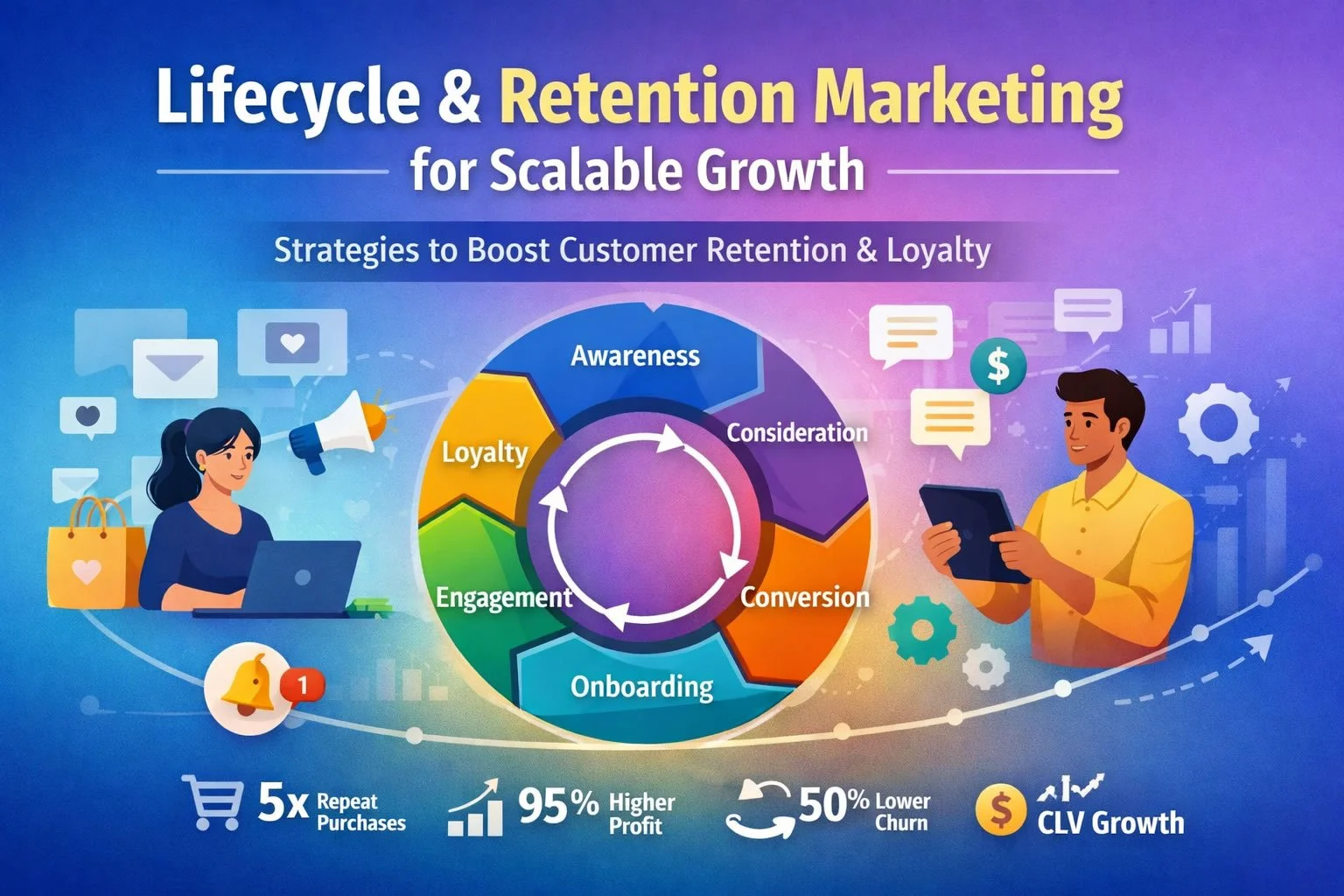
Lifecycle and retention marketing are the most underfunded levers in most businesses' marketing mix — and they're also the highest-ROI ones. In this comprehensive guide, Bernie Fussenegger of B2The7 draws on lessons from building Papa John's loyalty program and working with brands across B2C, B2B, and DTC to lay out a practical framework for lifecycle marketing: how to map every customer stage from discovery to advocacy, which retention metrics actually predict revenue, the behavioral segmentation approaches that unlock personalization at scale, and the specific automation tools that make it work across email, SMS, and CRM. If you're pouring budget into acquisition while ignoring what happens after the first sale, this guide is for you.
What You’ll Learn from This Article
The real difference between lifecycle and retention marketing
The key stats that matter and why they're worth tracking
Lifecycle strategies that drive repeat engagement
Metrics that show what's working (and what's not)
Straightforward plays that work for B2C, B2B, and DTC
What's Lifecycle Marketing All About?
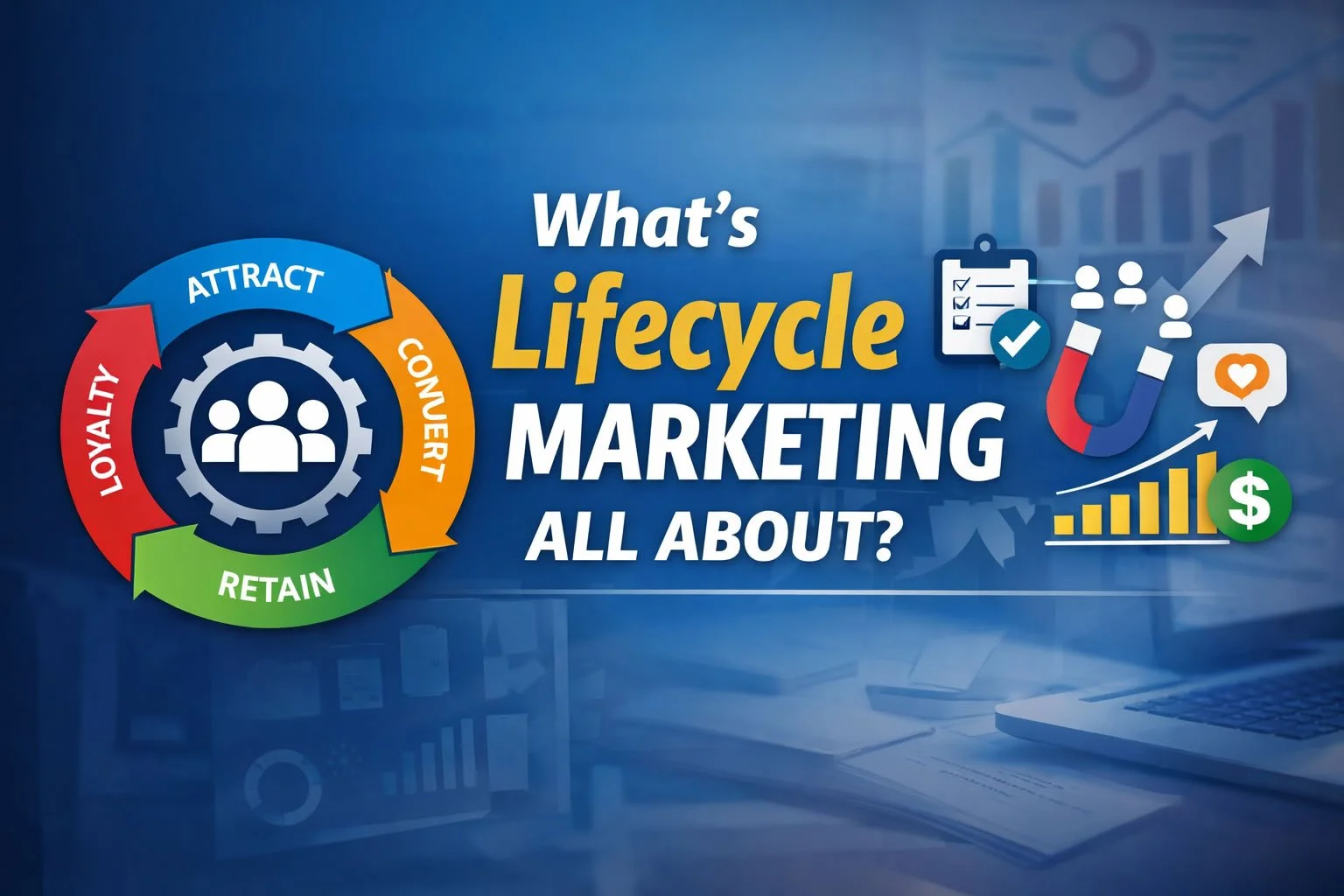
It's about hitting the right message at the right moment across the customer journey.
Think:
Awareness: They have just become aware of your presence.
Consideration: They are exploring their available options.
Conversion: They have made their first purchase from you.
Onboarding: They are starting to familiarize themselves with the process.
Engagement: They are beginning to form regular habits.
Loyalty: They are returning and recommending you to others.
Lifecycle marketing connects the dots between those stages. It's fueled by behavior, not just demographics. The data you have tells you what they want. Use it to craft messaging that sticks.
A solid lifecycle strategy uses data, content, and automation to build relationships at scale. It gives you a structure for nurturing leads and maximizing the value of each customer touchpoint.
Why Retention is Your Secret Weapon
Lifecycle brings the structure. Retention brings the staying power.
Here's what the numbers say:
Boost retention by 5%, and you could grow profits by 25% to 95%
Keeping a customer costs a fraction of acquiring a new one
Second-time buyers return 45% of the time—third-timers hit 54%
Returning customers are 50% more likely to try new products
Loyal buyers spend 31% more than first-timers
Retention makes your marketing work harder. It's not just about getting new customers in the door; it's about building the kind of relationship that keeps them coming back.
If you don't have a plan in place for repeat business, you're leaving money on the table. Too many brands pour budget into acquisition and ignore what happens after the first sale. Put your energy into retention, and you'll see growth that lasts.
Numbers That Matter
Here's what you should be tracking:
Customer Retention Rate (CRR) – If customers are leaving quickly, your onboarding or product experience may need improvement.
Customer Lifetime Value (CLV) – What is each customer worth? If CLV is not increasing over time, your retention strategies are not effective.
Churn Rate – Who's slipping through the cracks? Watch monthly, quarterly, and by cohort.
Repeat Purchase Rate – Who's coming back for more? This shows how well you're nurturing post-purchase behavior.
Engagement Metrics – Who is truly paying attention? Some key metrics to watch are open rates, click-through rates, on-site behavior, and product usage.
Tactical Playbook for 2026 and beyond.
During my time leading retention efforts at Papa John's and collaborating with other brands, I identified several effective strategies to drive customer loyalty. These strategies not only encouraged repeat orders but also fostered loyalty and increased long-term value. Implement a clear plan using these approaches, and you will see a positive impact.
1. Personalization at Scale
The inbox is crowded. The feed is noisy. Personalization cuts through. Start with:
Emails are sent after a purchase, tailored to the specific items that customers have bought.
Triggers that activate based on a user's browsing or shopping cart behavior.
Ensure a consistent tone across email, SMS, and push notifications.
Ensure your customers feel acknowledged. When they feel understood, trust builds more quickly.
2. Automate Where It Matters
Marketing automation is a game-changer! Most brands overlook their potential by treating it as a one-off rather than integrating it into their ongoing strategy, or they don't implement it at all.
Start with the basics that actually make a difference:
A welcome and onboarding series that makes the first impression and gives you the ability to showcase your brand or features
Cart reminders that reach people before they move on
Simple check-ins for customers who've gone quiet
Follow-ups around key moments, like a second order or a one-year mark
Build them once, then keep testing and refining (look at the metrics for direction). The key is staying relevant and showing up at the right time.
3. Rethink Loyalty Programs
Back when I helped set up the loyalty program at Papa John's, one thing was clear—loyalty isn't just about points or punch cards. It's about giving people a reason to feel connected to your brand.
Here's what works:
Tiered rewards based on how often they buy or engage
Early access to products, content, or special events
Surprise offers tied to moments that matter
Perks that create community, not just discounts
Keep it focused, keep it personal. Loyalty should drive retention, not just another promo channel.
4. Fix the Friction
Retention dies when the customer experience breaks down. Audit every step:
Is onboarding intuitive?
Can customers get help fast?
Is your checkout process smooth on mobile?
Are your emails useful or annoying?
Gather feedback early and often. Build a feedback loop into your lifecycle process.
5. Let the Data Lead.
Data doesn't just help optimize. It enables you to predict. With the right insights:
You can identify high-value segments and double down
You can spot churn signals before customers leave
You can track what channels are driving retention
Behavioral segmentation unlocks a whole new level of lifecycle strategy. Use what people do—not just who they are—to power your campaigns.
One Size Doesn't Fit All.
Retention looks different across business models.
B2C
Create urgency with seasonal offers and limited drops
Use reviews, UGC, and referrals to deepen brand trust
Build campaigns around lifestyle, not just product
DTC
Build replenishment flows for consumables
Create high-value welcome offers with clear next steps
Combine loyalty, email, and SMS into one experience
B2B
Educate through onboarding and regular product updates
Use customer success managers to reduce churn risk
Track product usage to identify upsell opportunities
🙋♀️ Frequently Asked Questions Organic Social
How's lifecycle different from retention marketing?
Lifecycle marketing is the broader journey—from discovery to advocacy—while retention marketing zooms in on the period after the first purchase. Lifecycle strategies focus on acquisition, onboarding, and engagement. Retention strategies focus on keeping customers loyal, reducing churn, and maximizing lifetime value. Both work together to build a more profitable business.
Is retention really cheaper than acquisition?
Yes. It's almost always cheaper to keep a customer than to find a new one. The ones who stick with you tend to buy more, talk about your brand, and give you grace when things aren't perfect. That loyalty turns into consistent, lasting growth.
What platforms help with this?
If you're looking to build automated, personalized messaging, platforms like Klaviyo, Braze, ActiveCampaign, and Customer.io make it easy to set up behavior-based flows across email, SMS, and other channels. For tracking what's working and identifying where people drop off, tools like Amplitude and Mixpanel provide the data to fine-tune every step of the customer journey.
What's the best way to measure success?
This is what I look at. Retention rate, lifetime value, churn, and how often people come back. These numbers tell you if your marketing is doing what it should. I break it down by group, watch where people fall off, and always tie it back to revenue. That’s how you know what’s really working.
What's working best for DTC right now?
High-performing DTC brands are leaning into post-purchase automation, replenishment reminders, loyalty integrations, and personalized SMS. Cross-channel consistency is key. Brands that win are building experiences that adapt to customer behavior—not just batch-and-blast messaging.
The B2The7 Final
I’ve seen this firsthand—at Papa John’s and with other brands I’ve worked with. The ones that grow and keep growing are the ones that treat lifecycle and retention as core strategy, not buzzwords. They build the right foundation, stay consistent, and use data to guide every step.
If you want your marketing to scale without wasting budget, this is the way. Be intentional. Show up where it counts. And put real focus on retention. It works.
📩 Get Weekly Trend Alerts in Your Inbox
Want these insights delivered straight to your inbox every week?
Sign up here to subscribe to the Trend Brief
Stay ahead of what’s moving in marketing, social, and tech.