Omni-Channel vs. Multi-Channel Marketing: What Marketers Need to Know in 2026
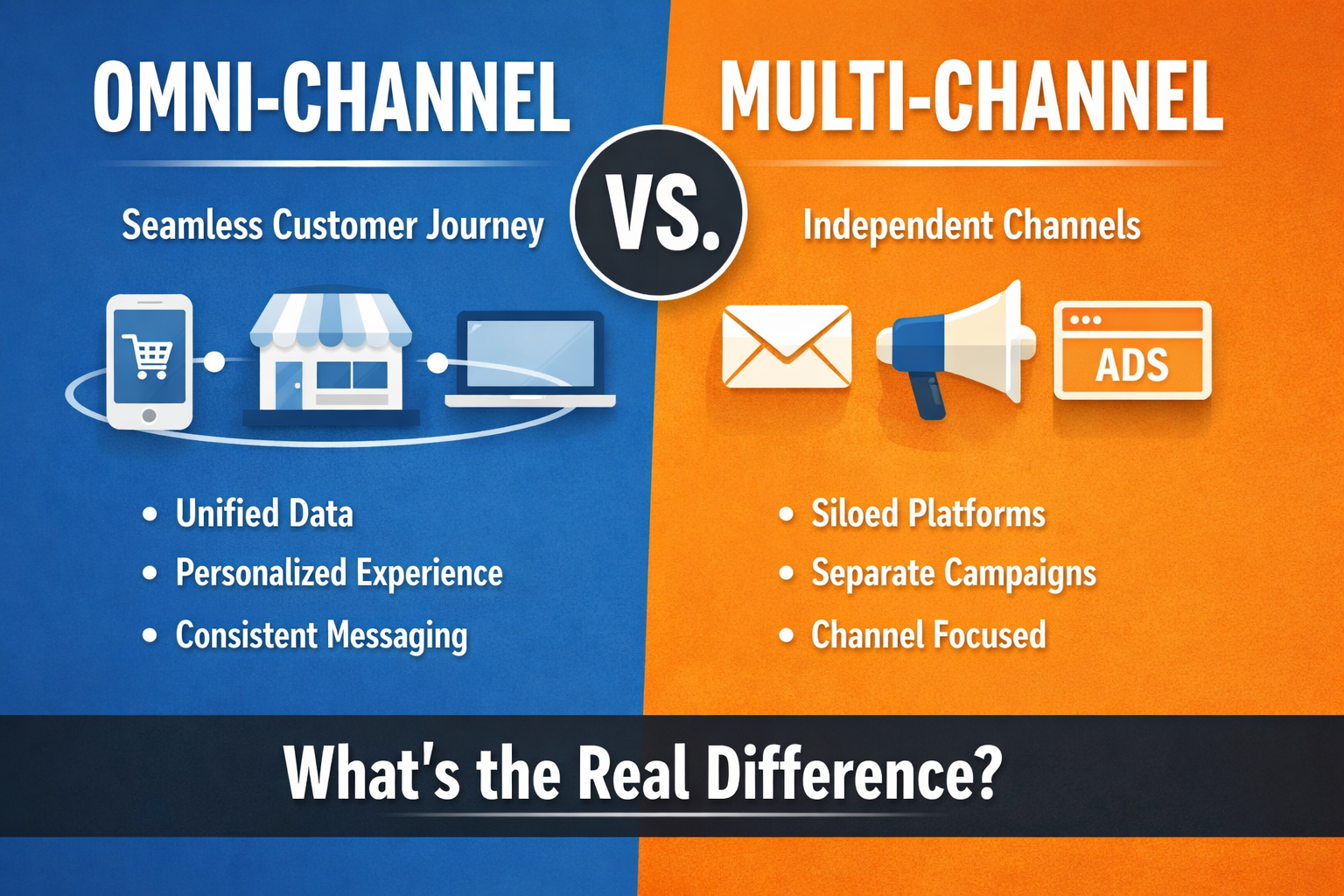
Omni-channel and multi-channel marketing are not the same thing — and confusing them is one of the most expensive strategic mistakes a brand can make. Multi-channel marketing means being present on multiple platforms. Omni-channel marketing means those platforms work together to create a seamless, connected customer experience across every touchpoint. In this guide, Bernie Fussenegger of B2The7 explains the difference with real examples and data, breaks down why customers in 2026 expect integrated experiences as the baseline, and gives you a practical framework for evolving from a multi-channel presence into a true omni-channel strategy that drives retention, repeat purchase, and lifetime value.
Every marketing team wants to "meet customers where they are." But let's be honest — where they are is everywhere. One moment they're scrolling Instagram, the next they're on your site, then they're chatting with your support team, all while your emails are sitting unread in their inbox. This is why the difference between omni-channel and multi-channel marketing matters more than ever.
This article is here to cut through the buzzwords. If you're planning next year's campaigns or wondering how to stop your brand from feeling like five different companies across channels, keep reading.
What You’ll Learn from This Article
Clear, no-fluff definitions of omni-channel and multi-channel marketing
The fundamental differences between them — and why they matter for your customers
Data-backed insights on performance, retention, and ROI
Practical, real-world examples of how each approach plays out
Guidance on which strategy fits your brand best
Actionable steps to start moving toward an actual omni-channel experience
Let’s dig in!
What Is Multi-Channel Marketing?
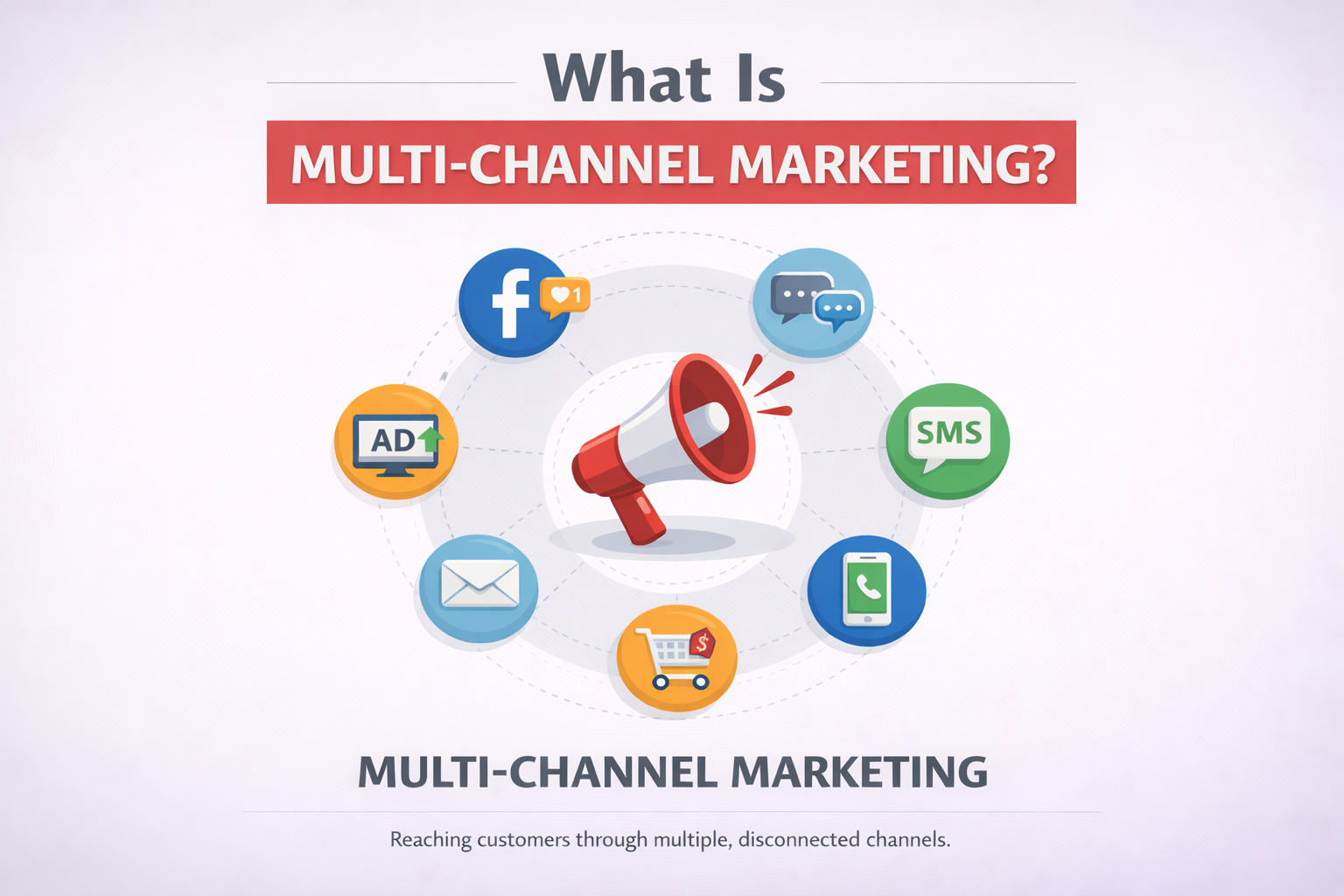
Multi-channel marketing is precisely what it sounds like: using more than one channel to promote your business. Think email, social media, paid ads, blog content, and some print if you're feeling old school.
Each of these channels usually runs independently. Your email strategy? Separate from your paid strategy. Your organic social? Probably siloed too.
Key traits:
Channels operate independently
Messaging varies per channel
Focus is on reach and volume
Example: You launch a new product. Your team writes one email, one social, and one ad campaign. The message and timing don't match. Customers might see all of it, or none of it, depending on where they hang out.
What Is Omni-Channel Marketing?
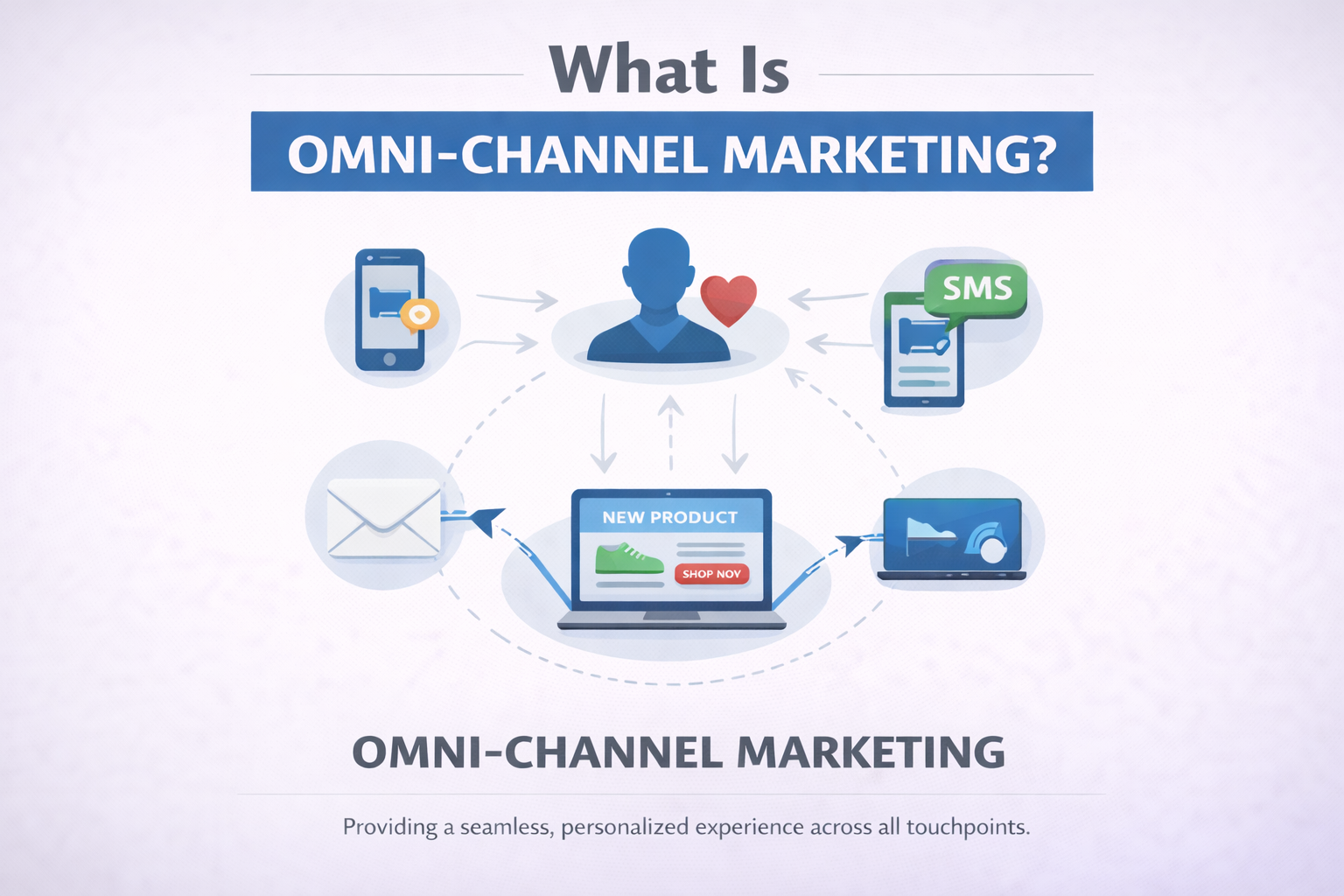
Omni-channel marketing is what happens when your channels start talking to each other. Instead of just being on every channel, you're connecting them.
Your customer visits your site, clicks on a product, and leaves. Later, they see a tailored Instagram ad for the same product. Then they get an email reminder and a text with a discount code. If they go into a physical store? The associate knows exactly what they were browsing online.
Key traits:
Channels are integrated
Experience is consistent across platforms
Messaging adapts to the customer journey
Example: In that same product launch, every channel is in sync. The social post, the email, the text — they all echo the same message, timed just right and tailored to what each customer has already interacted with. It feels cohesive, not repetitive.
The Real Differences (And Why They Matter)
Let's break this down side-by-side:
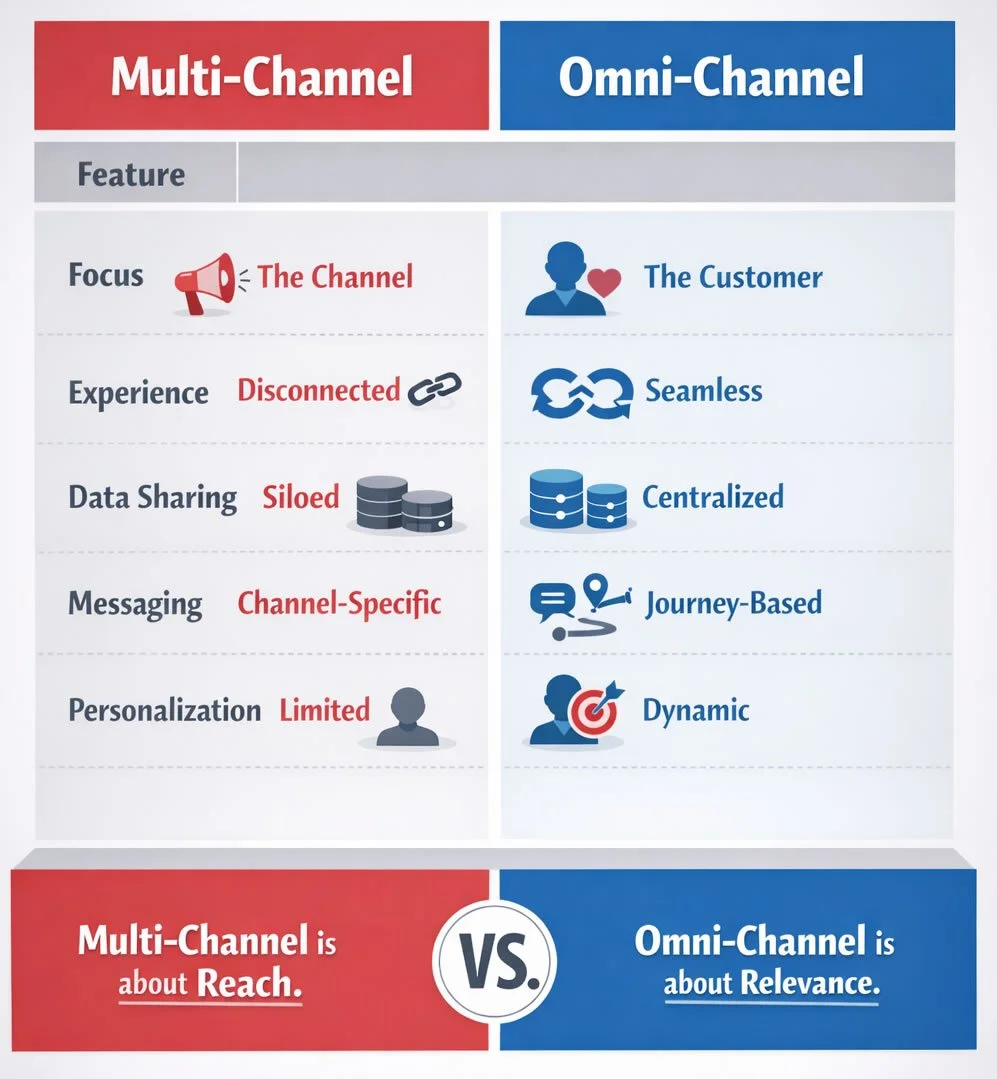
Suppose you're trying to be visible, multi-channel works. But if you care about retention, loyalty, and experience? Omni-channel is your move.
Let's Talk Numbers
Is making the shift really worth it? Let's look at what the numbers show:
80% of consumers use multiple channels before making a purchase.
73% of shoppers bounce between physical and digital channels during their journey.
Brands with strong omni-channel strategies see 89% customer retention, versus 33% for weak ones.
Omni-channel shoppers spend 30% more on average.
Businesses with aligned omni-channel campaigns drive 9-10% higher revenue growth.
That's not a minor edge. That's the difference between surviving and scaling.
When Multi-Channel Makes Sense
Let's be clear — multi-channel isn't bad. It's often a smart starting point. Not every business needs full omni-channel complexity right away. Multi-channel gives you visibility without the overhead.
Choose multi-channel when:
You're still building your tech stack or digital infrastructure
You're experimenting with channel mix to find where your audience engages most
Your team is small or lacks the tools to manage cross-channel data
Your primary goal is to increase reach or launch quick campaigns
It allows you to activate more customer touchpoints and see which ones convert, without requiring every system to be connected. For early-stage startups or local businesses, this agility can be a significant win.
However, the trade-off is that the customer experience may feel inconsistent. If someone reads a blog post, stops by your store, and then sees completely different messaging — or later gets ads that don't match anything they've interacted with — it creates confusion. That disconnect chips away at trust and makes your brand feel disjointed.
When You Need Omni-Channel
Omni-channel might take more effort upfront, but it’s where your marketing starts to really pay off. Once the basics are in place, you’re in a position to create smoother experiences, earn lasting loyalty, and build customer relationships that go far beyond a single transaction.
Leap when:
You're seeing strong traction across multiple channels, but want to unify efforts.
You're collecting first-party customer data (emails, site behavior, purchase history) and want to use it more effectively.
You want to create a personalized journey that follows the customer across platforms.
You're aiming to reduce drop-offs, cart abandonment, and churn by creating more innovative touchpoint
If you're running an e-commerce business, omni-channel lets you bridge the web, mobile, in-store, and customer support channels. If you're B2B, it means syncing your ads, email sequences, sales outreach, and content journey.
This approach requires a tech stack that supports integration — but you don't need to go enterprise. Mid-market tools now offer integrations that make omni-channel achievable without breaking the budget.
Real-World Comparison
Multi-Channel in Action: A skincare brand uses email, Instagram, Google Ads, and its website to promote a new serum.
Each team pushes different creative and timelines:
The email touts a "25% off" offer.
The Instagram post features a giveaway.
The Google Ad promotes "Buy One Get One Free."
The site shows "Free shipping on orders over $50."
A customer who follows them on two platforms gets mixed messages, feels confused, and doesn't convert.
Omni-Channel in Action: The same brand has integrated systems.
A customer browses the serum on mobile but doesn't buy.
Two hours later, they received a dynamic Instagram ad showing the same product with a personalized 15% offer.
An hour after that, they receive an abandoned cart email with a gentle nudge and a one-click checkout option.
If they walk into the store, a staff member sees their online behavior in the CRM and offers a free sample based on their browsing history.
Every touchpoint is in sync, informed by real-time behavior, and focused on moving the customer forward.
Making the Shift: From Multi-Channel to Omni-Channel
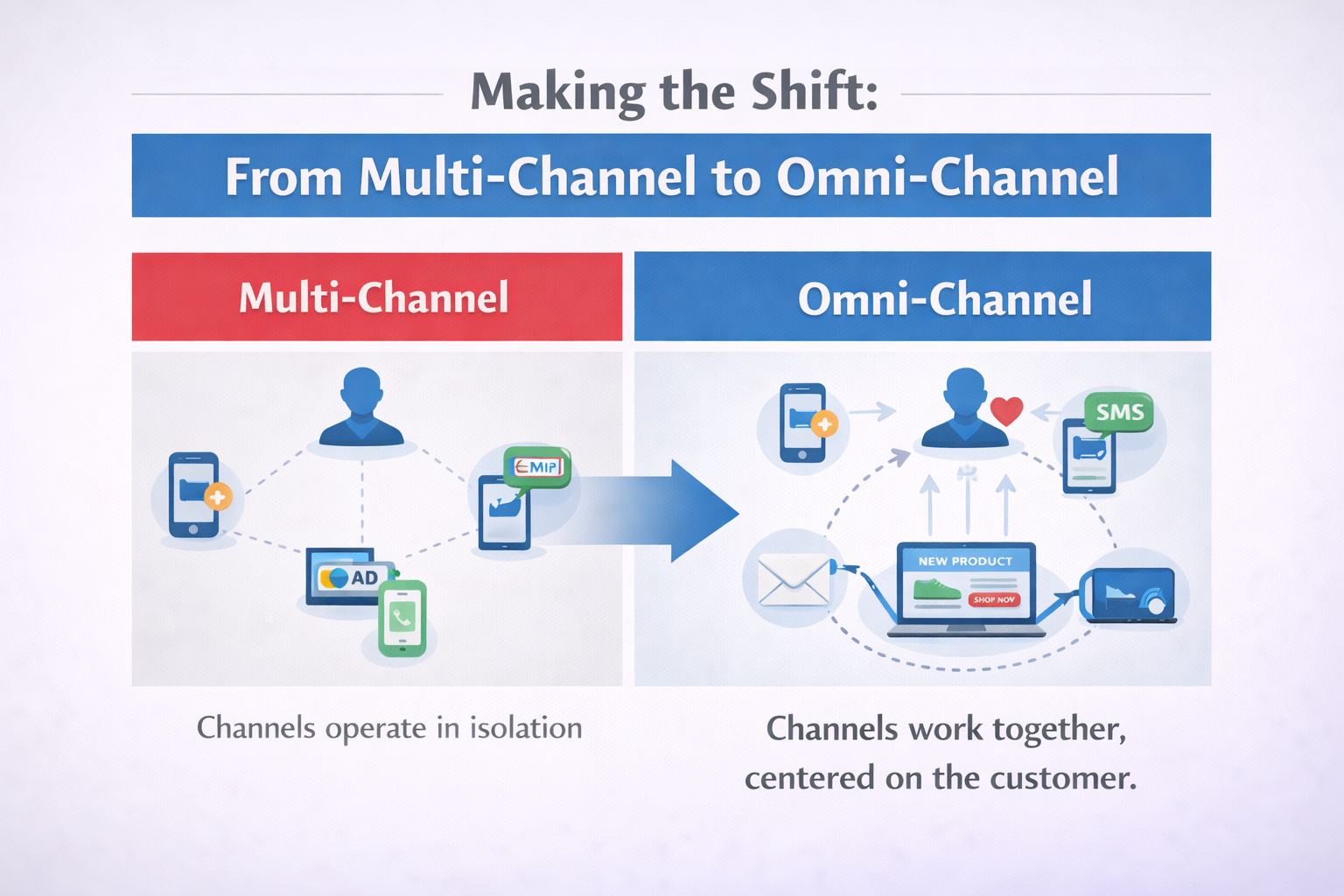
If you're currently running a multi-channel strategy and want to step things up, moving toward an omni-channel approach doesn't have to be overwhelming. Here's how to get started in a way that's practical and sustainable:
1. Take Inventory
List out every channel and customer touchpoint you're using — email, ads, social, SMS, support, etc. Are they working together? Or are they operating in silos?
2. Trace the Customer Journey
Look at how your customers move from awareness to purchase (and beyond). Where are the gaps? Where do people fall off or get hit with repetitive or irrelevant messages?
3. Connect the Dots
Start syncing your tools. Link your CRM, email platform, ecommerce backend, and ad channels so they can share data. If you've got a CDP (or are considering one), use it to unify customer profiles.
4. Keep Your Messaging Consistent
Your voice, offers, and creative should feel like they're coming from the same brand — no matter where someone sees them. And go beyond generic personalization — tailor based on real behavior, not just names or job titles.
5. Don't Do Everything at Once
You don’t have to overhaul everything at once. Pick one part of the customer journey — say, abandoned carts or post-purchase follow-ups — and make that your testing ground. Build a connected experience there, see what works, make improvements, and then scale it out from there.
Think of this as evolution, not reinvention. Start where you are and build from there.
🙋♀️ Frequently Asked Questions
Is omni-channel better than multi-channel?
Not necessarily. Omni-channel gives your customers a smoother, more personalized experience, which usually means better retention and long-term ROI. But it also takes more planning, connected systems, and resources to pull off well. For businesses just starting or figuring out which channels perform best, multi-channel can be a more realistic and flexible option.
Can small businesses do omni-channel marketing?
Yes, and they should if retention and customer experience are key priorities. Many marketing platforms now cater to small teams, offering out-of-the-box integrations for email, social, SMS, and e-commerce. Start by syncing your email and e-commerce platforms, then layer in social and support tools.
What tools do I need to run omni-channel marketing?
To start, you'll need a CRM or a customer data platform (CDP) to centralize customer data. Tools like HubSpot, Klaviyo, Omnisend, ActiveCampaign, and Salesforce Marketing Cloud offer omni-channel features such as behavior-based triggers, unified dashboards, and cross-channel automation. Your stack should also include integrations for analytics, ad platforms, and customer support.
What's the difference between multi-touch and omni-channel marketing?
Multi-touch refers to engaging a customer at multiple points in their journey, such as an email followed by a retargeting ad. Omni-channel means those touches are not only happening, but also coordinated and contextual. Multi-touch is tactical; omni-channel is strategic and customer-centric.
How do I transition from multi-channel to omni-channel?
Start by aligning your messaging across platforms. Then, unify your customer data with a CRM or CDP. Begin running campaigns that adapt based on customer behavior, not just demographics. Focus on consistency across all touchpoints and look for opportunities to streamline the experience based on past interactions.
The B2The7 Final
If you want to deliver value instead of noise, it's time to think omni. Multi-channel got us here. Omni-channel gets us where the customer expects us to be.
And in 2026, that expectation isn't going anywhere.
📩 Get Weekly Trend Alerts in Your Inbox
Want these insights delivered straight to your inbox every week?
Sign up here to subscribe to the Trend Brief
Stay ahead of what’s moving in marketing, social, and tech.